

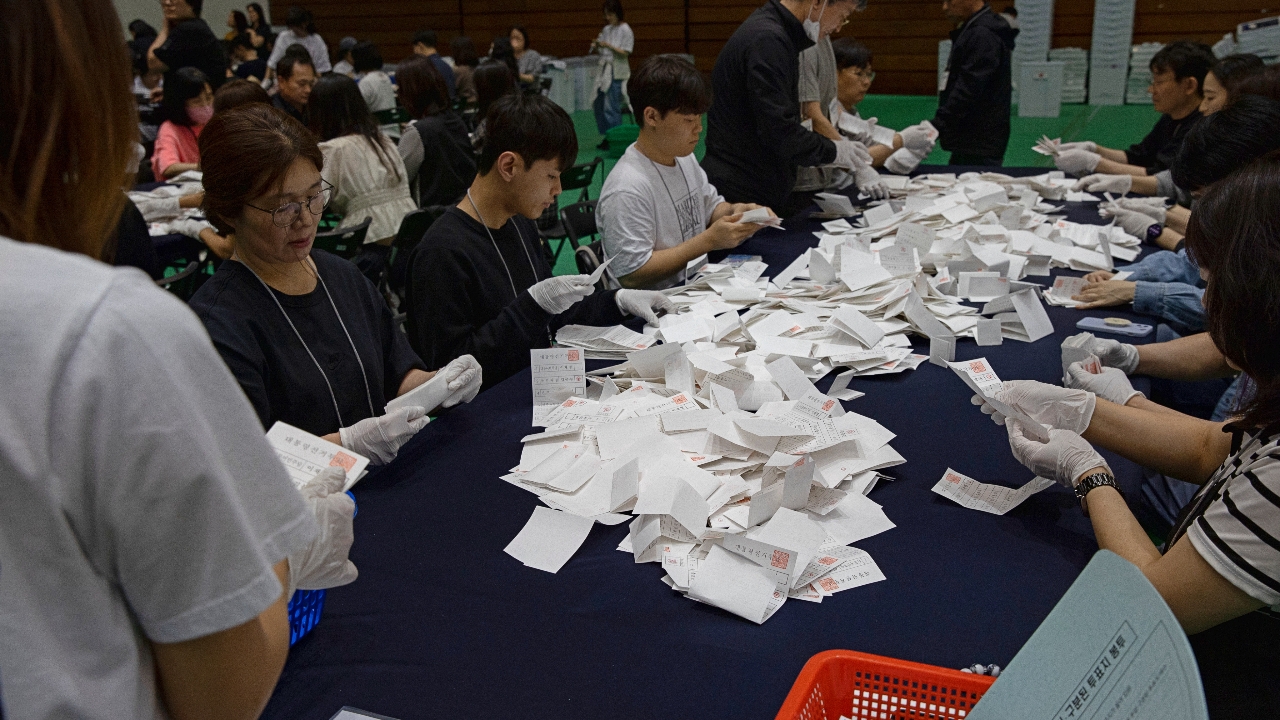
South Korea's ruling and opposition parties have reached an agreement to establish a special prosecutor's office to investigate the shortage of ballots in the nationwide local elections held on June 3. They also agreed to extend the parliamentary investigation committee's term by 30 days to prepare for a new vote count from the ballot boxes stored in Seoul amid concerns about election management and transparency of the National Election Commission.
The Democratic Party of Korea and the People Power Party jointly agreed to push forward a bill appointing a special prosecutor to investigate allegations related to the insufficient ballots during the 9th nationwide local elections held on June 3.
The bill is titled "Act on the Appointment of a Special Prosecutor to Investigate Allegations of Violations of Citizens' Voting Rights, including the Shortage of Ballots in the 9th Local Elections," and was scheduled for consideration in the National Assembly plenary session that same afternoon.
In addition to approving the appointment of a special prosecutor, both parties agreed to extend the parliamentary National Election Commission (NEC) investigation committee's term by 30 days beyond its original end date of July 31.
During this extension, officials will prepare for a new vote count from ballot boxes stored at the counting center within the Olympic Park in Songpa District, Seoul.
Chun Joon-ho, deputy floor leader of the ruling Democratic Party, said the extension primarily aims to prepare for the new vote count. Meanwhile, Kim Seung-soo, deputy floor leader of the opposition People Power Party, stated that if the special prosecutor appointment proceeds swiftly, the new vote count should be linked to the prosecutor's investigation.
According to the agreement, the investigation will cover multiple allegations: insufficient ballots preventing full voter participation, suspicions of computer system errors used to manage elections, including data recording and result calculation, allegations of manipulation or falsification of election statistics, and continuing vote counting despite ballot management issues.
It will also investigate abuse of power or procedural violations by the National Election Commission and local election committees, election management system security issues, allegations that election officials concealed or incompletely reported irregularities, and inconsistencies between the budget for printing ballots and the actual number printed and distributed. The special prosecutor may expand the probe to other offenses uncovered during the investigation.
The bill stipulates the special prosecutor will have five assistant prosecutors, 70 special investigators, up to 20 appointed prosecutors, and up to 70 government personnel assigned to assist.
After appointment, the special prosecutor will have up to 20 days for preparation before starting an official 90-day investigation, which can be extended twice by 30 days each if necessary, allowing a maximum investigation period of 150 days.
Regarding the selection process, both parties previously agreed to establish a Public Representative Selection Committee composed of six members—three nominated by the ruling party and three by the opposition.
This committee will review nominees proposed by the Korean Bar Association and the Council of Law School Deans, select two suitable candidates, and submit them to the prime minister and president for consideration to appoint one special prosecutor.
The ballot shortage during the June local elections sparked widespread criticism in South Korea and led to calls for a thorough review of the National Election Commission's operations.
The bipartisan agreement to appoint a special prosecutor and prepare for a new vote count represents efforts to restore public confidence in the election system and address doubts about the transparency and credibility of the country's electoral process.
SourceThe Chosun Daily/NEWSIS.COM