

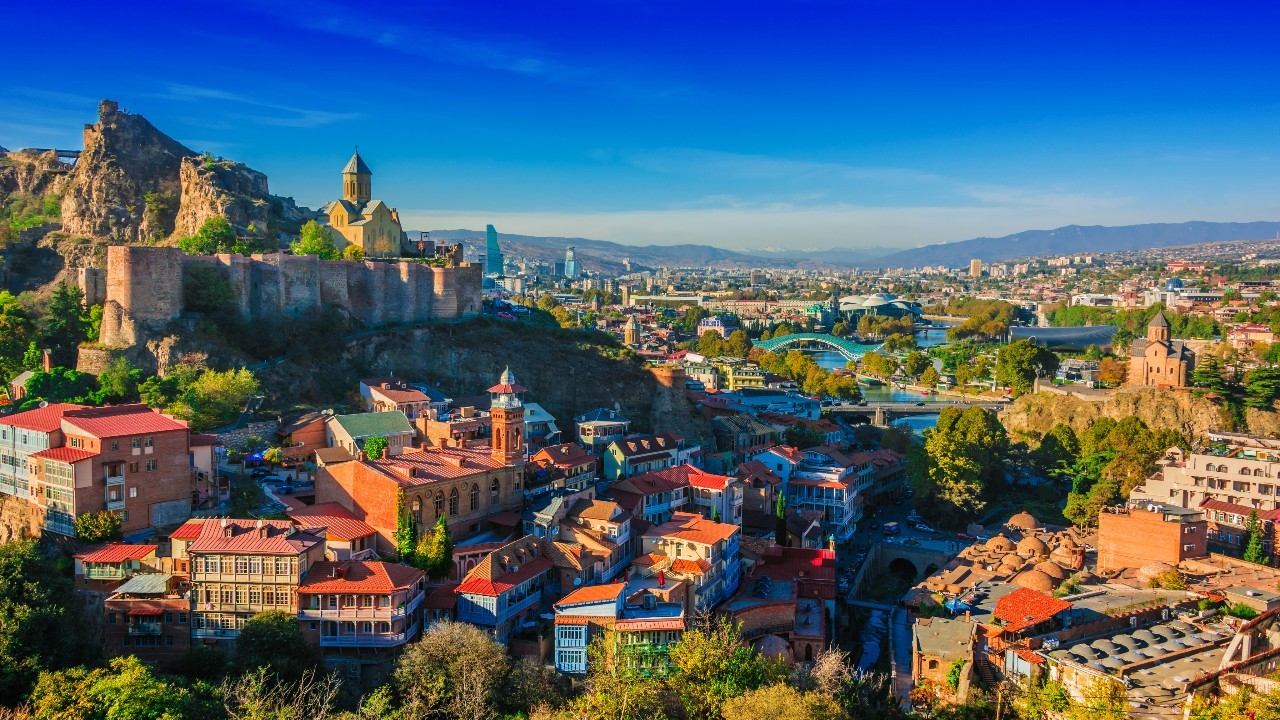
Georgia's tourism revenue declined by 3.8% following a sharp drop in Middle Eastern tourists, while both the United States and United Kingdom maintain travel advisories urging their citizens to exercise increased caution and avoid certain areas in the country.
Georgia's tourism sector is showing signs of slowdown after tourism revenue in the second quarter of 2026 dropped 3.8% compared to the same period last year, totaling $1.1 billion. This decline is mainly due to a significant decrease in tourists from the Middle East, while the US and UK governments continue to advise travelers to exercise greater caution when visiting Georgia.
Data from economic analysis firm Galt & Taggart shows that the number of tourists from Iran fell by 65.1%, while visitors from Saudi Arabia decreased by 61.9%, and those from Turkey declined by 10.9%.
However, this contraction was partially offset by increased revenue from tourists from the European Union (EU), which rose 12.1%, Russia up 10.1%, Ukraine up 49.8%, and Azerbaijan up 10.3%.
For the first half of 2026, Georgia's tourism revenue totaled $1.9 billion, a 2% decrease from the previous year, with analysts forecasting the full-year revenue to reach approximately $4.9 billion.
Data from the National Bank of Georgia also reveals that Israeli tourists are the highest spenders, averaging $1,519 per trip, followed by Saudi Arabia at $1,469, Ukraine at $1,429, and tourists from the European Union at $1,347 each.
In the first six months of the year, more than 610,800 Russians traveled to Georgia, generating $307 million in revenue—an average of $503 per person. Meanwhile, 249,200 tourists from the European Union and United Kingdom accounted for $336 million in revenue, with an average spending nearly 2.7 times higher than that of Russian visitors.
US and UK advise increased caution despite no upgrade in travel warnings.
Although the US Department of State still classifies Georgia at Level 1: Exercise Normal Precautions—the lowest travel advisory level—it continues to warn against travel to the Abkhazia and South Ossetia regions. These disputed areas, under Russian occupation, pose security risks including crime, detention, and the presence of unexploded landmines in some locations.
The UK Foreign, Commonwealth & Development Office issues similar guidance, advising against travel to these two regions and areas near administrative boundary lines. It also recommends that travelers avoid political demonstrations in Tbilisi, which may occur without prior notice, and to closely monitor official announcements.
Additionally, the UK government advises travelers to be vigilant against pickpocketing on public transport and in crowded tourist spots, not to leave drinks unattended in entertainment venues, to use reputable app-based taxi services rather than hailing cabs on the street, and to exercise caution when driving. Some drivers exhibit reckless behavior, and many rural roads lack adequate lighting and traffic signs.
While the US and UK travel advisories have not been upgraded recently, the information has gained renewed attention as Georgia has become a topic of news in several countries, providing important context for those planning to visit the Caucasus nation.
Click to read more aboutInternational news