

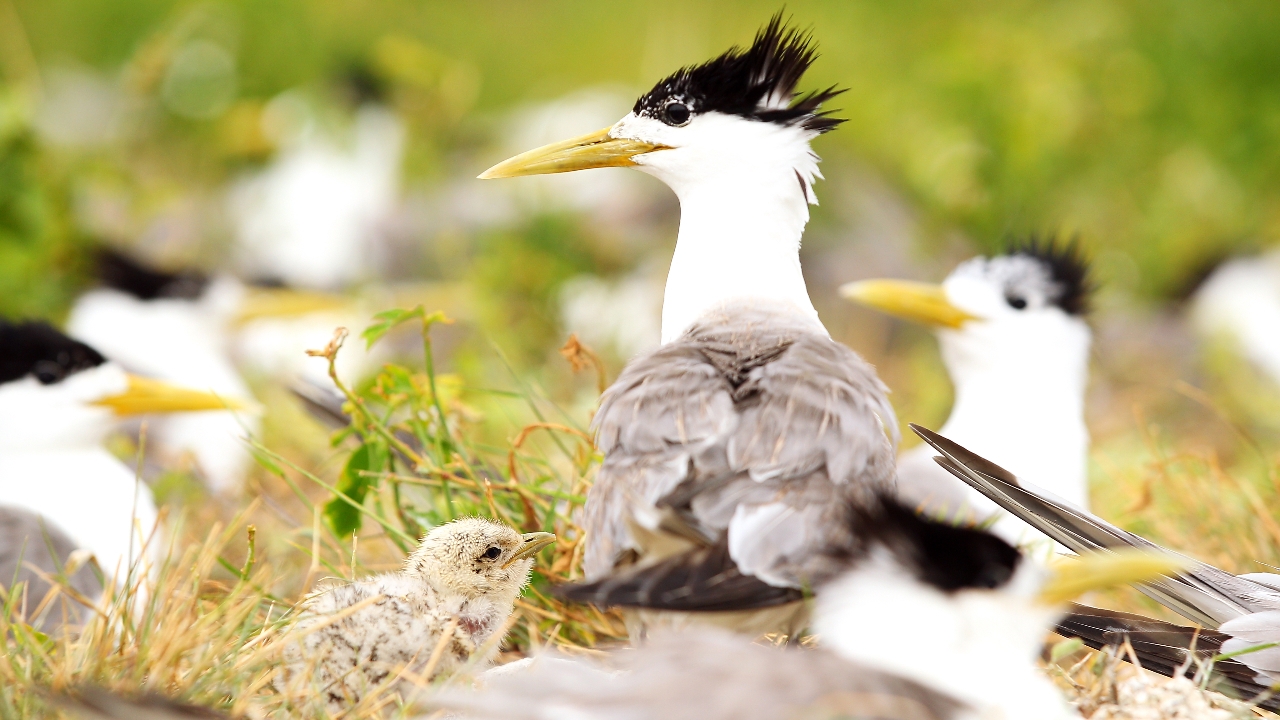
Australia has confirmed the first instance of mass wildlife deaths caused by the H5 strain of avian influenza after many Greater Crested Terns died on an island off South Australia's coast. The government warns the disease is likely to spread widely among wild animals, although no outbreaks have been detected in poultry farms and the risk to the public remains low.
The Australian government has confirmed the country's first mass wildlife death event caused by the H5 avian influenza virus following laboratory tests that verified many Greater Crested Terns found dead on Bodkin Rocks Island, off the coast of South Australia, were infected with this virus strain.
This discovery followed aerial patrols by officials who spotted flocks of sick and dead birds on the island, located about 5 kilometers south of Cape Jaffa, before collecting samples for testing and confirming the results last Friday.
Latest data indicates Australia has recorded a total of 74 cases of avian influenza infection in wild animals, with the highest number—54 cases—in South Australia, followed by Western Australia with 10 cases, Victoria with 7, New South Wales with 2, and Queensland with 1 case.
Julie Collins, Australia's Minister for Agriculture, stated that this mass wildlife death event was anticipated, as once the H5 virus begins spreading in nature, it is difficult to avoid significant wildlife losses.
However, she emphasized that there is no evidence of outbreaks in poultry farms or agricultural production systems, and assessed that the risk to public health remains low. The government is collaborating with the poultry industry to enforce stricter biosecurity measures to prevent the virus from entering commercial farming operations.
The Agriculture Minister also warned that the public might observe increased outbreaks in wildlife going forward and assured that continuous surveillance will be maintained, with information promptly shared with the public whenever the virus is detected in new areas.
If large numbers of dead animals or birds are found, authorities will assess with experts whether to bury the carcasses on-site, remove them, or leave them in place, depending on what is most appropriate for each location.
Murray Watt, Minister for the Environment, said that experience from other countries shows it is impossible to stop the spread of the disease among birds and wildlife because natural bird migration and animal movement cannot be controlled, indicating mass wildlife deaths are likely to increase in the future.
He noted that the government has implemented a national H5 avian influenza management plan and allocated an additional AUD 24 million from federal and state governments, supplementing the previously invested AUD 113 million, to enhance preparedness for potential outbreaks.
Meanwhile, Fiona Fraser, Commissioner for Threatened Species, warned that incoming migratory birds in the coming months will increase the risk of virus spread, as they will mingle with native birds that may already be infected, leading to more outbreaks and mass wildlife deaths.
She also expressed concern that the virus could spread to key wetlands across the country, which are habitats for many waterbirds. While it is impossible to prevent all wildlife deaths, the government plans to strengthen ecosystems through habitat restoration, water resource management, and controlling invasive species such as feral pigs, foxes, and feral cats to reduce long-term pressure on wildlife populations.
/sourceABC