

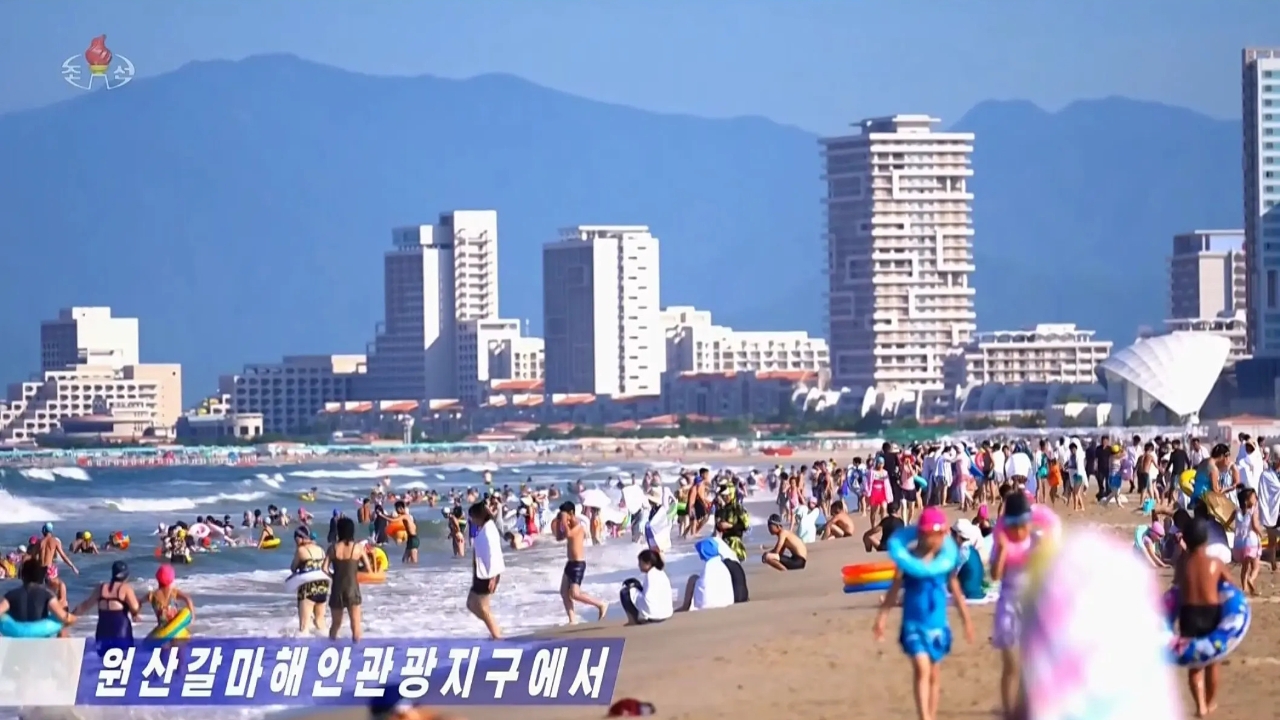
North Koreans are flocking to seaside resorts amid a severe heatwave, with some areas reaching temperatures as high as 40 degrees Celsius. Meanwhile, Pyongyang has experienced consecutive "tropical nights," prompting official media to urge citizens to avoid outdoor activities and advise farmers to protect crops amid the intense heat covering the Korean Peninsula.
The Korean Central News Agency (KCNA) reported that North Korea is facing a nationwide heatwave, causing temperatures in many areas to soar to 40 degrees Celsius. Pyongyang, along with Pyongan and Jagang provinces, is expected to have daytime highs between 35 and 40 degrees Celsius.
In Pyongyang, the lowest temperature on Monday morning was 28 degrees Celsius, which is 5 degrees above the seasonal average, rising to 35 degrees Celsius during the day.
Additionally, Pyongyang has experienced continuous "tropical nights" since the previous Monday, with nighttime temperatures never dropping below 25 degrees Celsius. This term refers to periods from 6:01 p.m. to 9:00 a.m. the following day when temperatures remain above 25 degrees Celsius.
Rodong Sinmun, the official newspaper of the ruling Workers' Party of Korea, published advice urging citizens to avoid outdoor activities during daytime to reduce the risk of heatstroke and heat-related illnesses. It also recommended that farmers strengthen measures to care for crops affected by high temperatures and increased humidity.
Meanwhile, Korean Central Television showed images of many people visiting beaches and swimming pools in the Wonsan-Kalma coastal tourist area on the east coast. The area opened for its second tourist season on 1 July and has already welcomed tens of thousands of visitors.
This heatwave coincides with scorching weather across the Korean Peninsula. The South Korean Meteorological Administration (KMA) reported record-breaking temperatures in several areas, including Daegu in the southeast, which reached 40.9 degrees Celsius—the first time it has surpassed 40 degrees since the record set on 1 August 1942, over 80 years ago. Yangsan also recorded a historic high of 42.5 degrees Celsius on Sunday, 2 August, and reached 38 degrees Celsius on Monday.
The extreme heat has caused a public health crisis throughout South Korea. In Incheon, a man in his 40s died after being hospitalized with a body temperature nearing 40 degrees Celsius. Additionally, there were reports of two farmers aged 60 and 80 dying in Chungcheongnam-do province.
The South Korean Meteorological Administration explained that this prolonged heatwave is caused by two high-pressure systems overlapping above the Korean Peninsula, combined with direct sunlight under mostly clear skies, leading to severe and sustained heat accumulation in the region.