

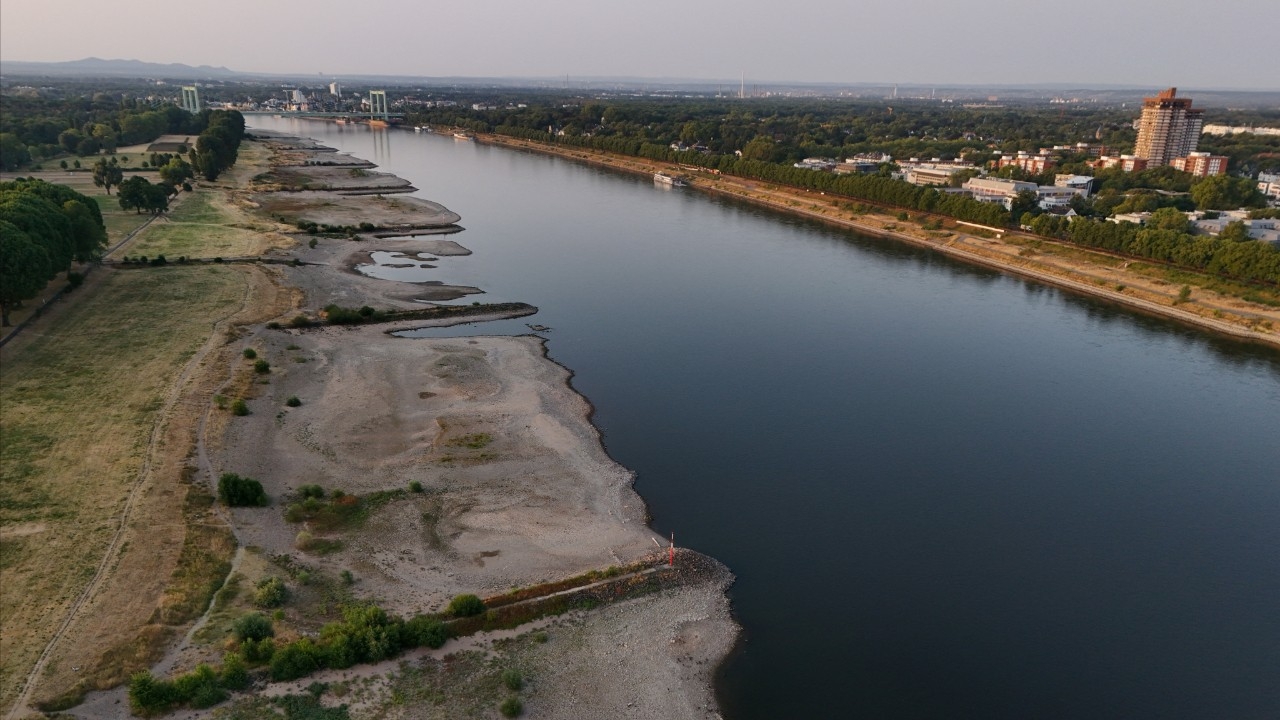
Several major rivers in Europe, including the Rhine, have reached historically low water levels following multiple heatwaves and droughts across the continent. They have dropped to their lowest point in recorded history.
Foreign news agencies reported on 3 Aug 2026 that the prolonged heatwave and drought crisis in Europe has rapidly lowered water levels in the Rhine and other major rivers. In many parts of Germany and the Netherlands, water levels have fallen to their lowest recorded measurements.
Water level gauges in Cologne and Lobith—the border point between Germany and the Netherlands—have recorded historic lows.
At Kaub, a key bottleneck for water transport, cargo ships have had to significantly reduce their load due to the low water levels. Some ships must transfer goods to multiple vessels to avoid sailing too deep, increasing shipping costs and risking supply chain disruptions.
Another river severely affected by drought is the Danube, where water levels in Serbia and Romania have fallen to their lowest in 30 years. Hungary's sole nuclear power plant has had to reduce output and may need to shut down if levels drop further.
Meanwhile, Serbia has cut electricity production at coal power plants due to inadequate cooling water. Automotive factories for Dacia and Ford in Romania have temporarily halted production to reduce electricity usage.
On another front, Italy's longest river, the Po, has reached record low levels, prompting the government to raise the drought warning to the highest level.
The lowered water levels have allowed seawater to intrude into the river mouth, damaging ecosystems and severely impacting farmers who cannot access fresh water for irrigation.
Scientists from World Weather Attribution stated that although long-term rainfall amounts may not have significantly decreased, human-induced global warming has raised temperatures, accelerating water evaporation. This, combined with increased water demand from households, agriculture, and industry during summer, worsens the situation.
The European Union's Copernicus Climate Change Service warns that this drought also raises wildfire risks, which in turn accelerates carbon emissions beyond average levels.
Follow international news:https://www.thairath.co.th/news/foreign
Source:bbc