

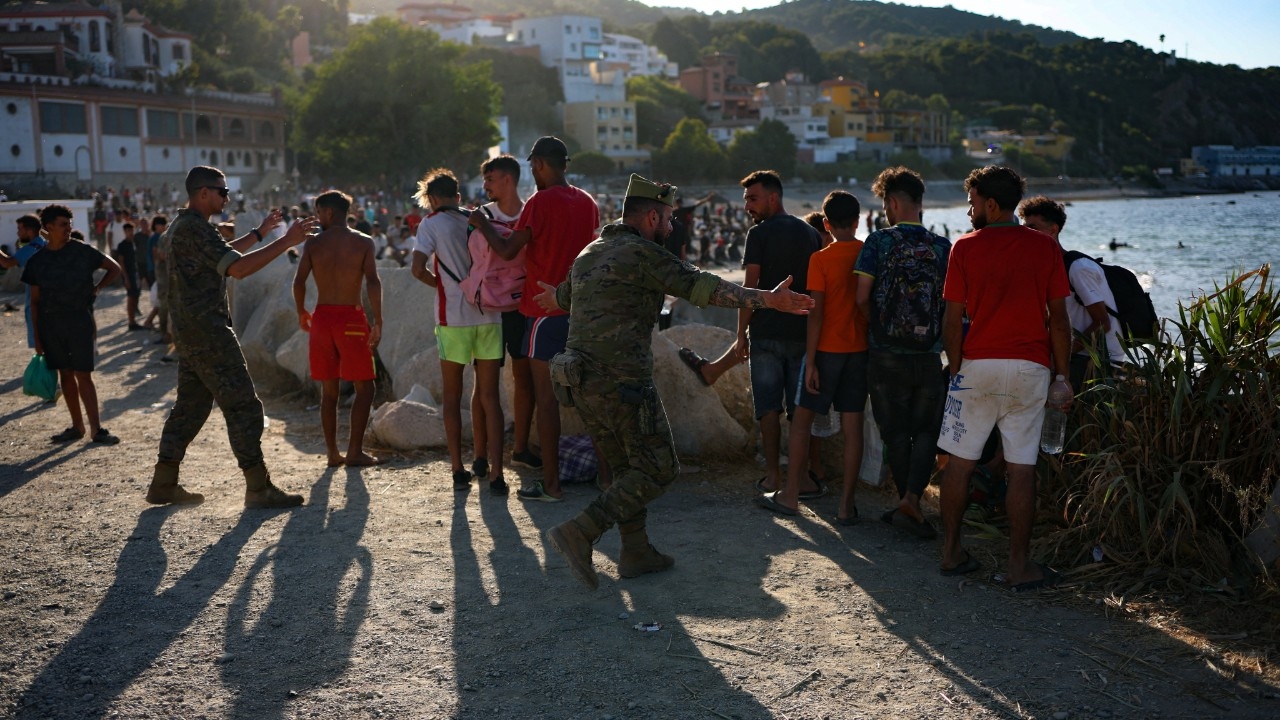
The EU is increasing technical and financial support to Morocco to enhance border control following an influx of tens of thousands of migrants into Ceuta, a Spanish territory in North Africa,.
On Monday, 3 Aug 2026 GMT+7, Ursula von der Leyen, President of the European Commission, proposed that the European Union (EU) strengthen border protection and increase aid to Morocco to prevent an influx of over 50,000 migrants crossing into Ceuta, a Spanish territory located in North Africa.
The event last week, in which tens of thousands of migrants swam around the border fence between Morocco and Ceuta extending into the sea, caused significant alarm among EU member states.
Moroccan authorities stated that the incident was caused by false information spread online by human trafficking gangs claiming that the Spanish border was open to migrants, along with a misinterpretation of a Spanish court ruling. However, most migrants who crossed the fence found no food or welcome and eventually returned to Morocco.
As a result, Italy temporarily suspended the Schengen agreement (which allows passport-free border crossing) with Spain for one month, while 22 of the 27 EU member states called for coordinated measures to tighten security at the external borders.
The European Commission President emphasized that Morocco is a key strategic partner in combating human trafficking. The EU is ready to cooperate with Spain to develop an early warning system and increase technical and financial support to Morocco.
This incident is considered the first major test of the EU’s new Migration Pact, which came into effect in June to establish common rules for managing migration issues.
Analysts warn that if the pact fails to effectively address the crisis, it will undermine confidence in European leaders and become a political tool for far-right parties in several countries facing upcoming elections.
Experts point out that Europe's reliance on North African countries such as Morocco to delay and control migrants may reduce numbers in the short term but gives those countries leverage, potentially using migration flows as political or economic bargaining chips with Europe in the future.
Follow international news:https://www.thairath.co.th/news/foreign
Source:cna