

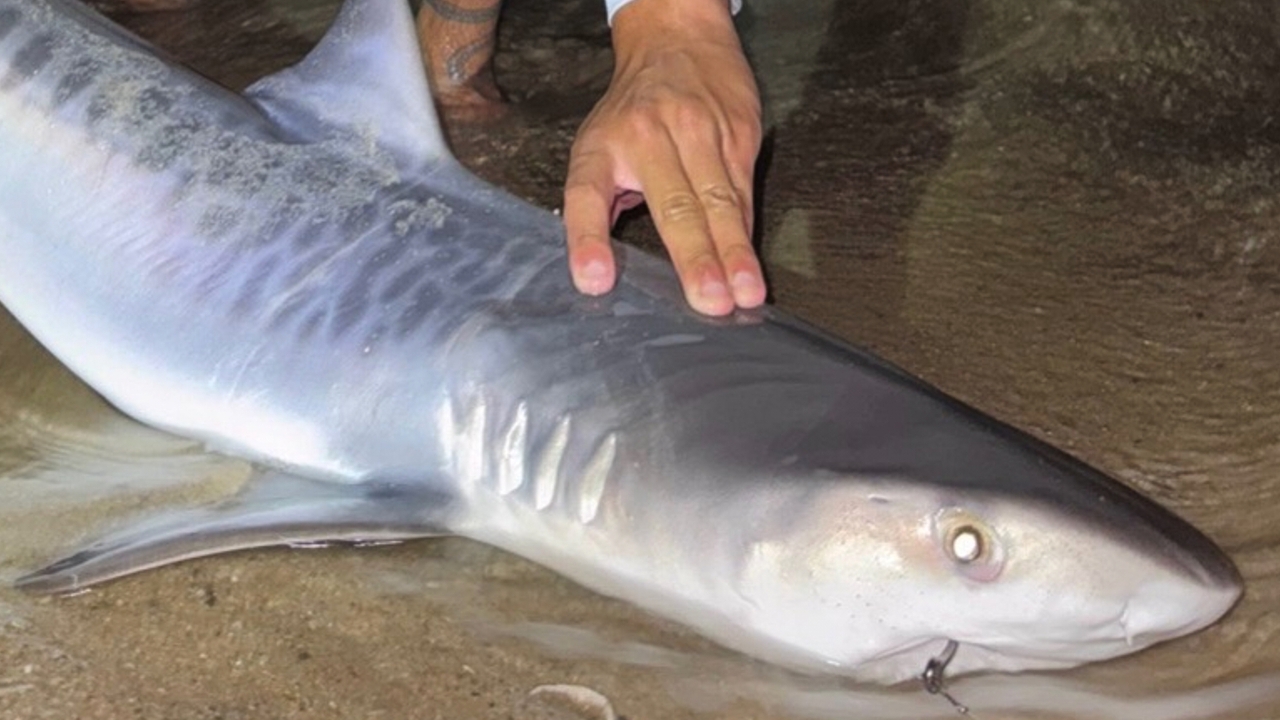
Two brother anglers in Massachusetts, USA, caught a tiger shark pup near a beach in Falmouth, an area where this species is almost never found. Scientists say this might be another indicator of climate change.
Nate Ruett and his younger brother Nelson Ruett went shark fishing at night in late July, aiming to catch brown sharks commonly found in the area. However, when they pulled up their line, they found a tiger shark pup about 5 feet (approximately 1.5 meters) long, which they safely released back into the sea.
Nelson, who is the social media manager for On The Water magazine, said that upon seeing the distinctive stripes on the shark’s body, he immediately recognized it as a tiger shark and excitedly called out to his brother, as they never expected to find this shark species in northern U.S. waters.
Normally, tiger sharks are predators found in tropical and subtropical seas like the Caribbean. They can grow longer than 4.6 meters and weigh up to 635 kilograms. Known as apex predators, they feed on almost all marine animals, including fish, shellfish, seabirds, and are notorious for swallowing unusual human objects like license plates and shoes, which have been found in their stomachs multiple times.
Although adult tiger sharks are considered among the shark species most potentially dangerous to humans, fatal unprovoked shark attacks remain very rare.
John Chisholm, a scientist at the Anderson Cabot Center for Ocean Life at the New England Aquarium, stated that in recent years, tiger shark pups have been increasingly spotted in northern waters because sea temperatures in the New England region have risen due to climate change.
He explained that summer sea temperatures can reach about 27 degrees Celsius, creating a suitable environment for tiger shark pups, and it is expected that this shark species will become more common in the area in the future.
Scientists also note that the rare sightings of tiger shark pups here may indicate that New England’s coastline is becoming a new natural nursery for tiger sharks. However, the long-term effects on the marine ecosystem still require ongoing observation and study.
/source:AP
Click to read news aboutInternational News