

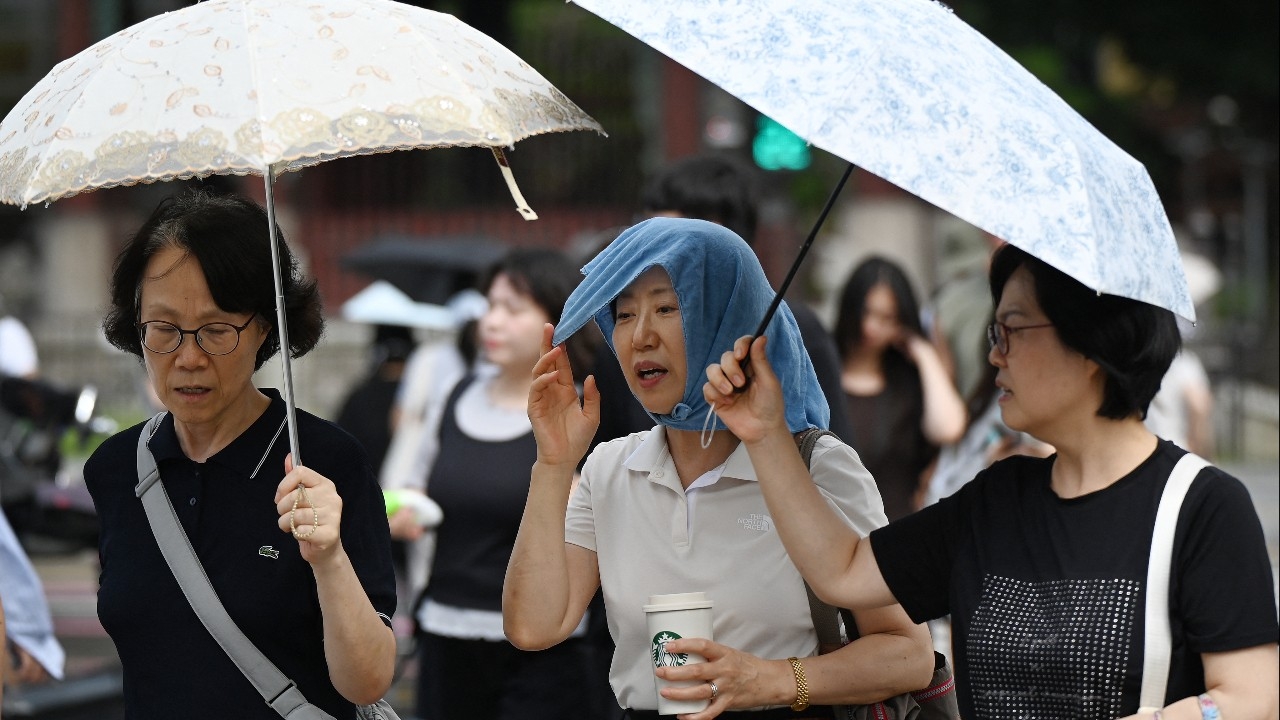
Seoul, South Korea has issued its first highest-level heatwave warning, with daytime temperatures expected to reach 38 degrees Celsius. Meanwhile, the number of heat-related illness cases has risen to 185, including two deaths.
On 4 August 2026, Yonhap News Agency reported that the Korea Meteorological Administration issued a Serious Heat Wave Warning for some areas of Seoul for the first time at 11:00 a.m. on Tuesday, 4 August. The heatwave has intensified, with temperatures in Seoul expected to reach 38 degrees Celsius. The highest-level warning covers the southeastern and southwestern parts of Seoul, affecting 11 districts including Gangnam, Songpa, Gangseo, and Gwanak.
In addition, Seoul has designated around 4,000 locations as cooling centers, such as community centers, senior centers, and welfare centers, where residents can seek relief from the heat. Meanwhile, South Korea's Ministry of the Interior and Safety has sent alerts advising people to avoid leaving their homes and engaging in outdoor activities, to stay well hydrated, rest in cool places, and closely monitor the safety of family members.
Reports state that the serious heatwave warning was newly added to South Korea's heatwave alert system on 1 June. It is issued when the perceived maximum temperature reaches or exceeds 38 degrees Celsius, or when the day's maximum temperature reaches or exceeds 39 degrees Celsius in areas where the perceived temperature has been at least 35 degrees Celsius for two consecutive days.
Official data indicates that on Monday, 18 new cases of heat-related illnesses were reported in Seoul, bringing the total number since 15 May to 185, with two deaths. Seoul authorities said they are closely monitoring the heat illness situation and have mobilized full countermeasures, including street water spraying to lower temperatures and special care for vulnerable groups, especially residents living in small, crowded housing.
Source: Yonhap