

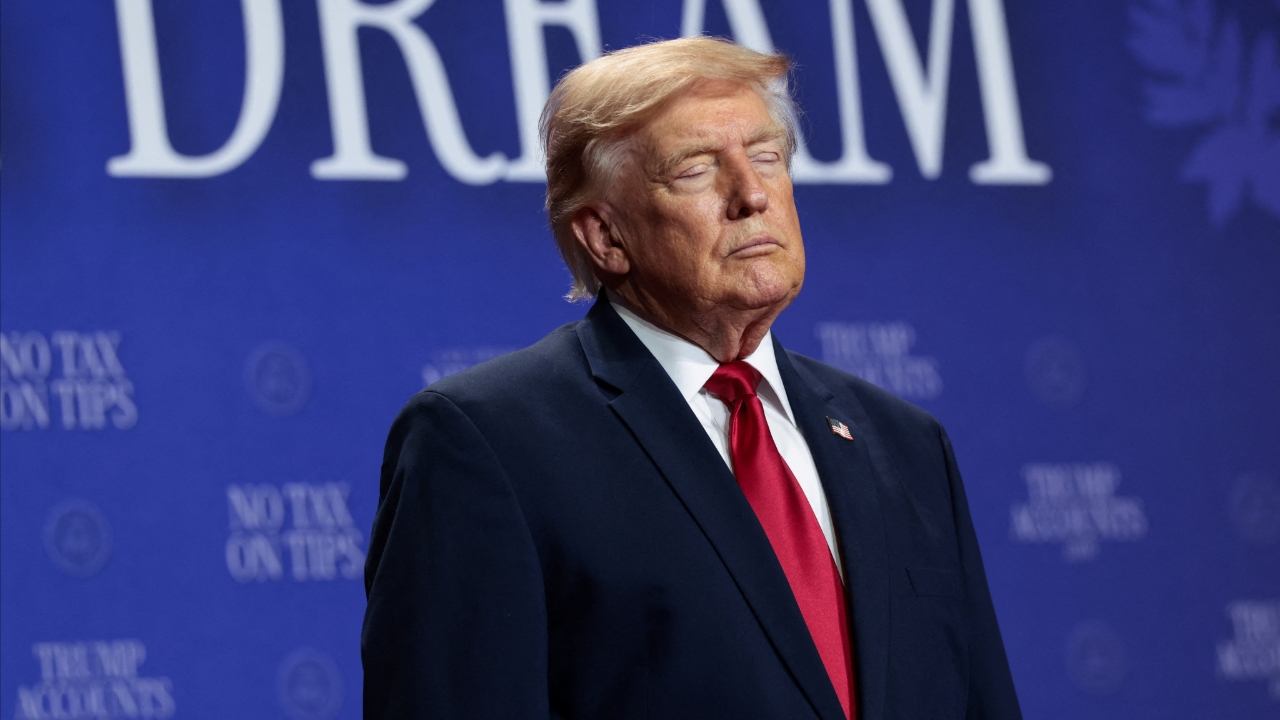
The U.S. government has refunded more than 3.3 trillion baht in “Trump tariffs” to businesses since the Supreme Court ordered the cancellation of these tariffs. This amount represents 60% of the total refunds the government must pay.
Foreign news agencies reported on 5 Aug 2026 that the U.S. government under President Donald Trump has returned over 100 billion U.S. dollars (approximately 3.3 trillion baht) in “Liberation Day” customs tariffs—retaliatory import taxes imposed on goods from all countries worldwide—to businesses directly charged with these tariffs.
According to the latest court filing from the U.S. Customs and Border Protection (CBP), this figure accounts for about 60% of all tariff revenue collected by the government under this policy.
However, a significant amount remains unpaid: nearly 29 billion dollars are still under trade agency review, while another 1.6 billion dollars remain pending because importers have not yet provided bank account details.
These refunds follow a landmark U.S. Supreme Court decision in February, where justices ruled that the broad application of import tariffs under the International Emergency Economic Powers Act (IEEPA) was "unlawful."
Previously, the White House cited the 1977 International Emergency Economic Powers Act (IEEPA), which grants the president authority to "control" trade in response to emergencies.
However, this measure faced heavy opposition both domestically and internationally from companies confronted with sudden, steep tariff increases on imports into the U.S., as well as concerns that these tariffs would lead to higher consumer prices.
Those paying the tariffs are not foreign governments or exporters but U.S. businesses and importers at customs points. Higher tariffs raise upfront costs for U.S. businesses, which typically pass these costs on to consumers through higher retail prices.
Since the Supreme Court ruling, many major American companies have filed for large refunds. However, under U.S. customs law, only importers who paid the tariffs directly can request refunds, so consumer compensation depends on each company's decision.
Refund amounts are expected to rise further as U.S. Customs continues reviewing pending claims and importers update their bank account information.
Although the Supreme Court rejected the use of IEEPA to impose additional tariffs, Donald Trump immediately implemented a new blanket 10% tariff measure instead.
That measure expired at the end of July and was replaced by new tariffs on 60 allied trading partners, citing allegations that these major economic partners failed to properly address forced labor issues.
Follow international news:https://www.thairath.co.th/news/foreign
Source:bbc