

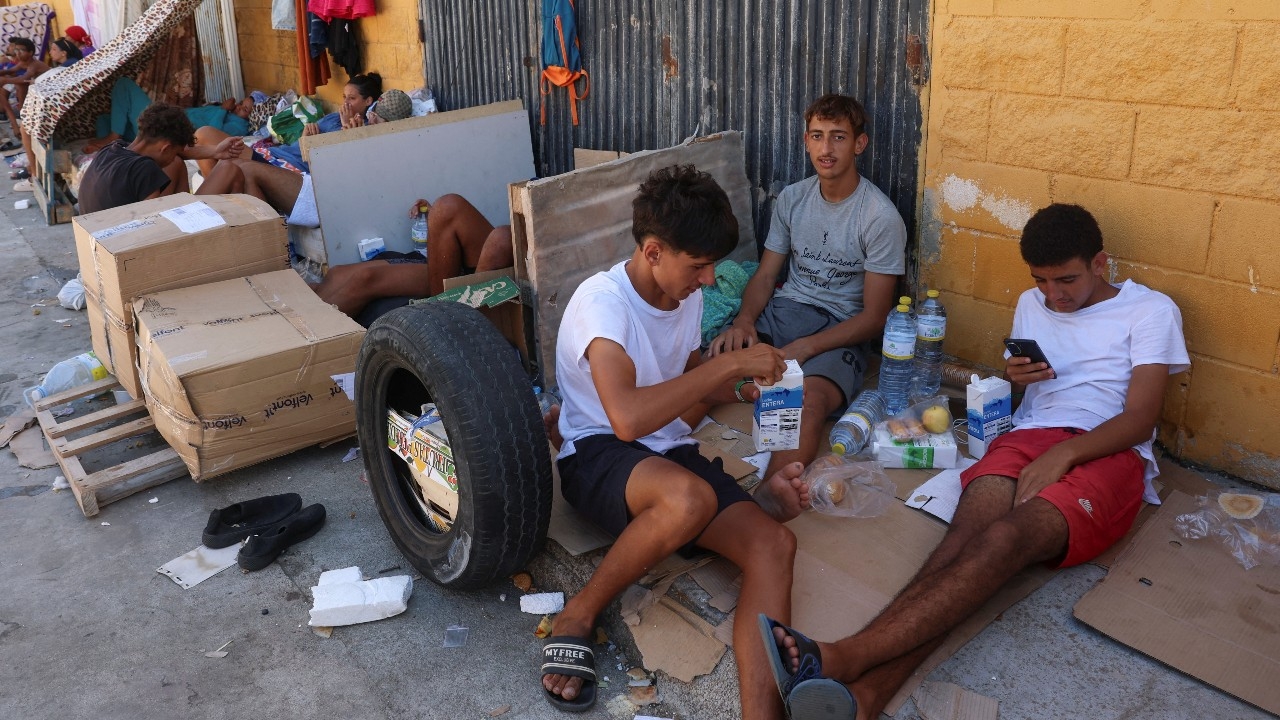
Human rights organizations warn that hundreds of unaccompanied migrant children face risks of abuse, exploitation, and trafficking after crossing the border from Morocco and wandering in the city of Ceuta.
Jose Miguel Morales, director of Federacion Sur Acoge, an organization working on rights and migrant aid in southern Spain, expressed concern for the welfare of migrants in Ceuta, especially hundreds of unaccompanied children exposed to abuse, exploitation, and trafficking after sleeping on the streets of Ceuta, a Spanish territory in North Africa. Following a massive influx crossing from Morocco last week, many children living on the streets have been physically assaulted and fallen victim to violence. Currently, there is no solution or safe shelter, and girls are particularly vulnerable to all forms of abuse. He noted some children are as young as 10 or younger, with many under 14 years old.
Although most migrants have returned to Morocco, Spanish authorities still face challenges caring for Moroccan children remaining in Ceuta, as unaccompanied minors cannot be immediately deported under the law.

Meanwhile, Save the Children has urged the government to expedite the registration of all children, warning that girls are at especially high risk of violence, trafficking, and exploitation.
The Spanish government revealed that out of approximately 72,000 migrants who entered Ceuta between 30-31 July, about 70,000 have returned to Morocco, leaving around 2,000 remaining.
However, Ceuta's opposition-led administration stated that the number of those still stranded is higher and includes more than 1,000 unaccompanied children.
AFP reporters noted that in recent days, many children have lacked food, drinking water, shelter, and basic sanitation.
Some migrants are gathering in forested areas, beaches, and residential neighborhoods, many sleeping outdoors using plastic bags or T-shirts to shield from the sun, with only minimal belongings like shoes and water bottles by their side, reflecting the absence of permanent housing.
The city's migrant shelters have stopped accepting new arrivals due to full capacity, forcing many to wait outside.
Ceuta authorities report about 1,100 children require care, while shelters have capacity for only 90.
Alejandro Ramirez, Ceuta's vice mayor, said the city's support system is completely overwhelmed, and the current situation is unsustainable. Officials are urgently converting schools and warehouses into temporary shelters to accommodate homeless children. Meanwhile, children living on the streets rely on food and essentials from charities and local residents.
Prime Minister Pedro Sanchez's government approved a 25 million euro budget to assist Ceuta in caring for unaccompanied children.
However, plans to relocate these children to other Spanish regions face opposition from areas governed by the opposition Popular Party (PP) and the far-right Vox party, which have declared they will not accept migrant children transfers.
Santiago Abascal, leader of Vox, stated on social media that not a single euro of Spanish taxpayers' money should be used for illegal immigrants.
Many migrants revealed they came to Ceuta to escape poverty, while researchers found false rumors circulating on social media claiming the border is freely open.
This migrant influx into Ceuta has resulted in at least 80 deaths on the Spanish side, while Moroccan authorities report 11 deaths on their side.
Source:channelnewsasia
Click to read related news aboutInternational news