

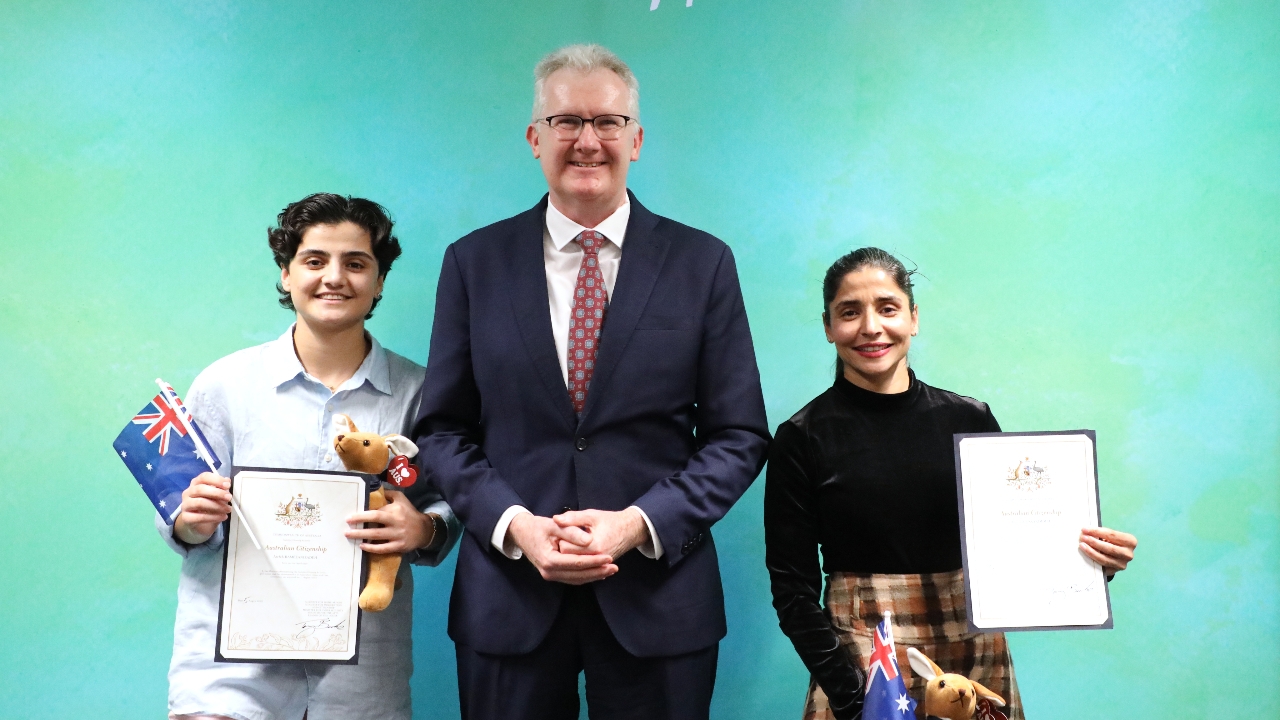
Two Iranian national female footballers who made headlines by refusing to sing the national anthem in protest against their government and later sought asylum in Australia have now officially become Australian citizens. After facing intense pressure and being branded "traitors," both are preparing to start new lives and pursue professional football careers in the A-League.
Atefeh Ramezanizadeh, aged 34, and Fatemeh Pasandideh, aged 22, former Iranian national female footballers, were officially granted Australian citizenship in a ceremony held in Brisbane, Queensland. The ceremony was attended by Tony Burke, the Australian Minister for Home Affairs, who presented their citizenship certificates.
Ramezanizadeh said it was a special, unforgettable day and expressed immense pride and gratitude to become Australian citizens. Pasandideh added that after all the challenges and hardships they had endured, this moment meant more than words could express.
Both were among seven members of the Iranian women's national football team who sought protection in Australia after refusing to sing Iran’s national anthem before a match in the Women's Asian Cup in March. This act took place just days after Israel and the United States launched airstrikes against Iran.
The incident raised concerns that the female players might face punishment upon returning to Iran. Iranian state television aired footage of a presenter calling the group "traitors" and stating they should be punished for not singing the national anthem.
Due to pressure from the Iranian community in Australia, Australian authorities offered the seven footballers the chance to apply for asylum or humanitarian protection. In the end, only Ramezanizadeh and Pasandideh chose to remain in Australia, while the other five decided to return to Iran.
After returning to Iran, the fate of the other five players remains unclear. Human rights activists have expressed concern that some female footballers may have been coerced to change their minds through threats against their families. However, at the time, the Iranian government stated that the players’ return demonstrated "national spirit and patriotism" and was a foil to enemy plans.
Currently, Ramezanizadeh and Pasandideh are training with Brisbane Roar in the Australian women's football league and intend to continue pursuing professional football careers at a high level in Australia.
Brisbane Roar congratulated both players, stating that what they have faced since February is something most people never experience in a lifetime. The club affirmed that Queensland is their home now and that the club’s doors will always be open to them.
The granting of Australian citizenship to the two players comes as the Australian government prepares to implement stricter visa measures to control immigration. Expected measures include limiting work rights and appeal processes for asylum seekers, as well as banning certain visa holders from switching to family visas.
The Australian government is under pressure from the opposition, which proposes even tougher immigration controls, while refugee rights groups criticize current measures, warning they may increase risks to asylum seekers’ safety.
The case of the two Iranian female footballers has drawn significant attention because their refusal to sing the national anthem was seen as a symbolic protest against the Iranian government. Their decision to seek asylum and start anew in Australia has allowed them to continue their football careers and receive official citizenship in the country they have chosen as their new home.