

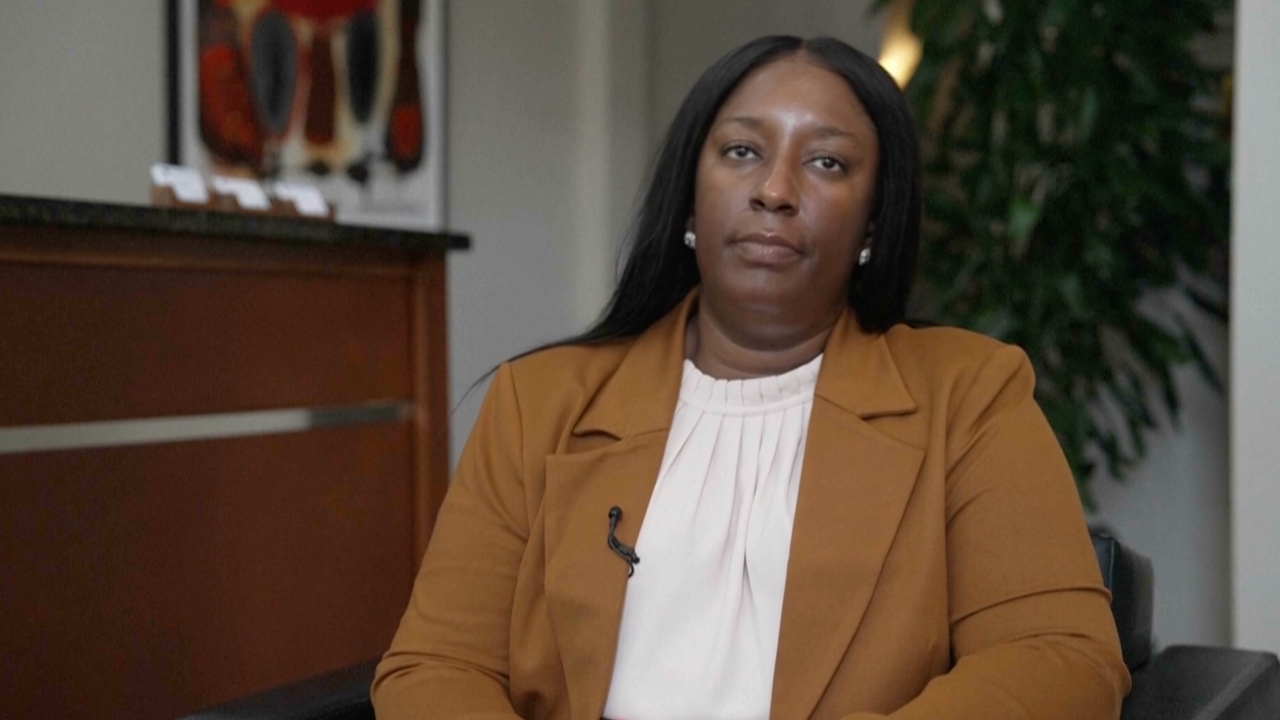
A woman from Georgia, USA, filed a lawsuit against a hospital after her biopsy sample was mislabeled, leading to a misdiagnosis of uterine cancer. This caused her to undergo a hysterectomy and live for months believing she had a serious cancer.
Cassandra Barksdale, 43, and her attorney sued Kaiser Permanente, an integrated health care and insurance provider, alleging that errors in handling pathology biopsy samples led to an incorrect diagnosis, causing her physical and psychological suffering for several months.
Barksdale visited a doctor at Kaiser Permanente Southwood Medical Center in Jonesboro, Georgia, in early 2025 after experiencing abnormal heavy bleeding and having uterine fibroids, which are benign tumors on the uterus.
She underwent a biopsy on 10 March 2025 and was informed on 17 March that she had an aggressive form of endometrial cancer.
Barksdale said doctors told her she might only live 2 to 5 years, leading her to believe she was facing a severe cancer diagnosis.
Although a subsequent CT scan did not detect cancer, when she saw doctors at Northside Hospital, the diagnosis of endometrial cancer was confirmed again, reinforcing her belief that she had cancer.
According to the lawsuit, Barksdale had a hysterectomy on 15 May 2025, but post-surgical pathology tests found no cancer cells in her uterus.
Doctors then questioned the earlier biopsy results from Kaiser Permanente and recommended further testing to determine the cause of the discrepancy.
In September 2025, Kaiser Permanente’s risk management contacted Barksdale to inform her that the biopsy results she received earlier belonged to another patient, as tissue samples had been mislabeled.
Subsequent DNA testing confirmed that the biopsy showing aggressive endometrial cancer was not Barksdale’s but another patient’s.
Shannon Yang, Barksdale’s attorney, said her client went to the hospital seeking answers about bleeding and fibroids but was misdiagnosed with another person’s disease. All treatments thereafter were based on incorrect information.
Barksdale said that after learning of the error, she fell into severe depression, cried daily, had suicidal thoughts, lost trust in the medical system, and became fearful of returning to doctors.
Her lawyer noted that while compensation cannot restore the removed organ or heal psychological trauma, the lawsuit is the family’s way to seek accountability and justice.
Kaiser Permanente issued a statement saying, "Ms. Barksdale should never have experienced this," and emphasized that the organization has trained staff and thorough review procedures to prevent such errors.
The organization said that following last year’s incident, it took immediate steps to prevent recurrence and is prepared to work with Barksdale and her attorneys to find a fair and responsible solution.
However, due to privacy laws, no information about the other patient whose biopsy was mislabeled has been disclosed, nor is it known if that patient experienced delayed cancer treatment or other impacts.
There is no clear data on how often biopsy labeling errors occur in pathology, but similar cases have been brought to court in the US by other patients.
Researchers have documented multiple prostate cancer biopsy sample identification errors, and laboratories have developed preventive measures such as barcode labeling systems and sample verification at the point of care.
Barksdale’s lawsuit seeks damages but does not specify an exact amount. The case is currently ongoing in the legal system.
Source:channelnewsasia
Click to read related newsInternational news