

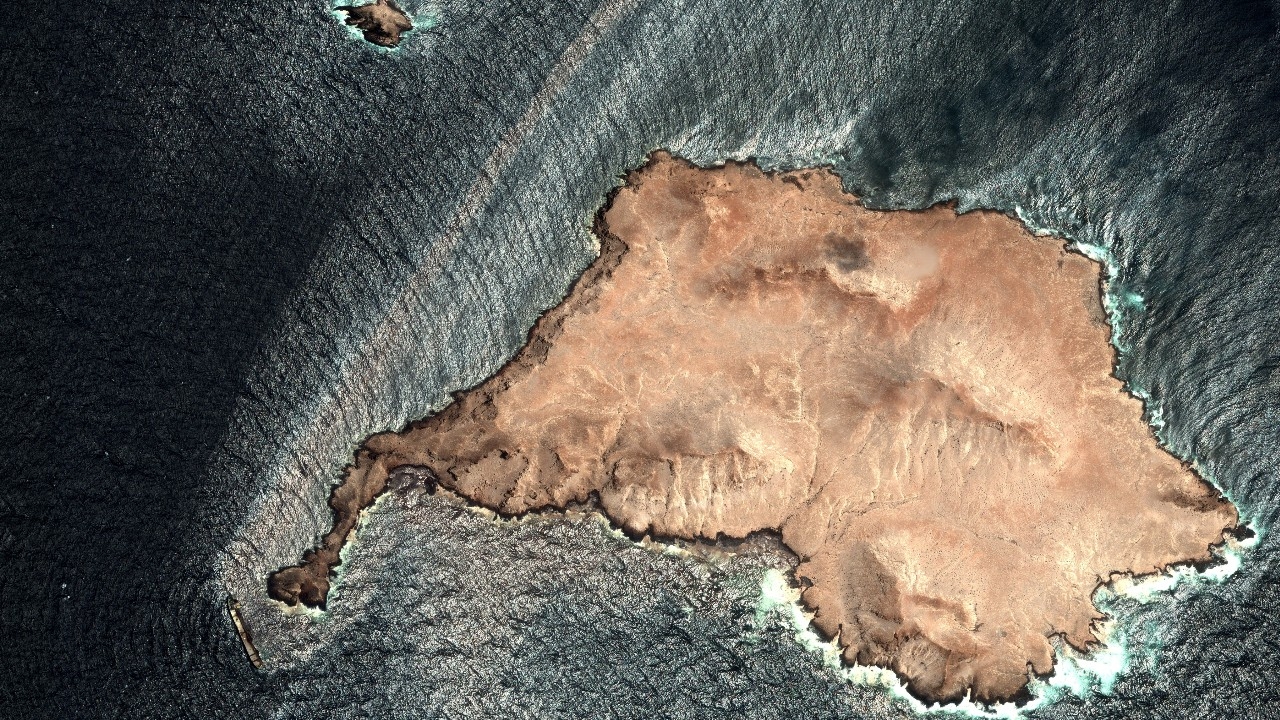
Oman is accelerating efforts to control a crude oil spill from a grounded tanker off its southern coast after oil slicks were found covering around 390 square kilometers near the Hallaniyat Islands, a marine conservation area known for its important ecosystems and rare marine species. Experts warn that if the oil reaches the shore, it could cause long-term environmental damage.
The Omani government disclosed it is intensifying efforts to contain the crude oil spill from the tanker "Caroline Bezengi," which ran aground near the Hallaniyat Islands in the country's south. The latest assessment shows the oil slick covers an area of approximately 390 square kilometers.
The tanker, 274 meters long, was carrying nearly one million barrels of Russian crude oil destined for Asia. The ship reported issues near Yemen’s coast on 8 June. Maritime security sources indicated that preliminary assessments suggest a possible explosion on board. However, no party has claimed responsibility for the incident.
Oman’s Environmental Authority stated that the oil slick is spreading northeast of the islands and is about 7 kilometers from the shore. So far, there is no risk to the local seawater desalination plant or tourist sites, but authorities must act quickly to prevent the oil from reaching the coast.
The Hallaniyat Islands were designated as a nature conservation area by the Omani government last year to protect marine ecosystems and diverse wildlife, including humpback whales in the Arabian Sea, Socotra cormorants, coral reefs, and sea turtle nesting sites.
Omani officials reported deploying aerial patrols and divers to the site and are preparing a plan to transfer oil off the ship to minimize risks and protect the marine environment. The UK maritime security company Ambrey will join the salvage and oil spill response efforts, noting that the situation is complex and rapidly evolving.
However, the environmental group Greenpeace, analyzing earlier satellite images, estimated the oil spill could be as large as 600 square kilometers. Reuters’ satellite image analysis also indicated that the oil slick continued to expand in late July.
Experts warn that if the oil slick is kept away from the shoreline, the impact will be less severe than if the oil enters shallow waters and coastal areas, which could cause damage to coral reefs, birds, fish, and marine ecosystems for years.
The Caroline Bezengi, built in 2001, is identified as part of Russia’s shadow fleet—older tankers used to transport oil while evading Western sanctions. This ship is subject to sanctions by the European Union, Ukraine, the United Kingdom, Canada, and Switzerland.
Records show the tanker loaded oil from the Russian port of Novorossiysk in the Black Sea in April and passed through the Suez Canal in late May before the incident near Yemen’s coast in June. The exact cause of the oil spill remains under investigation.
Source: AFP /Reuters