

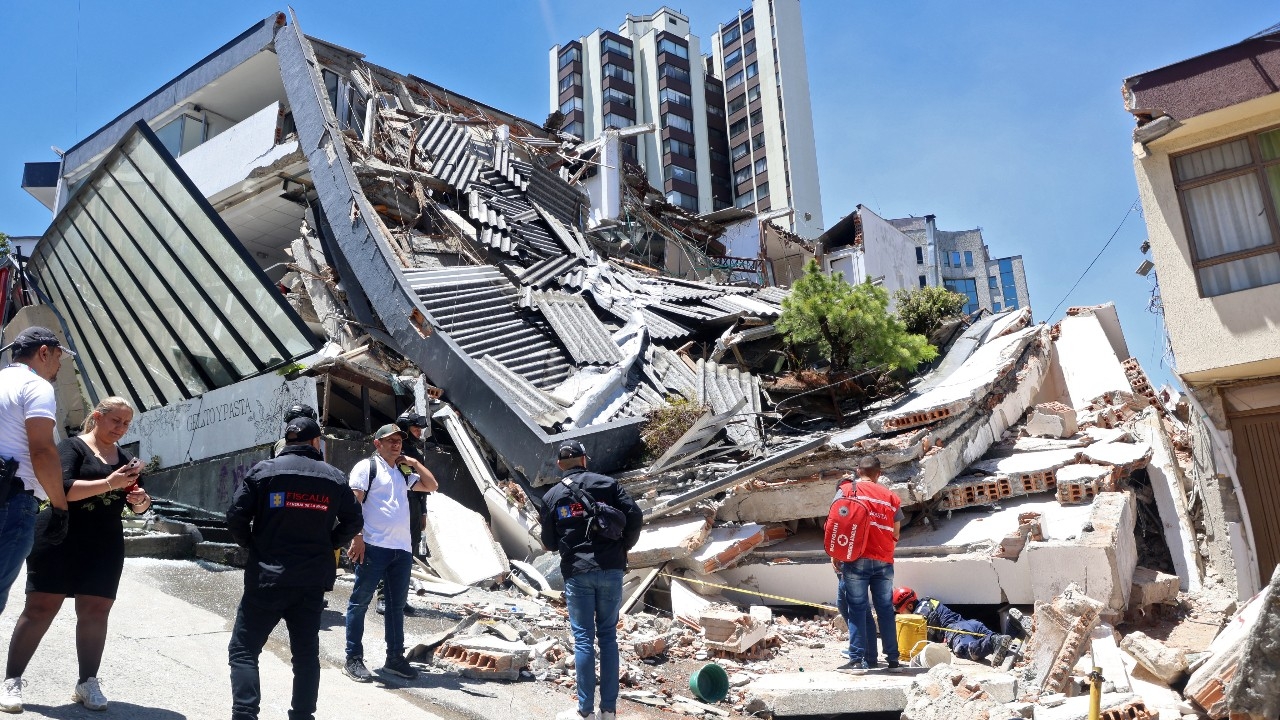
Search and rescue operations in Colombia's western region entered their second day following a 7.4 magnitude earthquake, one of the strongest in the country in decades, resulting in at least 164 deaths and over 480 injuries.
Rescue workers, police, military personnel, and volunteers worked through the night using heavy machinery and manual digging to locate survivors trapped beneath collapsed buildings and homes, while officials warned the death toll could rise due to many still missing or trapped under rubble.
The earthquake struck at 07:34 local time on Monday, 10 Aug, centered near San Jose del Palmar in Choco province in western Colombia, at a depth of approximately 103 kilometers. The tremors were widely felt, including in neighboring Venezuela, Ecuador, and Panama.
The city of Pereira in Risaralda, a key coffee-growing area of Colombia, suffered severe damage. Authorities reported 66 deaths, with many buildings reduced to piles of twisted concrete and steel. Additionally, 65 buildings collapsed in the Pereira metropolitan area, with an estimated 15 buildings still housing trapped individuals.
Cali, with a population of about 2.2 million, also experienced heavy damage, reporting at least 85 deaths. Dozens of buildings collapsed or remain at risk of collapse. A hospital suffered severe damage, with several upper floors including the pediatric care area collapsing, trapping some patients inside and necessitating the evacuation of roughly 600 patients to outdoor care areas.
Reports also indicated 13 deaths in Choco province near the earthquake’s epicenter, as well as fatalities in Manizales, Quibdo, Medellin, and other areas within Choco and Valle del Cauca provinces.
In Manizales, the earthquake damaged part of the old cathedral tower. Residents reported intense shaking and falling bricks from surrounding buildings.
Several regional airports were damaged, including those in Pereira, Manizales, Quibdo, Armenia, Cartago, and Buenaventura. In Bogota, hundreds of kilometers from the epicenter, tremors were felt causing trees and traffic lights to sway violently and cracks to appear in some buildings, though no serious infrastructure damage was reported in the capital.
President Abelardo de la Espriella, who recently took office, declared a national disaster and granted the government special authority to mobilize resources and reallocate budgets to manage the emergency, confirming that over 1,500 homes have been damaged.
Authorities imposed curfews in parts of Pereira and Cali following reports of looting. The president said around 1,000 security personnel would be deployed to Cali to maintain order and support rescue efforts.
This event has been compared to the major 1999 earthquake that heavily damaged Colombia's coffee region and killed over 1,000 people, as well as to the large earthquake in Venezuela in June that caused more than 6,300 deaths.
International offers of assistance have come in, with US Secretary of State Marco Rubio stating the US is closely monitoring the situation and ready to help. European Commission President Ursula von der Leyen said the EU is using Copernicus satellite data to support rescue operations. El Salvador’s President Nayib Bukele sent a message of solidarity and offered personnel and equipment for aid.
The US Geological Survey estimates about 1.5 million people felt the earthquake with intensity near level 7. Though deep earthquakes are generally less damaging than shallow ones, they can release significant energy causing structural damage and may trigger severe aftershocks.
Rescue teams continue racing against time to find those trapped under rubble, hoping to save more survivors before the death toll rises further beyond the current level.