

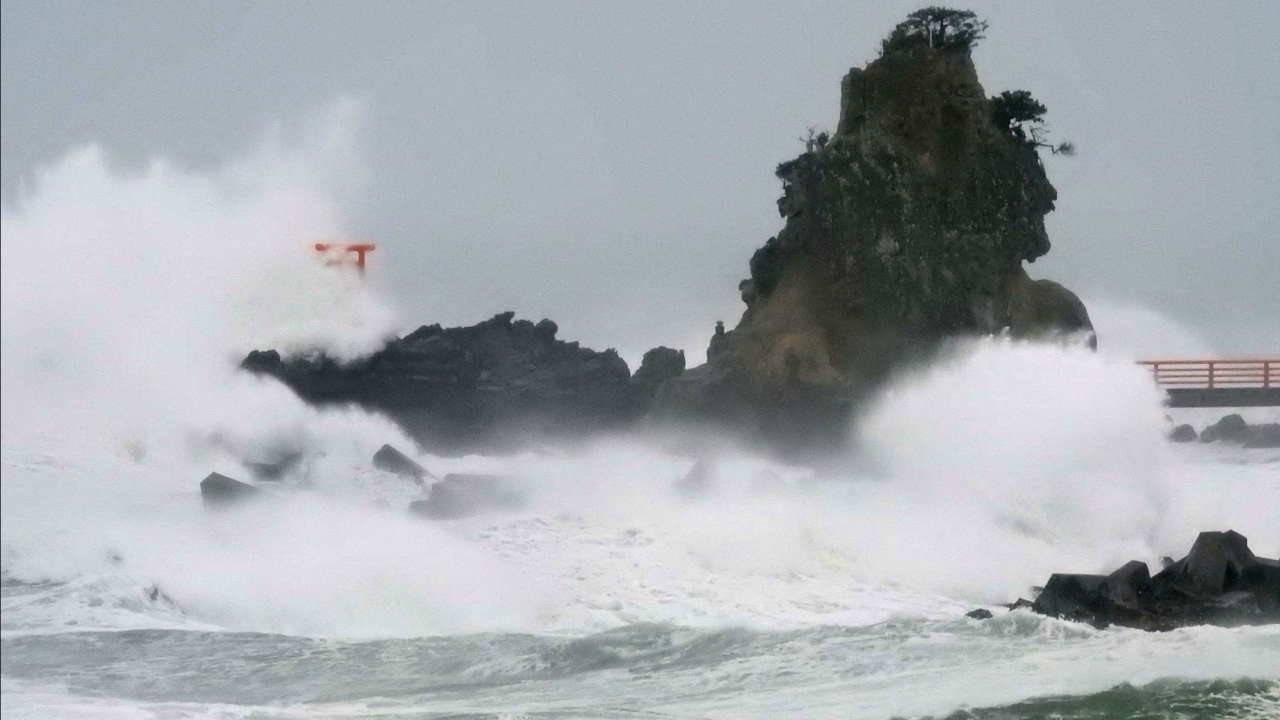
Tropical Storm Chan-hom has moved westward after making landfall in the Tokyo metropolitan area last night, causing trees to topple, thousands of homes to lose power, and resulting in five people sustaining minor injuries.
The Japan Meteorological Agency (JMA) stated that Chan-hom significantly weakened after making landfall in southern Ibaraki Prefecture late Tuesday night, before moving toward Gifu Prefecture in central Japan by Wednesday morning and heading toward Wakasa Bay along the central-northern coast.
At that time, the storm's sustained winds were about 64 kilometers per hour, and it continued to cause heavy rain and thunderstorms throughout the day in northern and western Japan.
In Ibaraki and neighboring Tochigi Prefectures, more than 3,000 homes were without electricity Wednesday morning, according to TEPCO Power Grid data. Five people suffered minor injuries—two men in Iwate Prefecture in the north and three women in Ibaraki Prefecture.
The storm also caused numerous trees to fall in Tokyo, including one in the upscale shopping district of Omotesando, but there were no injuries reported from these incidents, according to NHK television.
Despite the storm's impact in many areas, passenger train services and flights in Tokyo continued operating normally, and the city largely functioned as usual. However, the storm affected many travelers during the Obon holiday, a time when Japanese people return to their hometowns to honor ancestors.
On Tuesday, about 60 flights arriving and departing from Tokyo's Haneda Airport were canceled. Meanwhile, Oarai Beach in Ibaraki Prefecture, a popular tourist spot, was closed due to the storm, leaving the beach nearly deserted.
Chan-hom's landfall in Ibaraki on Tuesday was the first recorded instance of a tropical storm or typhoon making landfall there since the Japan Meteorological Agency began recording such data in 1951.
Chan-hom struck Japan just days after Typhoon Dolphin caused damage in the southern regions, disrupting transportation and forcing hundreds to evacuate to shelters before weakening and moving toward other regions.
Previously, Typhoon Dolphin claimed 10 lives in the Philippines and caused flooding in China, forcing hundreds of thousands to evacuate from high-risk areas.
. Source:AP
Click to read related news aboutInternational news