

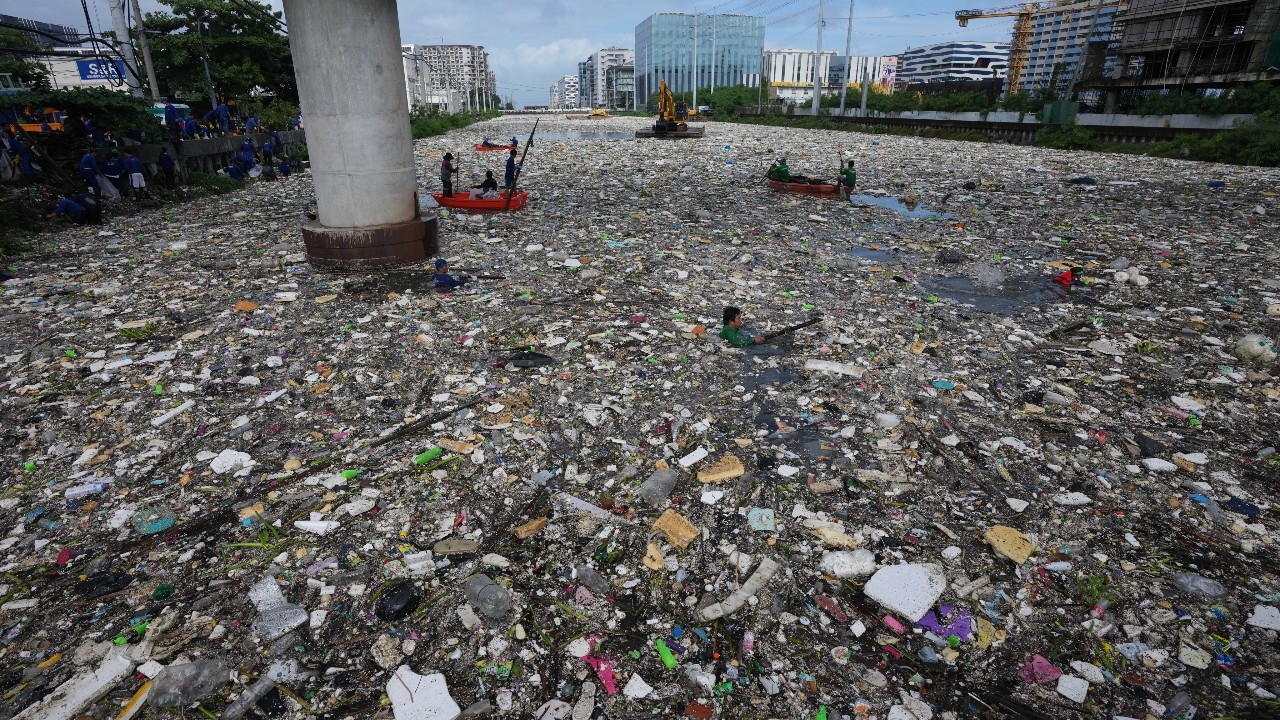
Manila is urgently mobilizing personnel to clear a massive amount of garbage flooding rivers and the coastline in Paranaque City, which has turned into a "sea of garbage" following nine consecutive days of heavy rain. Residents and officials point to waterway pollution as a major factor contributing to the flooding, while heavy rains in northern Philippines have resulted in at least 16 fatalities.
Manila, Philippines, is accelerating cleanup operations after continuous heavy rainfall caused large volumes of trash from Manila Bay to flow into rivers and coastal areas in Paranaque City. Near Baclaran Church, the area is covered with garbage such as plastic bags, tires, clothing, and foam, forming a dense layer that blankets the water surface over a wide area.
Residents of the Baclaran district were shocked by the sight and smell of vast amounts of garbage swept in from Manila Bay and deposited along Paranaque’s coastline. These images circulated widely on social media, raising concerns about waste management challenges and their impact on the city's drainage systems.
Bernie Amurao, head of Paranaque City’s Environmental and Natural Resources Office, stated that authorities were alarmed by the volume of incoming waste. He explained that the rainy season combined with high tides caused marine debris to be pushed into the area.
Officials from the environmental office have been manually collecting trash near the LRT-1 train station in Baclaran since Monday afternoon. Meanwhile, the Metropolitan Manila Development Authority (MMDA) is dredging waterways in the area to expedite drainage.
Amurao estimated that about ten trucks might be required to remove all the waste from the area. He urged residents to stop disposing of trash into rivers, canals, and waterways, emphasizing that disciplined waste management is crucial to reducing flooding problems.
Authorities identified accumulated trash blocking rivers and drainage pipes as a major cause of clogs and flooding. Claire Castro, Deputy Secretary of the Philippine Presidential Office, said that although the government is taking measures to address flooding, citizens also have a responsibility to help prevent the issue.
Earlier, Paranaque City reported that heavy rains caused large amounts of trash from Manila Bay to be washed into the Baclaran canal after trash traps were removed, resulting in severe contamination of the waterway.
Local authorities are cooperating with multiple agencies, including the MMDA, to collect and transport waste. Vince Dizon, Secretary of the Department of Public Works and Highways, personally inspected the waterways.
This situation follows nine consecutive days of heavy rain in the Philippines, with some areas receiving rainfall exceeding the monthly average. These conditions have led to flooding, landslides, and various accidents. On 10 August, rescue officials reported at least 16 deaths in northern regions, with heavy rains influenced by a tropical storm moving through the area.
Meanwhile, the "trash trap" project by the Philippine Department of Environment and Natural Resources has prevented at least 30 tons of waste from entering Manila Bay. These traps are barriers or nets installed in rivers and drainage channels to capture floating debris like plastics and packaging, while still allowing water flow.
The images of massive garbage accumulation have sparked online criticism, with some users calling for harsher penalties for littering, improvements in waste management systems, and better regulation of communities living along canals and waterways. Others argue that responsibility does not lie solely with the public but that local agencies should implement more effective waste collection, recycling, and management systems.
This event highlights the ongoing waste management issues in Manila and surrounding areas, which are directly linked to flooding problems, especially during heavy rains and high tides. Large amounts of trash entering drainage systems and waterways increase the risk of blockages and hinder water flow.
. . .INQUIRER.net/Interaksyon