

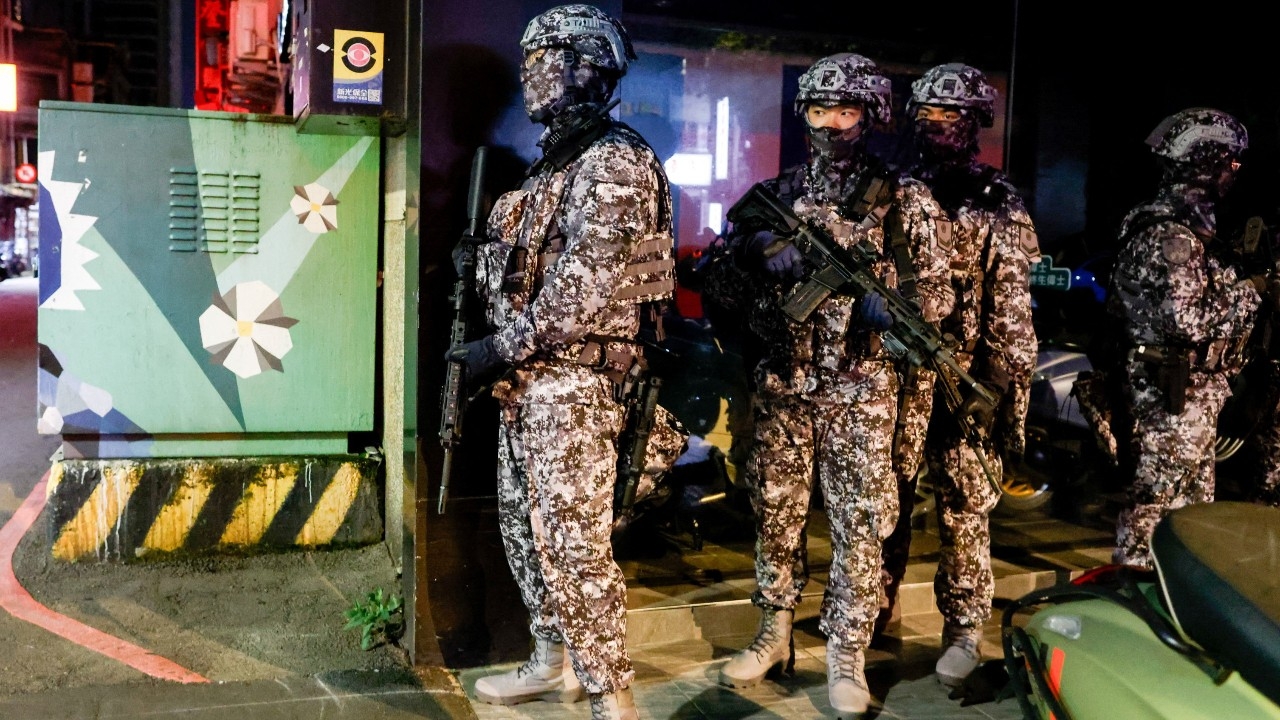
Taiwan slowed mobile internet speeds for 30 minutes during the annual "Han Kuang" military exercises, escalating a large-scale civil defense drill simulating a Chinese attack on the island. Measures included the first-ever mobile internet speed restrictions, road closures for civilian sheltering, and converting hospital underground areas into emergency medical units, while the military practiced responding to potential Chinese naval blockades.
Millions of people in Taiwan halted activities and took shelter indoors when air raid sirens sounded across Taipei at 14:30 local time on 13 Aug. The government also tested a 30-minute mobile internet speed reduction to simulate the impact if China targeted the island’s communication infrastructure.
This drill is part of the annual 10-day "Han Kuang" military exercises ending on Friday, aimed at preparing Taiwan’s military, reserves, and its population of about 23 million to respond to a potential Chinese attack or invasion.
China claims Taiwan as part of its territory and has not ruled out using force to seize the island, while Taiwan’s democratically elected government rejects China’s sovereignty claims.
During the civil defense drill, when sirens sounded, police ordered people off the streets into shelters such as underground parking lots, metro stations, shopping centers, and office buildings. Normally busy Taipei streets fell noticeably quiet, with cars and buses parked along the roadside.
A new measure this year was the first-ever mobile internet speed restriction, which significantly slowed video calls, live streaming, and food delivery apps for 30 minutes. However, wired internet and Wi-Fi networks were unaffected.
Ben Lewis, an analyst at PLATracker, said the drill likely did not simulate a total internet outage but was important to let people experience potential communication disruptions and to test the resilience of civilian communication and internet systems during crises.
In addition to air raid shelter drills, Taiwan simulated hospital operations in wartime by converting an underground parking garage near Taipei into an emergency medical facility.
Gary Chen, a 39-year-old hospital staff member participating as a simulated critical care patient, said acting out the scenario helped him understand and prepare for future emergencies.
Lily Ku, a 30-year-old critical care nurse, said staff are learning how to move patient beds to basement levels and adapt services to wartime conditions, where resources are far more limited than usual.
Before the afternoon drill, Taiwan’s President Tsai Ing-wen visited the underground parking area at a New Taipei hospital converted into an emergency ward and inspected a supermarket to review emergency supply allocations.
Also accompanying President Tsai were senior diplomats from several countries stationed in Taiwan, including de facto diplomatic representatives from the United States, Israel, and Canada. Taiwan is closely studying Israel’s civil defense system.
President Tsai said Taiwan is not facing regional geopolitical changes alone but is cooperating with an international community that shares concerns and joint efforts to handle the situation.
Meanwhile, military exercises continue. On Wednesday, Taiwan’s military conducted naval blockade drills using navy warships and coast guard vessels to simulate escorting merchant ships through potentially blockaded waters.
The navy and coast guard worked together to protect merchant vessels, while mine-sweeping ships cleared safe passage before guiding simulated ships to Taiwan’s eastern ports. The coast guard said this was its first joint exercise with the navy against maritime blockades.
Taiwan has long feared China may impose maritime blockades to restrict supplies and pressure Taiwan into surrendering. In June, China increased patrols called "law enforcement patrols" off Taiwan’s east coast, angering Taipei and raising concerns among the US and some Western countries.
This year’s Han Kuang exercises cover air attack responses, protecting communication infrastructure, wartime casualty care, and countering maritime blockades, reflecting Taiwan’s efforts to prepare both military and civilian sectors for potential security crises with China.
/Reuters/ AFP