

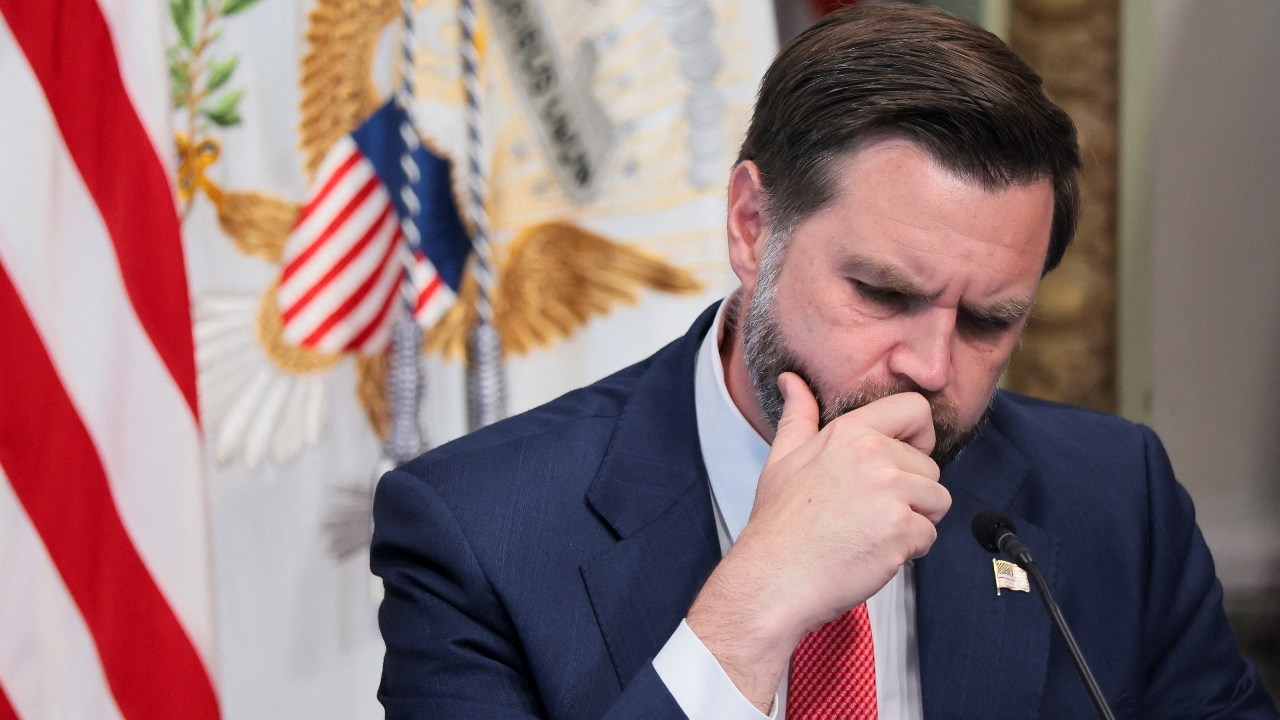
U.S. Vice President J.D. Vance stated that the United States' most important current goal in the conflict with Iran is to lower oil and gasoline prices for Americans, while preventing Iran from obtaining nuclear weapons—which was previously the main reason for entering the war—has become a secondary objective.
U.S. Vice President J.D. Vance revealed that the United States' highest priority in the war with Iran is no longer focused primarily on Iran's nuclear program, but rather on reducing oil and gasoline prices to ease the burden on American consumers.
Vance told Fox News that oil prices have dropped from their peak at the start of the conflict, and keeping oil and natural gas prices low for Americans nationwide is the "number one goal," while the second goal is to ensure Iran never acquires nuclear weapons.
This statement reflects Iran's significantly increased bargaining power after it managed to block navigation through the Strait of Hormuz, a crucial route for transporting oil and fuel out of the Middle East.
Before President Donald Trump launched the war alongside Israel in late February, the Strait of Hormuz remained open for normal shipping. But after Iran responded by nearly closing the route, Tehran gained a major bargaining chip, while the Trump administration sought ways to end the war and avoid renewed large-scale military strikes.
Vance, a senior U.S. official known for his cautious stance on war with Iran, added that at times the U.S. has prioritized energy issues so Americans can cope with fuel prices, while at other times focusing on military matters and Iran's nuclear program.
Meanwhile, U.S. Treasury Secretary Scott Bessent signaled that the U.S. government plans to increase economic pressure on Iran, stating that Iran could be pushed into an economic isolation "the world has never seen before," with new measures expected to be announced next week.
This stance comes just days after Trump indicated that an agreement to reopen the Strait of Hormuz was near, but now the U.S. government appears inclined to continue economic pressure, hoping that economic hardship will force Iran to back down.
Trump said last week that the U.S. government is cautiously negotiating with Iran, monitoring rising inflation and Iran's funding shortages, while using economic pressure as a key tool.
At the same time, reports indicate that the U.S. military has used large quantities of expensive weaponry, including advanced missiles and other arms, worth several billion dollars since the war began. Now some weapon stocks are reportedly depleting, which may limit Trump's options if he wants to launch another major strike against Iran.
The situation also creates domestic political pressure on Trump, as his approval ratings have dropped significantly, the war is unpopular among Americans, and the U.S. midterm elections are approaching in November. Republicans worry that the war and rising oil prices could cost the party control of Congress.
Previously, Trump stated he would delay new attacks on Iran only if a quick agreement could be reached to reopen the Strait of Hormuz. However, Iran has set several conditions for reopening the route that the Trump administration is unlikely to accept.
Iran's conditions include ending all wars, lifting the U.S. blockade on Iranian ports, ending sanctions, releasing frozen Iranian assets, and compensating for war damages.
These conditions align with a preliminary agreement or memorandum of understanding both sides reached in June, which collapsed after new fighting erupted. The agreement also proposed establishing a $300 billion fund to rebuild Iran.
Consequently, the Strait of Hormuz has become an increasingly central point of conflict, while the U.S. government must balance pressuring Iran to retreat, preventing Iran from developing nuclear weapons, and controlling energy prices that directly affect Americans.
/sourceAFP