

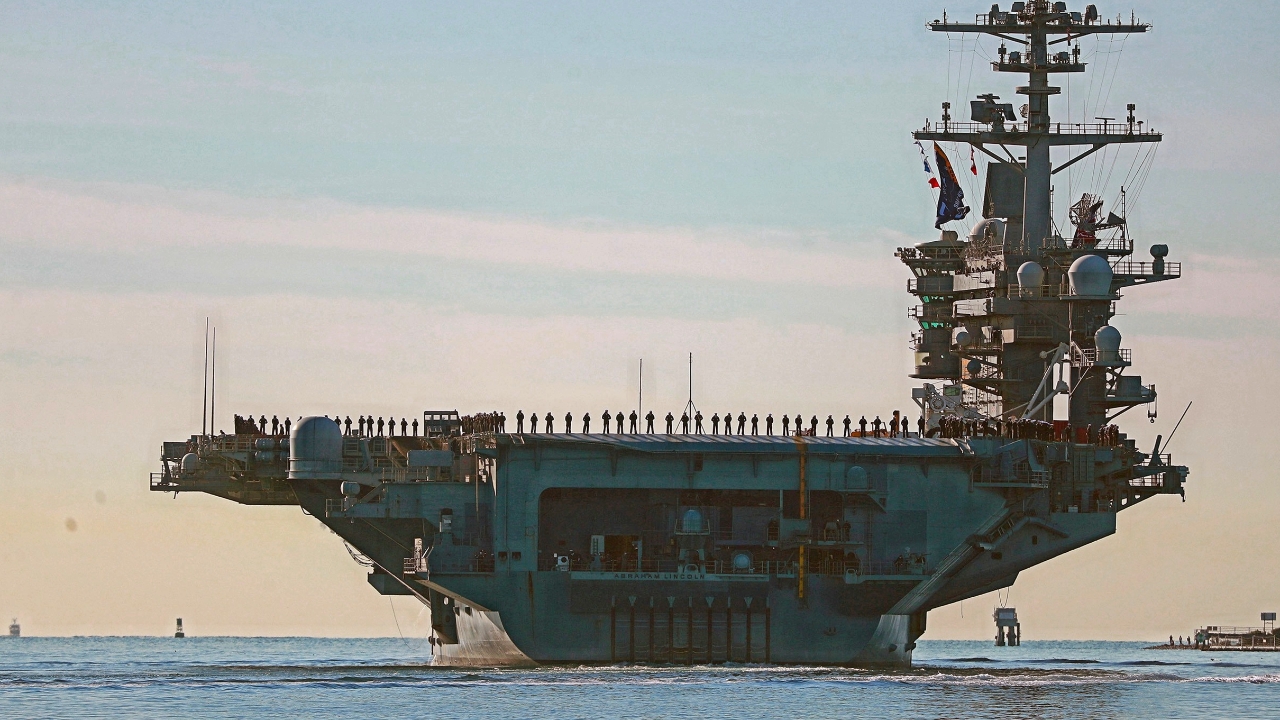
U.S. Congress members have called for an urgent Pentagon investigation after reports emerged that about 5,000 crew members aboard the aircraft carrier USS Abraham Lincoln are facing shortages of food and essential supplies, malfunctioning plumbing, no hot water, poor hygiene, and accumulated fatigue leading to mental health issues. Several crew members reportedly attempted to jump overboard to end their lives after the ship has been deployed at sea for over 250 consecutive days while the Iran conflict continues.
The U.S. Navy's military operations face heavy pressure as approximately 5,000 sailors and marines aboard the aircraft carrier USS Abraham Lincoln endure severe hardships after their deployment at sea was extended beyond 250 days, approaching nine months. This extension results from combat missions in the Middle East and the Iran war.
Reports from military media and families of the crew reveal severely deteriorated living conditions aboard the ship, including shortages of soap, toothpaste, and deodorant. Sanitation systems have failed, toilets are broken, showers are moldy, and laundry systems have been inoperable for weeks, preventing crew from washing clothes for over a week. Fresh food shortages stem from lack of port stops, with some meals reduced to half a cup of rice and two tortilla sheets. The postal system is disrupted, causing family parcels to be lost for months during transit. A relative of a crew member told the media that their family member lost up to 29 kilograms since deployment began.
Beyond physical difficulties, mental health issues have reached critical levels due to combat stress, heavy workloads, and continuous noise and vibrations from engines and jet aircraft 24/7. Military news outlets and local media report several crew members have attempted to jump overboard to end their lives. Earlier in August, one crew member fell from the ship but was rescued by helicopter and has since been medically evacuated for treatment. An investigation is ongoing.
This situation prompted U.S. lawmakers to demand Pentagon accountability. Democratic Senator Richard Blumenthal of Connecticut sent a letter to Secretary of Defense Pete Hegseth urging inquiry into the troops' welfare and questioning whether the Navy can sustain such a demanding mission. Democratic Senator Ruben Gallego called for congressional representatives to be granted immediate access to inspect the ship and investigate the facts.
U.S. Secretary of Defense Pete Hegseth denied the allegations, stating that reports about onboard conditions are "completely distorted from reality." He affirmed that the Pentagon fully supports the ship and its crew with necessary resources. Government spokespeople reiterated commitment to supplying military equipment. U.S. Navy officials added there has been no increase in suicide trends on the ship and emphasized that basic supply systems—such as clean water, air conditioning, and nutritious food—remain functional. They acknowledged that military supply routes are affected by combat, requiring prioritization of military provisions first, followed by hygiene items and mail.
Experts from the Center for Naval Analyses note that strike groups are normally designed for about six-month deployments to safeguard crew welfare. Extending missions beyond this limit in combat zones not only causes fatigue and mental health problems among personnel but also harms operational readiness and long-term ship maintenance. A similar case occurred with the USS Gerald R. Ford, which operated at sea for 326 consecutive days.
The USS Abraham Lincoln departed California in November 2025 before being redirected to the Middle East for operations against Iran. Latest reports indicate the U.S. Navy plans to deploy the USS George Washington as a relief ship, expected to ease the crew and their families' crisis soon.