

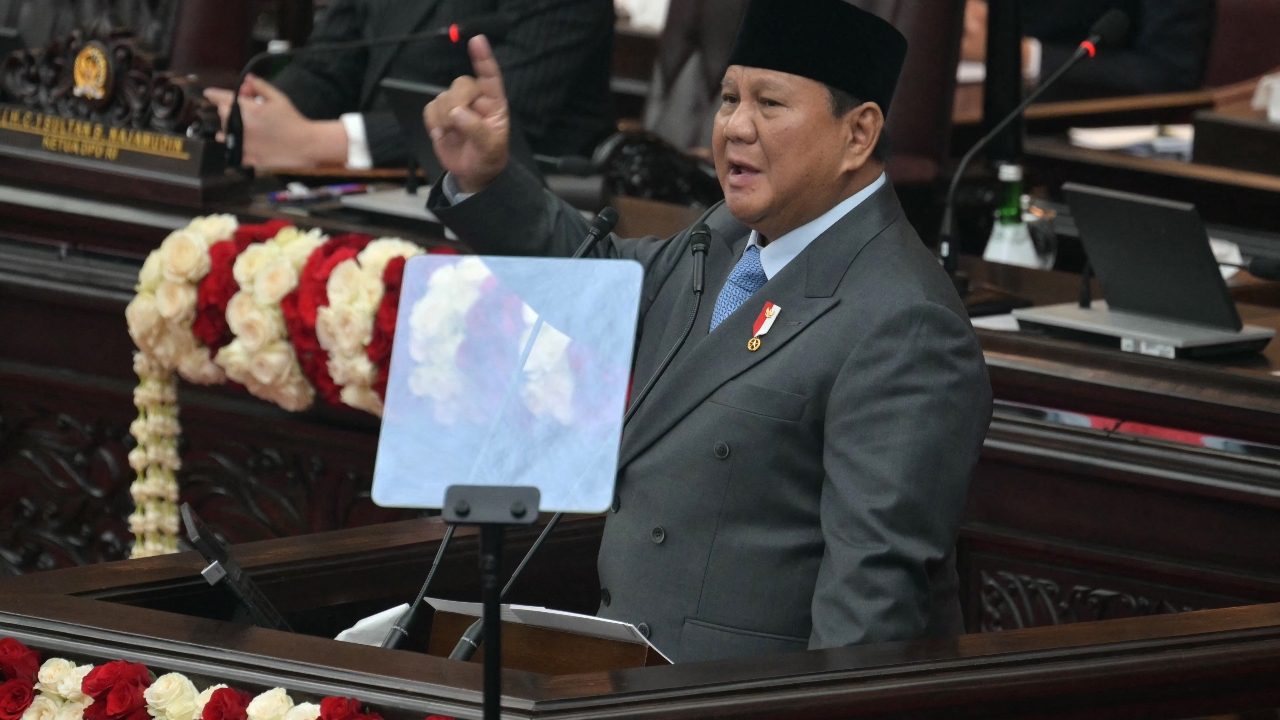
Indonesian President Prabowo Subianto announced plans to close more than 750 state-owned enterprises by 31 December after discovering the country has as many as 1,074 SOEs, many of which are inefficient or report false profits. He also proposed establishing a special court to review management over several decades, while the government aims to cut expenses and retain only enterprises that create public value.
President Prabowo Subianto stated that the government will proceed with a major SOE restructuring, aiming to shut down over 750 enterprises by the end of 2026 and reduce the total number of operating SOEs to no more than 300, down from 1,074 identified.
During his annual policy speech to the Indonesian parliament, Prabowo said many SOEs lack efficiency, and some report profits while actually incurring losses. He explained that some profit figures are fabricated to give the appearance of good performance, saying, "There are too many inefficient SOEs that consistently report losses but claim profits, and those profits are created."
Prabowo noted that the establishment last year of the Danantara National Wealth Fund to manage state assets revealed that Indonesia has as many as 1,074 SOEs.
"I used to think there were 300 or 400 SOEs, but it turns out there are 1,074," Prabowo said, adding that some SOEs operate arbitrarily without accountability to the nation or the state.
So far, the government has closed 290 SOEs and aims to reduce the number to no more than 300 by 31 December. "We will close more than 750 enterprises and retain only those that are efficient and add value to the public," the Indonesian president said, describing this restructuring as potentially "the largest business sector restructuring in the world."
Prabowo stated the reforms have already saved about 50 trillion rupiah (over 93 billion baht) in operating costs, including salaries for directors and commissioners, building and vehicle rentals, and business travel expenses.
He added that improving management systems and SOE efficiency has increased SOE profits by more than 75% from 2024 to 326 trillion rupiah last year.
However, corruption remains a significant issue in Indonesia, Southeast Asia's largest economy, despite the government enacting stricter anti-corruption laws, forming special investigative committees, and prosecuting several high-ranking officials.
Prabowo also proposed creating a "special ad hoc court" to audit SOE management and boards retrospectively for up to 30 years. He called on parliament to consider "special amnesty" measures for those who admit guilt and repent, allowing involved parties to enter the process of investigation and damage repair.
This move comes as Indonesia continues to face corruption challenges, scoring only 34 out of 100 on Transparency International's 2025 Corruption Perceptions Index, amid public dissatisfaction over rising living costs driven by surging oil prices linked to the Middle East conflict.
Corruption has become a key demand among protesters expressing frustration over higher living costs, while Indonesia and neighboring countries are affected by oil price increases resulting from the Middle East war.
One of the most criticized programs is the free school meals initiative, a flagship policy of President Prabowo's government. The president affirmed the program will continue but requires improvement and greater operational efficiency, emphasizing that the government cannot accept that one in four Indonesian children suffer from stunted growth or malnutrition.
Amid global economic uncertainties, Prabowo confirmed that Indonesia maintains food and energy security and expressed confidence that the economy will grow by 6% by the end of 2026.
Indonesia's gross domestic product (GDP) grew by 5.3% in the second quarter of this year, following 5.6% growth in the first quarter. However, analysts continue to question the government's official economic growth figures periodically.
Prabowo said the government's goal is not merely to produce growth statistics or attract investment but to ensure economic benefits reach the people genuinely. "Growth and investment are not the ultimate goals; our goal is the wealth and well-being of the people," he emphasized.
He stressed that every rupiah invested must create jobs and improve living standards, especially for the poorest segments of the population.
The major SOE closure and consolidation plan is a key government measure to control costs, reduce redundancies, and eliminate inefficient enterprises. It also serves as a crucial test of whether the government can improve governance and reduce corruption in the state business sector.
. AFP