

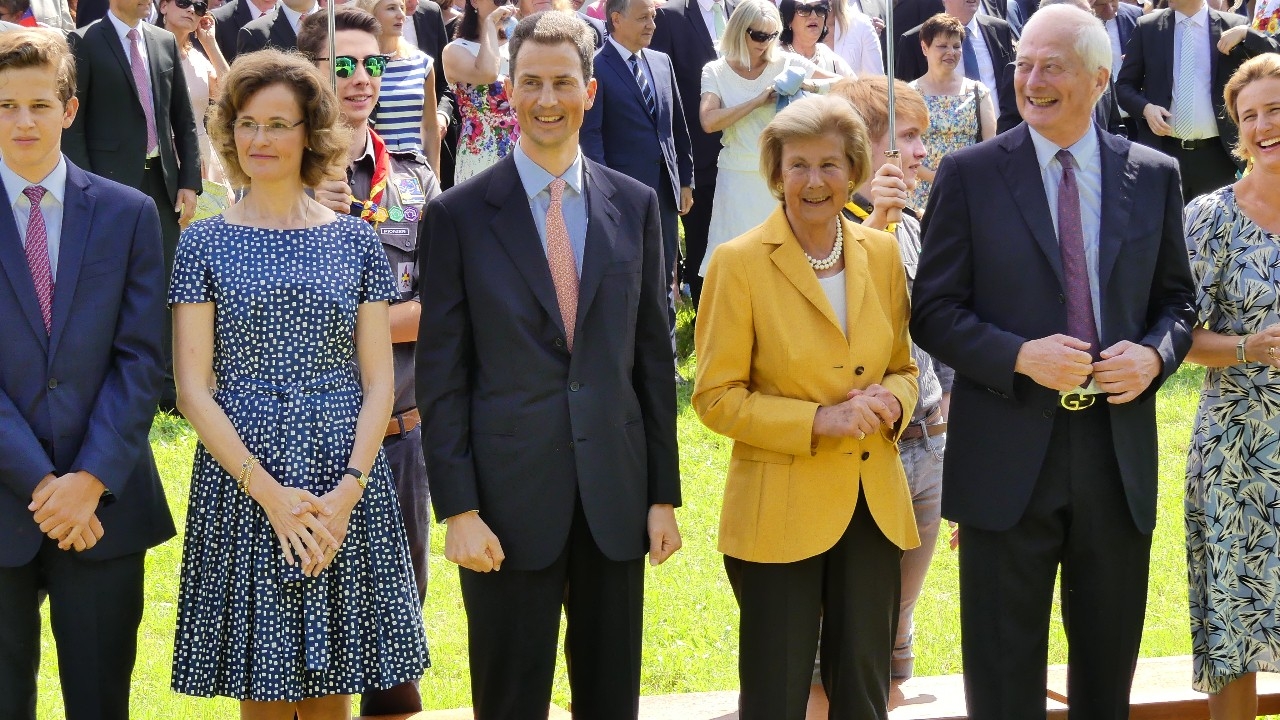
The Liechtenstein royal family has announced a change to the royal succession rules, shifting from a system favoring male heirs first to one where the eldest child, whether male or female, will inherit the throne in the future. This marks a significant change for the small Central European country whose monarchy still holds substantial political power.
The Liechtenstein royal family announced a change to succession rules, opening the path for women to ascend the throne in the future. The announcement came on Saturday, 15 August, coinciding with Liechtenstein's national day. Liechtenstein is a small Central European country with a population of approximately 40,000 to 44,000, located between Switzerland and Austria.
Crown Prince Alois of Liechtenstein announced the change in a speech on national day, stating that royal family members with voting rights approved the change with at least two-thirds majority on the previous Wednesday.
The Liechtenstein royal family stated that the new rule changes from "primogeniture preference for the eldest son" to "primogeniture regardless of gender," meaning that in the future, the firstborn son or daughter will immediately become the first in line to the throne.
Crown Prince Alois said the change aims to ensure that both the Principality of Liechtenstein and the royal family are led by the individual best prepared for the responsibilities involved. He added that blending continuity with modernization has long been a guiding principle for the royal family.
However, the rule change will not affect the current line of succession; it will only apply to the next generation of descendants of Crown Prince Alois and Princess Sophie, his wife.
Currently, Prince Hans-Adam II is the head of state and head of the Liechtenstein royal family, having reigned since 1989. However, he has delegated most royal duties to his eldest son, Crown Prince Alois, since 1994, following the royal tradition of passing responsibilities to the heir before officially transferring the throne.
Crown Prince Alois, aged 58, has carried out most official royal duties for about two decades and remains the current heir apparent. Therefore, the rule change does not alter the near-term succession order.
The eldest son of Crown Prince Alois is Prince Joseph Wenzel, aged 31, while the second child is Princess Marie-Caroline, aged 29. The new rule will affect heirs born after this point in the next generation.
Liechtenstein is the only landlocked country in Europe surrounded entirely by other landlocked countries. It is a small territory situated between Switzerland and Austria. Despite its size, the royal family wields more political power than most European monarchies.
The Prince of Liechtenstein has the authority to veto referendum results, appoint judges, and dismiss the government, making the monarchy's political role highly prominent.
Allowing women to inherit the throne marks a significant shift for a traditionally conservative country. Liechtenstein only granted women national voting rights in 1984, becoming the last European country to do so after male voters narrowly approved the change in a referendum.
Politically, Liechtenstein made history last year when Birgit Has was appointed the country's first female prime minister.
This recent change in royal succession rules reflects the Liechtenstein royal family's effort to align the system more closely with gender equality principles, while maintaining the continuity of the monarchy and the country's governing system.