

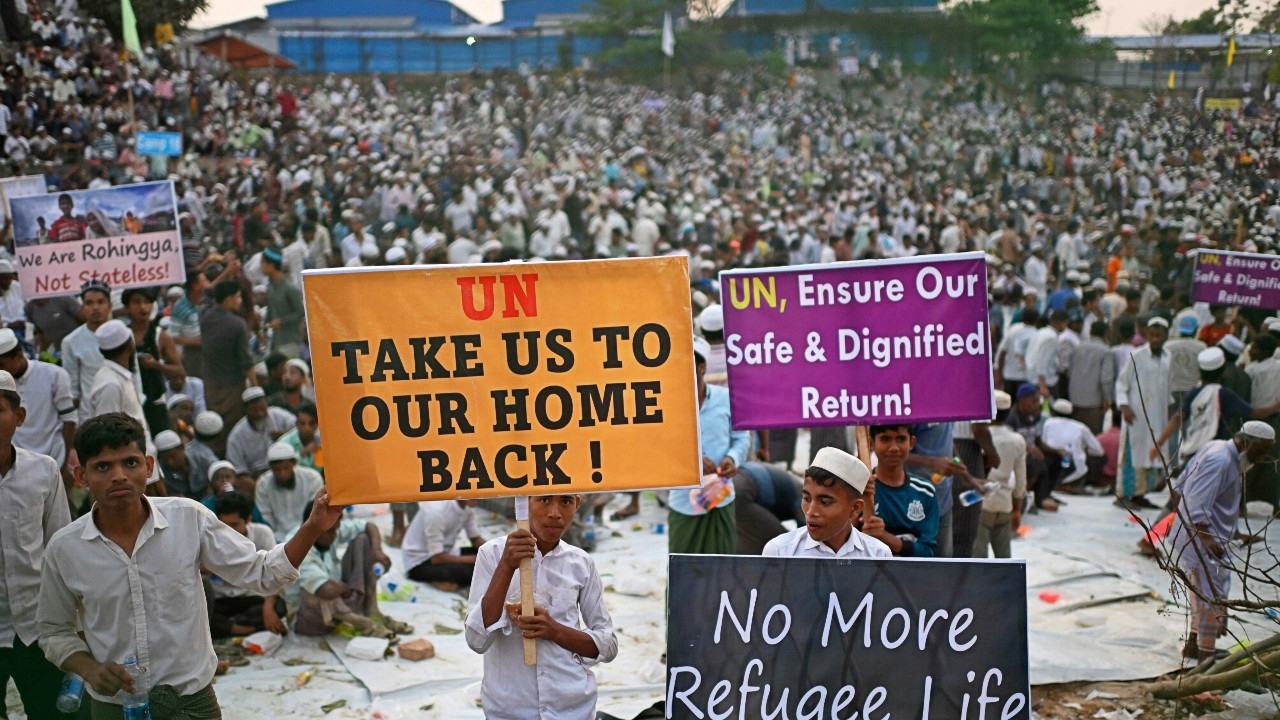
The Myanmar government, supported by the military, confirms that nearly 309,000 Rohingya refugees in Bangladesh camps are former residents of Rakhine State. It states that repatriation can only proceed once the security situation in Rakhine improves, as the area is currently experiencing intense clashes between government forces and the Arakan Army. Meanwhile, the Rohingya refugee crisis is entering its ninth year.
Myanmar's Ministry of Foreign Affairs disclosed that as of 31 Jul 2026 GMT+7, it had verified the identities of 426,545 displaced persons referred by Bangladesh out of a total 828,824 individuals, finding that 308,797 were former residents of Rakhine State in the country's west, an area with a large Rohingya population.
Myanmar stated that 113,507 individuals remain unverified, while another 4,241 have been identified as linked to activities the government labels as "terrorism."
The Ministry of Foreign Affairs confirmed it will continue cooperating with Bangladesh to repatriate verified refugees, but emphasized that returns will only happen once security conditions in Rakhine State stabilize.
Currently, Rakhine State remains a battleground between Myanmar's military and the Arakan Army, an ethnic armed group seeking greater autonomy, which has seized most of Rakhine from the military in recent years.
The major Rohingya refugee crisis began in August 2017 after Myanmar's military launched a crackdown in Rakhine following attacks by Rohingya armed groups on security posts. This led over 700,000 Rohingya to flee across the border into Bangladesh, according to United Nations data, settling in large refugee camps.
This operation has been internationally condemned, including by the UN, as ethnic cleansing and genocide. Myanmar continues to deny recognizing the Rohingya as an official ethnic group under national law, often referring to them as "Bengalis," implying they are immigrants from Bangladesh.
Myanmar and Bangladesh previously agreed on a two-year repatriation process in 2018, but no returns occurred amid security concerns. The situation worsened after Myanmar's military coup in 2021, sparking armed resistance and nationwide conflict.
The intensified fighting between Myanmar's military and the Arakan Army since 2023 has forced some Rohingya to flee Rakhine again, with many entering Bangladesh or attempting to reach other countries for safety.
Meanwhile, difficult conditions in refugee camps, reduced international aid, and lack of security guarantees for returnees have led many Rohingya to attempt dangerous sea journeys to Malaysia and Indonesia on unsafe boats.
In late July, Malaysian Prime Minister Anwar Ibrahim revealed that Myanmar agreed to accept about 5,000 Rohingya living in Malaysia back under a repatriation scheme. However, Myanmar's Ministry of Foreign Affairs denied this report, stating the program discussed focuses solely on verified Myanmar nationals detained in Malaysian detention centers, not Rohingya refugees.
Myanmar also emphasized that Rohingya repatriation is a bilateral issue with Bangladesh, noting that despite preparations for returns in 2018 and 2019, no refugees have actually returned to Myanmar.
This situation leaves the future of hundreds of thousands of Rohingya in Bangladesh uncertain, with safe and voluntary repatriation dependent on ending conflict and restoring stability in Rakhine State.
. SourceReuters/Associated Press