

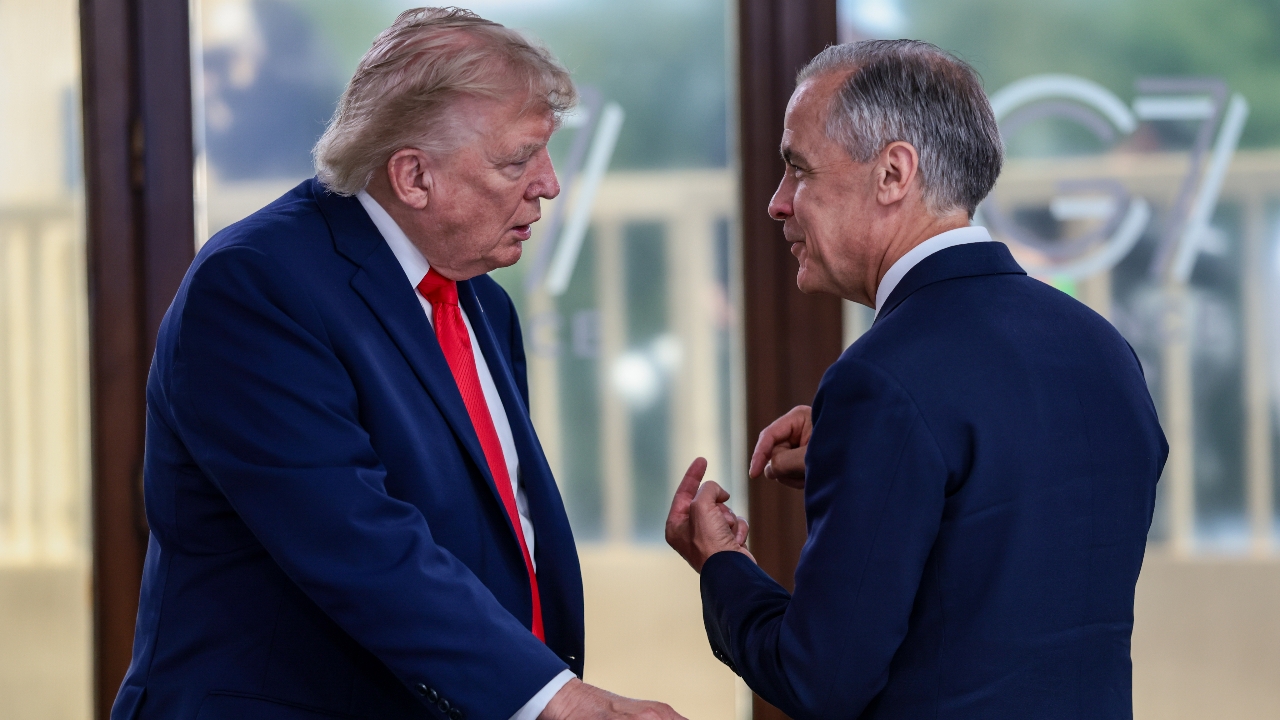
President Donald Trump announced a 3-day delay in enforcing a 50% tariff on imports from Canada after the U.S. and Canada accelerated trade agreement talks in the final stretch. Prime Minister Mark Carney stated that both sides have made significant progress, although many issues remain to be negotiated.
U.S. President Donald Trump announced the postponement of a 50% import tariff on many Canadian goods by 3 days from the originally scheduled Wednesday morning implementation, citing that the U.S. and Canada are close to reaching a trade agreement and are finalizing the paperwork.
Trump stated via the Truth Social platform that the U.S. agreed to delay the 50% tariff on Canadian goods until the end of 21 August, while Canadian Prime Minister Mark Carney confirmed substantial progress in negotiations but stressed important work remains.
The tariff covers nearly $20 billion worth of Canadian goods, approximately 28 billion Canadian dollars, including hockey sticks, tongue depressors, clothing, wine, dairy products, cement, and sporting equipment. This would add to existing U.S. tariffs on Canadian steel, aluminum, cars, and lumber.
The delay came after Trump and Carney held two phone calls in the past two days, while trade teams from both countries have been engaged in intense negotiations since July. Key issues include U.S. auto tariffs and several Canadian provinces' bans on U.S. alcohol sales.
Reports indicate the U.S. is considering reducing auto import tariffs from Canada from 25% to 15%, but both sides have yet to agree on which vehicle types would qualify for the reduced rate, with the U.S. seeking to limit it to cars with a high percentage of American-made parts.
Canada wants the U.S. to eliminate or reduce tariffs in key sectors, while the U.S. demands Canada lift retaliatory tariffs on American cars, adjust dairy import quotas to allow more U.S. cheese producers access, and repeal bans on U.S. alcohol sales imposed by several Canadian provinces in response to Trump’s tariffs.
Trump also mentioned that the new trade deal could pave the way to revive the Keystone XL pipeline project, which would connect Alberta, Canada, with the U.S. and transport about 830,000 barrels of oil per day. The project faced opposition from environmental and Indigenous groups and was canceled during Barack Obama’s administration, with the Biden administration reaffirming its cancellation.
Trade tensions between the U.S. and Canada have escalated since Trump returned to the White House, as he pushed for widespread tariff hikes globally, affecting the long-standing free trade system between the two countries.
Canada heavily depends on the U.S. market, with nearly 72% of Canadian exports last year going to the U.S., while the U.S. faces risks from the new tariffs since American importers bear the tax burden and may pass increased costs to consumers through higher prices.
The U.S. Chamber of Commerce urged both sides to quickly reach an agreement, warning that higher tariffs would damage both economies, raise living costs for American households, disrupt supply chains, and threaten about 13 million U.S. jobs reliant on the United States-Mexico-Canada Agreement (USMCA).
Trump is relying on Section 338 of the 1930 U.S. Tariff Act as the legal basis to threaten tariffs up to 50% on certain Canadian goods. This provision, never before used, authorizes the president to impose tariffs on countries accused of discriminating against U.S. businesses without requiring prior investigation.
Meanwhile, the U.S. and Canada are reviewing the USMCA, North America's key trade framework. The threat to use Section 338 serves as a critical tool for the Trump administration to pressure Canada into accepting additional conditions in the negotiations.
This latest tariff delay provides both sides with an additional 3 days to intensify efforts to reach a resolution before the 50% tariff could be reinstated. Businesses in both countries are closely monitoring the talks, concerned that ongoing trade disputes could impact prices, supply chains, and the overall economies of both nations.