

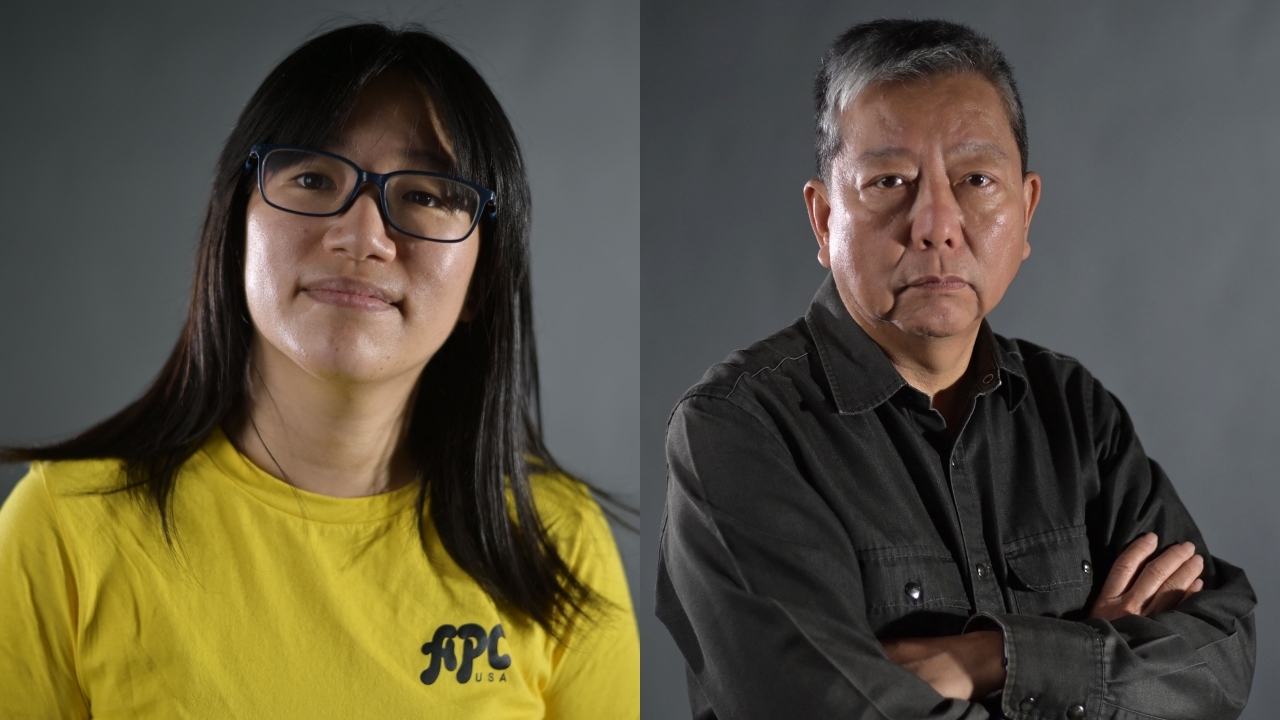
A Hong Kong court ruled that 69-year-old Li Zhuoyan and 41-year-old Zhou Hangdong, activists who organized commemorations of the 1989 Tiananmen Square bloodshed, are guilty of "inciting subversion of state power" under the national security law imposed by China in Hong Kong. The law carries a maximum penalty of 10 years in prison, with sentencing to be determined later.
A three-judge panel stated that both individuals "incited others to organize, plan, carry out, or participate in unlawful activities aimed at overthrowing state power" and found their actions amounted to "subverting or undermining the fundamental system" as outlined in China's constitution.
Li and Zhou have faced charges of subversion since 2021 and have been detained in prison under the national security law enforced by the Chinese government in Hong Kong. During the reading of the verdict, both remained silent in the defendants' dock.
They were former leaders of the Hong Kong Alliance in Support of Patriotic Democratic Movements of China, now disbanded, which was a key group organizing annual candlelight vigils for the Tiananmen incident at Victoria Park in Hong Kong.
Previously, Hong Kong and Macau were among the few places within Chinese territory where the public could hold events commemorating the victims of the June 4, 1989, incident, when Chinese troops and tanks suppressed pro-democracy protesters in Beijing's Tiananmen Square.
The Hong Kong Alliance was established in May 1989 to support student-led pro-democracy protests before the Chinese Communist Party deployed forces to disperse the demonstrations in Beijing weeks later. Death toll estimates from the crackdown vary from several hundred to several thousand.
For more than 30 years, the Hong Kong Alliance has called on the Chinese government to acknowledge responsibility for the incident, release political dissidents, and pursue democratic reforms.
However, Tiananmen remembrance events in Hong Kong have been banned since 2020, with authorities citing COVID-19 control measures as justification for prohibiting gatherings. The events have not resumed since. That same year, Hong Kong's national security law came into force, broadly criminalizing expressions or acts perceived as threats to the state.
Prosecutors argued that Li and Zhou's speeches and statements over the years were not merely personal opinions but intended to incite others to commit illegal acts. They accused the two of "endangering national security under the guise of human rights" and emphasized that freedom of expression and assembly "are not absolute rights without limitations."
Albert Ho, a 74-year-old former Hong Kong legislator and the third defendant in the case, pleaded guilty in January, a plea that often results in a reduced sentence.
Human Rights Watch stated that this verdict reflects how expressions of mourning for the deceased are increasingly criminalized in Hong Kong.
Elaine Pearson, the Asia director of Human Rights Watch, said these activists reveal the Chinese government's fear of remembrance of its own brutal actions, viewing such memorials as threats to national security.
Before the verdict, Zhou wrote in a blog post: "Justice lies in the hearts of the people; there is no need to respect judgments handed down from above, and a single ruling is not of great significance."
Zhou also described her detention conditions, saying prison authorities changed her transport procedures from just handcuffs to being restrained with handcuffs, leg shackles, waist chains, and leg chains before being escorted by officers in metal chains.
The case has been widely criticized as another example of the erosion of freedom of expression in Hong Kong.
Urania Chew, a law lecturer at Oxford Brookes University, said the case sends a harsh message and instills fear within civil society that peaceful criticism of the government and state policies is no longer tolerated in Hong Kong.
Amnesty International stated the case relies on vague and overly broad definitions of "subversion," allowing arbitrary law enforcement. They called for the immediate and unconditional release of Zhou and Li, labeling them "prisoners of conscience" who should never have been prosecuted.
Zhou was previously arrested in June 2021 for "inciting" people to participate in the Tiananmen remembrance that year and was initially convicted. However, Hong Kong's Court of Final Appeal overturned the conviction in 2022, with a judge ruling the police lacked sufficient justification to ban the event.
Before her arrest, Zhou told reporters she was prepared to be detained because "this is the reality of Hong Kong now" and affirmed her acceptance of the consequences for fighting for democracy.
Hong Kong's national security law has been criticized by opposition figures and human rights groups for diminishing freedoms and autonomy in the city and creating a climate of fear. Authorities maintain the law is necessary to preserve the city's security and stability.
The law defines several offenses, including secession, subversion of state power, terrorism, and collusion with foreign or external forces or organizations.
. . .BBC/ AFP