

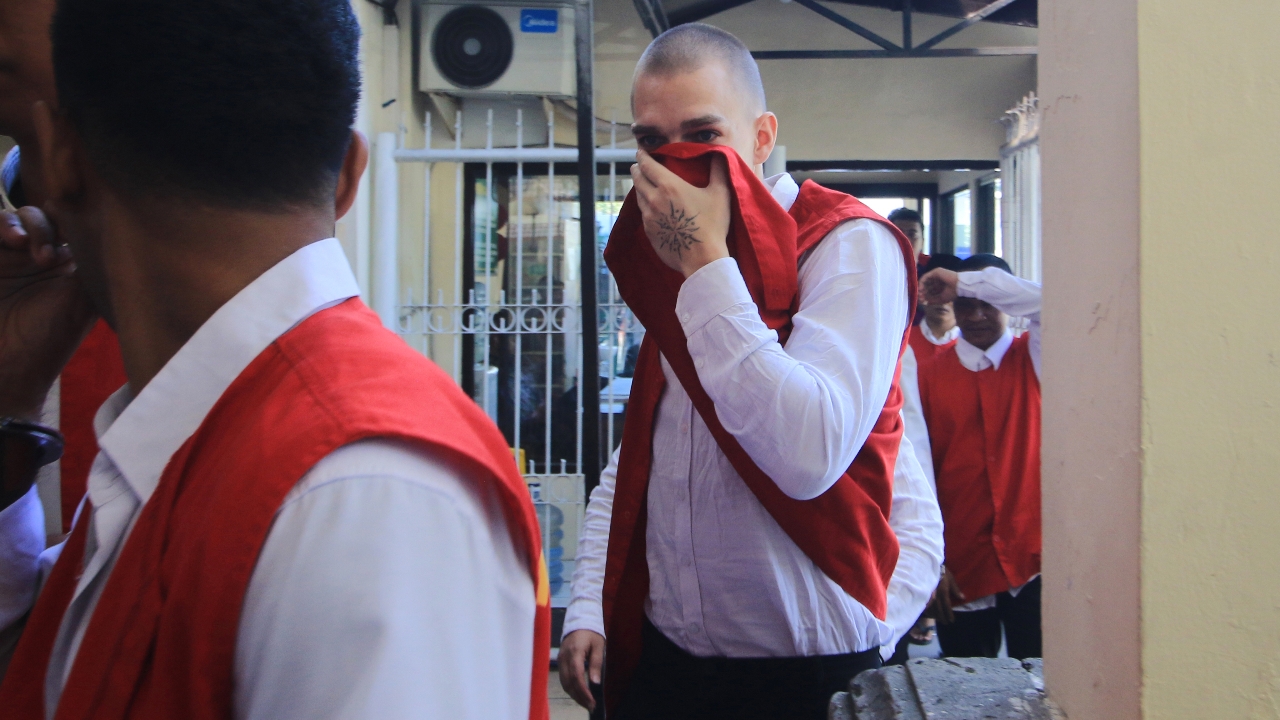
Indonesia's Bali District Court sentenced a Swiss tourist to one year in prison after he posted a video while leaving his accommodation for the beach during "Nyepi" or the Day of Silence, a significant Hindu religious day for Balinese people, using vulgar language that caused widespread public displeasure. The tourist admitted guilt and apologized, claiming he did not fully understand the restrictions of this important day.
The Denpasar District Court in Bali, Indonesia, sentenced Lucien Andrin Schrekken, a 26-year-old Swiss tourist, to one year in prison after finding him guilty of violating restrictions during "Nyepi," the Day of Silence, a major Hindu religious observance in Bali.
This case arose after Schrekken posted a video on Instagram on Nyepi, 19 March, showing himself walking from his lodging to an empty beach, captioning the situation as "completely crazy" and including vulgar language in the post's text, before the clip was later deleted.
The video sparked widespread outrage among Balinese people on social media, as it was seen as disrespectful to local religious traditions and beliefs. Authorities subsequently tracked him down and arrested him in March near a popular tourist area close to Kuta Beach.
Presiding judge Jokorda Putra Budi Pastima stated the defendant’s actions upset the Balinese community, harmed their faith, and caused social dissatisfaction, emphasizing that he must be held accountable for his conduct.
The court noted that Schrekken violated Indonesia’s revised criminal code by posting content on social media about the religious holiday, despite prior warnings from villa staff about Nyepi restrictions.
Nyepi marks the New Year in the Balinese Hindu Saka calendar and is one of the island’s most important days. During this time, normally bustling Bali becomes unusually quiet, with residents staying indoors, refraining from noise and entertainment, and focusing on meditation and self-reflection.
These restrictions apply to everyone on the island, regardless of religion or nationality, including foreign tourists. Residents typically prepare food and necessities in advance to remain indoors throughout the day.
On Nyepi, Bali's international airport closes, internet access is suspended, entertainment activities are strictly limited, and campaigns encourage reduced electricity use. Streets and beaches, usually crowded with tourists, are empty except for officials ensuring compliance with the Day of Silence rules.
Local media reported that Schrekken posted a clip showing him violating the stay-at-home order, appearing to challenge the restrictions. In the video, he smiles at the camera, says he is going to the beach, and uses inappropriate language calling the tradition "crazy."
During his trial, which began in June, Schrekken asserted he did not intend to insult Hinduism or Balinese people and did not fully understand the strictness of Nyepi’s restrictions.
He claimed he was hungry and frustrated because he could not go out for food, as the island was under lockdown measures restricting movement during the Day of Silence. In court, Schrekken expressed, “I deeply regret my actions and apologize to the Balinese people.”
Previously, both foreign and Indonesian tourists have been detained or expelled for violating Nyepi restrictions, especially for leaving their lodgings without emergency reasons. However, most past cases were resolved administratively without court prosecution.
This verdict comes as Bali faces challenges from a rapid rise in foreign tourists following the recovery of the tourism industry after the COVID-19 pandemic. Last year, Bali welcomed a record approximately seven million international visitors.
However, the influx of tourists has led to issues with inappropriate behavior by some foreigners, including acts perceived as disrespecting sacred sites, traffic law violations, and behavior impacting local lifestyles and culture.
Bali authorities have announced plans to strengthen monitoring and regulation of tourists and to crack down on foreigners exhibiting inappropriate behavior to preserve the island’s peace and cultural identity.
/sourceBBC/swissinfo.ch