

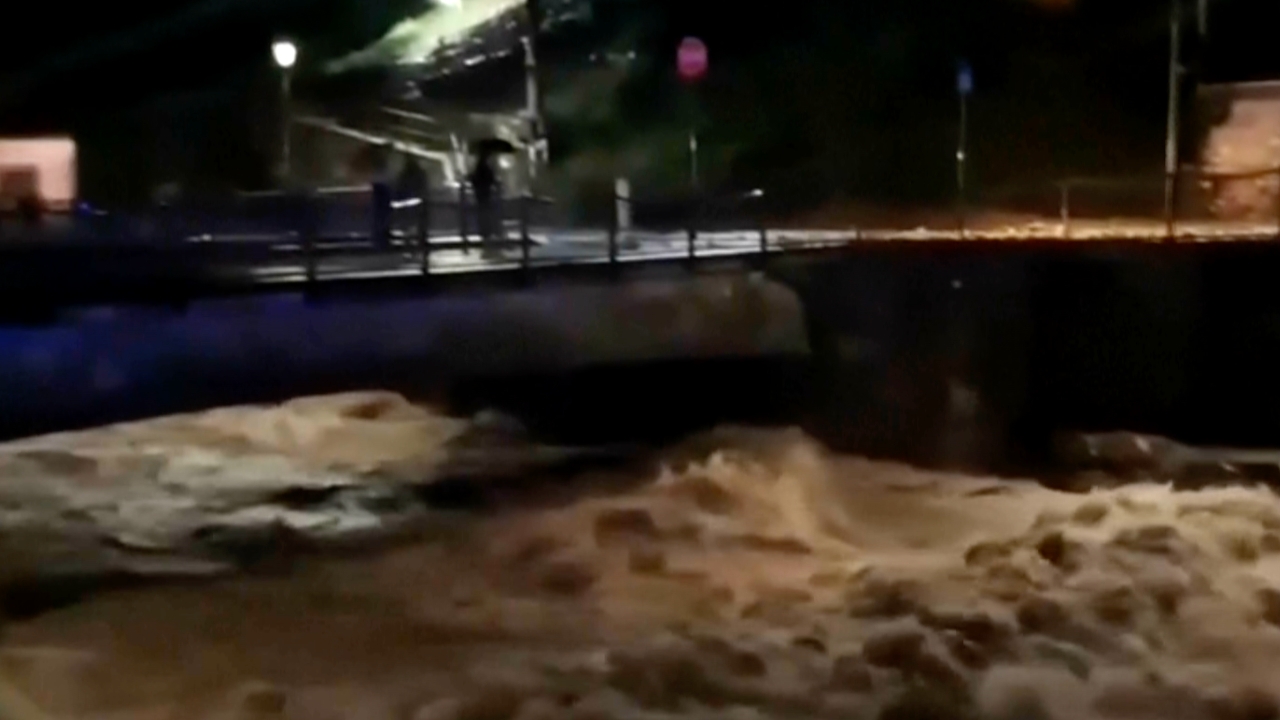
Italy is experiencing severe weather after thunderstorms swept across the northern part of the country, resulting in heavy rainfall, flooding, landslides, and damage to infrastructure in multiple areas.
Italian firefighters reported responding to around 1,000 emergency operations across northern and parts of central Italy. Lombardy alone accounted for more than 400 missions, Piedmont over 260, Tuscany more than 200, and Liguria over 160. Most incidents involved flooding, landslides, fallen trees, and damage to buildings and infrastructure.
One of the hardest-hit areas is Rino di Sonico in Brescia province, Lombardy, where two landslides caused the collapse of the bridge over the Val Rabbia stream, despite the bridge having been closed to traffic previously for safety reasons.
Authorities evacuated a total of 81 people—57 on the Rino di Sonico side and 24 on the Garda side—with no injuries reported from the incidents so far.
In the lower Sonico area, the Oglio River overflowed, flooding parts of the Malonno community. Firefighters deployed special teams and heavy machinery to try to control and contain the water's spread.
The situation in Bergamo province is also severe, with six towns—Valleve, Carona, Foppolo, Branzi, Valbondione, and Gandellino—cut off from surrounding areas due to landslides, flash floods, and fallen trees blocking roads.
Officials said around 350 people were evacuated from these areas, including about 200 campers at a site at risk from landslides and rising stream levels. In Valleve, three people, including two children, were evacuated after their home was isolated by a landslide.
Beyond Lombardy, other northern and central Italian regions were also heavily affected. Piedmont reported flooding and roof damage, especially in the provinces of Turin, Novara, and Vercelli. Tuscany experienced flooding and fallen trees in various areas, including Florence, Pisa, Lucca, and Pistoia.
Liguria region saw heavy rains causing floods in many areas. Previously, the town of Chiavari recorded rainfall of up to 126 millimeters, turning many roads into waterways and prompting authorities to raise flood warnings in some locations.
Firefighters continue to closely monitor the situation, particularly in landslide- and flood-prone areas, as heavy rains have rapidly raised water levels in rivers and streams.
This event follows several weeks of intense heat in Italy before unstable air masses moved over the north, triggering thunderstorms, heavy rain, hail, and strong winds. Meanwhile, central and southern regions remain hot, with some areas reaching temperatures as high as 36 degrees Celsius.
Source:Reuters
Click to read more related newsInternational news