

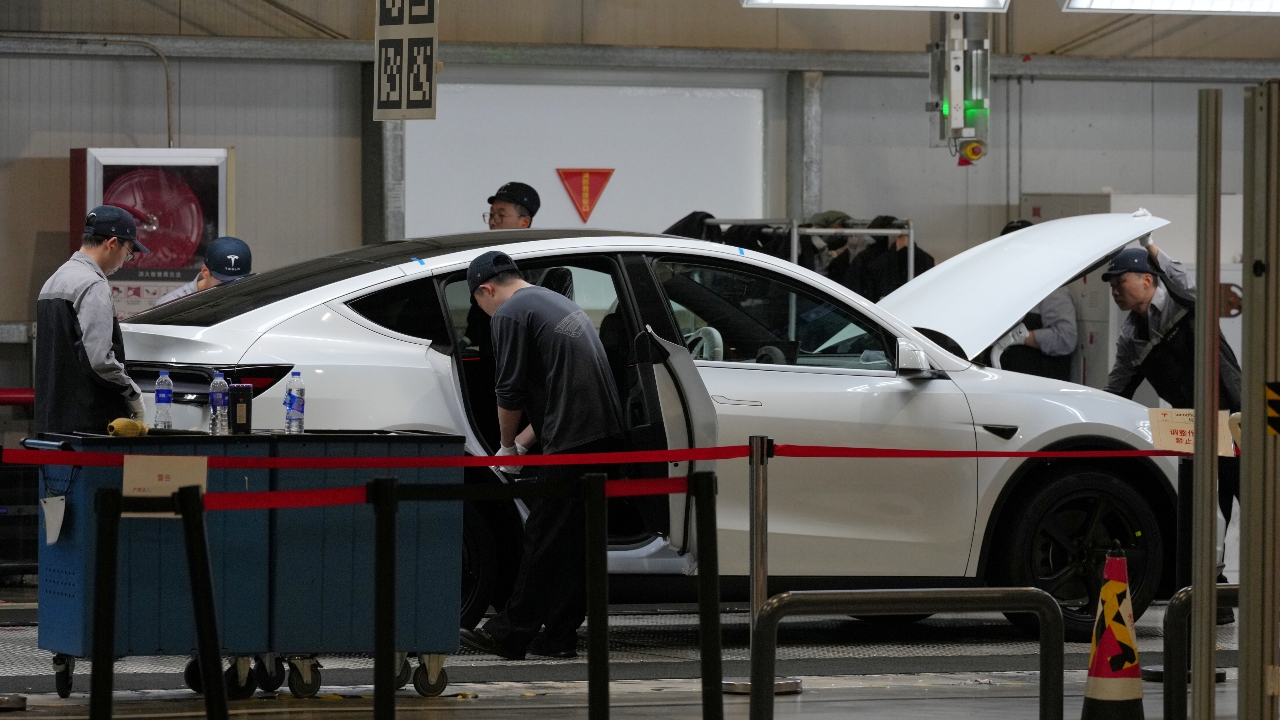
Tesla and eight other automakers are recalling about 4.3 million vehicles in China after regulators identified risks with emergency door-opening systems, marking the largest recall in China's history. They are recalling about 4.3 million vehicles in China after regulators found risks with emergency door-opening systems, making this the largest recall in China's history.
Tesla and eight major Chinese automakers announced a recall of approximately 4.3 million vehicles in China following government concerns that passengers might not be able to quickly open car doors in case of accidents or electrical system failures. China plans to ban the use of hidden door handles from 2027.
This recall includes electric and domestically produced vehicles from Tesla, Xiaomi, Leapmotor, Xpeng, and Geely. Measures include installing warning labels near door handles and remote over-the-air (OTA) software updates.
Tesla is the company recalling the most vehicles in this action, about 2.98 million units, including both imported and China-made models: Model 3, Model Y, Model S, and Model X.
Tesla’s recall will begin on 25 September, according to information submitted to China’s State Administration for Market Regulation (SAMR).
Regulators said the mechanical emergency door handles may be difficult to locate or operate after severe accidents, especially if the vehicle’s electrical systems are damaged, potentially preventing passengers from escaping or rescuers from accessing trapped occupants.
To address this, Tesla will install warning labels to indicate the emergency door handle location and push OTA software updates so windows will automatically lower after a collision.
Besides Tesla, several Chinese electric vehicle manufacturers have announced significant recalls: Xiaomi plans to recall about 390,000 units, Leapmotor around 371,000, and Xpeng about 264,000 vehicles.
Other companies that have submitted recall requests to Chinese regulators have smaller numbers of affected vehicles.
Leapmotor stated its fix includes installing warning labels and upgrading software controlling the electric windows, carrying out the recall as part of their responsibility to users.
This large recall comes as China tightens oversight of its electric vehicle industry amid fierce price competition and rapid adoption of new technologies, raising concerns about the safety of electronic and software systems.
Hidden door handles have drawn special attention after several incidents where passengers were trapped inside burning vehicles.
Last October, Chinese state media reported the death of a Xiaomi SU7 driver after a crash and fire, where rescuers were unable to open the car door to save him.
This incident increased scrutiny of emergency door-opening systems in electric vehicles, especially those with hidden door handles, which are very popular in new car models.
In addition to this massive recall, China has announced it will ban hidden door handles starting in 2027, making it the first country to phase out this design.
Hidden door handles became widely popularized by Tesla and have since been adopted by many Chinese electric vehicle manufacturers because they provide a modern look, reduce air resistance, and suit contemporary car designs.
However, these systems typically rely on remote keys, smartphones, or touch panels to open, with mechanical emergency handles concealed inside the cabin, raising concerns that passengers or rescuers might not find them in emergencies.
This issue is not limited to China; last month, the U.S. National Highway Traffic Safety Administration (NHTSA) said it is considering new safety standards to address risks that passengers could become trapped inside vehicles if electrical systems fail.
However, NHTSA stated on Friday that automakers have not notified the agency of any similar recall plans in the U.S. market.
Experts believe that although this recall covers a huge number of vehicles, the cost to manufacturers may not be very high because modern vehicles can resolve many issues through remote software updates, reducing both expenses and service center time.
This large recall in China highlights how technology and electronic system safety are becoming critical concerns in the electric vehicle industry, especially as newer models increasingly depend on software and electrical systems.
Source:channelnewsasia
Click to read news aboutInternational news