

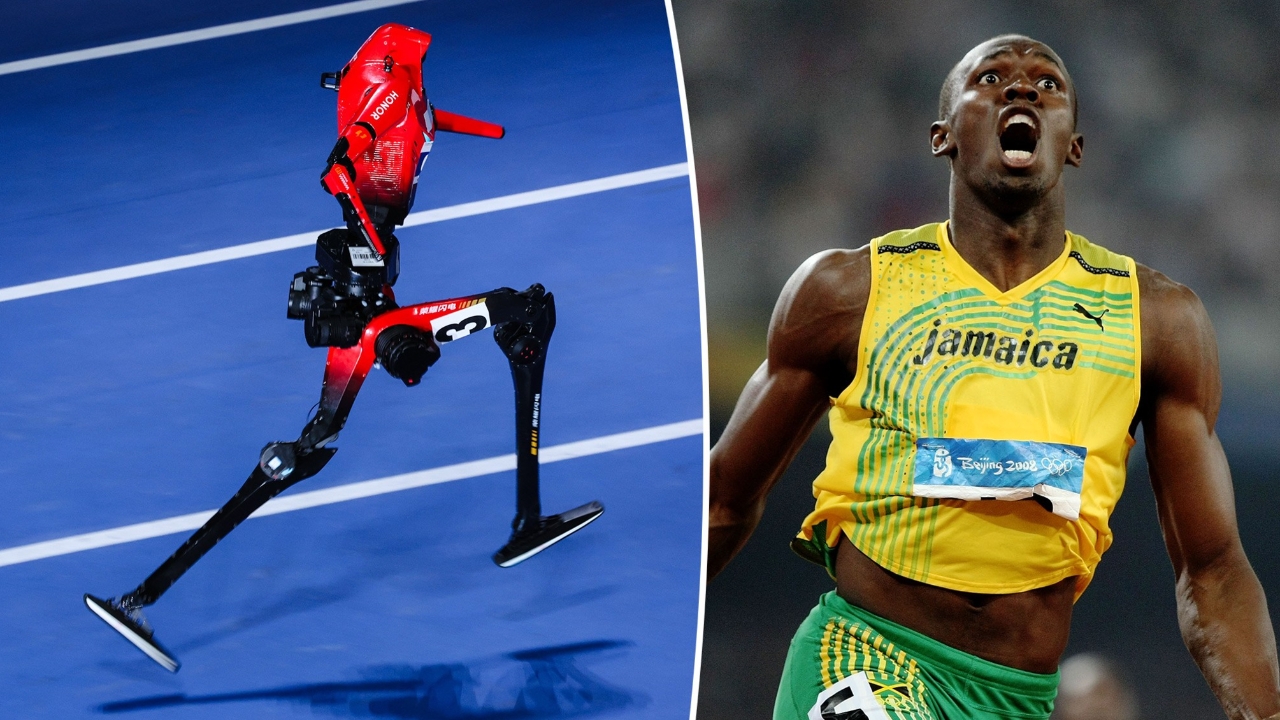
A Chinese humanoid robot made headlines on the opening day of the World Humanoid Robot Games in Beijing by running 100 meters in 9.39 seconds, faster than the human world record set by Usain Bolt at 9.58 seconds. Meanwhile, another robot broke the human standing high jump record, reflecting rapid advances in Chinese robotics technology amid technological competition with the U.S.
The second annual World Humanoid Robot Games kicked off in Beijing on Saturday (22 Aug) with over 2,000 humanoid robots participating from 16 countries, including Germany, Japan, and the U.S. The five-day competition features 51 events and over 1,000 sub-events covering athletics, weightlifting, tug of war, table tennis, and soccer.
The highlight was the 100-meter race, where the humanoid robot "Tianjiao" from Beijing-based company X-Humanoid recorded a time of 9.39 seconds, beating the world record of 9.58 seconds set by Jamaican sprinter Usain Bolt in 2009.
X-Humanoid's robot also excelled in the standing high jump with a height of 2.88 meters, shattering the previous humanoid robot record of 0.95 meters set at last year’s competition and surpassing the human world record of 2.45 meters set by Cuban athlete Javier Sotomayor in 1993.
However, before the official competition, Chinese smartphone maker Honor revealed its humanoid robot had clocked 9.32 seconds in a 100-meter test run with a top speed of 14.5 meters per second, faster than the time recorded on the competition’s opening day.
The event took place at Beijing’s National Speed Skating Oval, built for the 2022 Winter Olympics, during the same week as the 2026 World Robot Conference in Beijing, where companies showcased about 3,000 robotic products, including humanoid robots.
China's robotics development is drawing international attention as it produces most of the world’s humanoid robots. Meanwhile, the U.S. has increased scrutiny of Chinese technology. Last month, the U.S. Federal Communications Commission (FCC) banned imports of new foreign-made humanoid robots, citing national security concerns, widely seen as targeting China.
Additionally, the U.S. Department of Defense added Unitree, a major Chinese humanoid robot maker, to a list of companies linked to the Chinese military, a claim China denies.
Despite rapid progress in robot capabilities, experts warn that most humanoid robots are currently used primarily for demonstration, performance, and research, and it will take time before they are widely deployed in practical applications.
Many spectators expressed excitement about the robot developments. Beijing resident Li Yanfeng said she was initially skeptical about artificial intelligence, fearing it might replace humans, but decided to watch the competition after realizing the technology's unstoppable progress.
Event organizers said this year’s competition showcases China’s advanced robotics potential amid intensifying technological rivalry with the U.S.
/sourceAssociated Press