

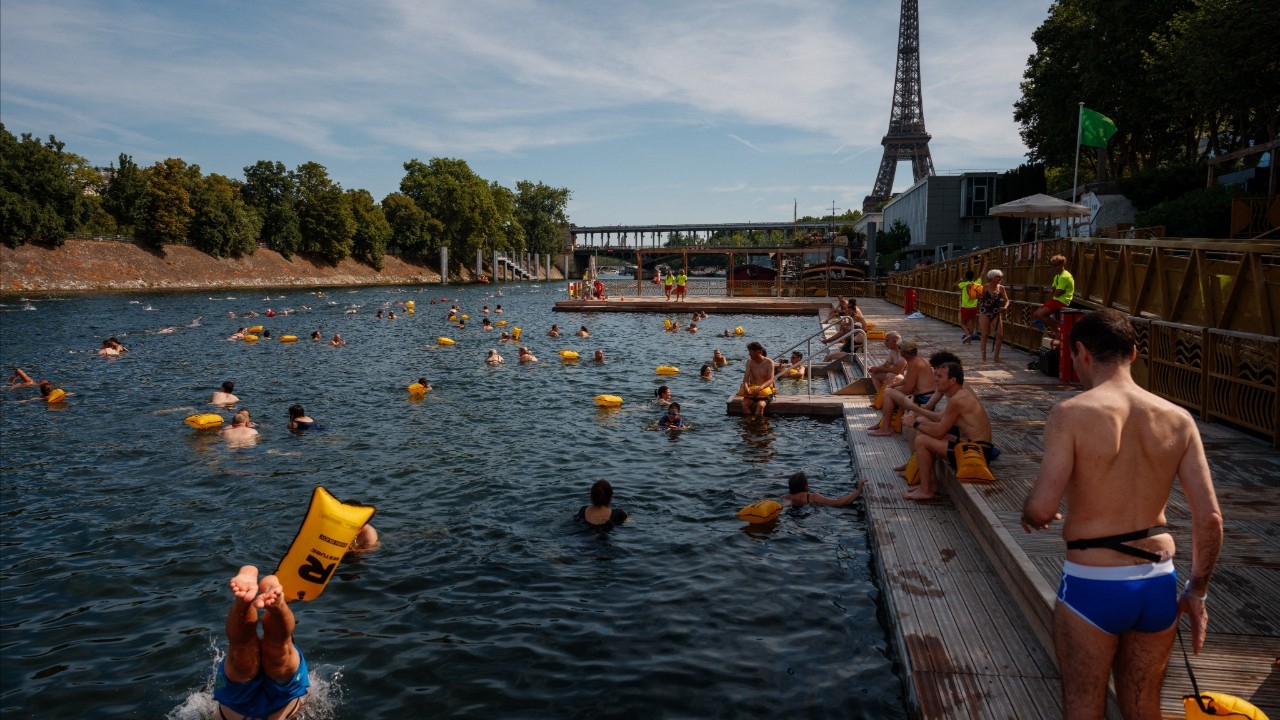
The French minister revealed that the number of drowning deaths in the country has risen to over 300, caused by increased water activities as people try to cope with severe heat waves.
On Sunday, 23 Aug 2026 GMT+7, the French minister announced that their country has recorded 301 drowning deaths since 19 June, linking the sharp rise compared to last year to the prolonged heat wave conditions.
Marina Ferrari, Minister of Sports and Youth, told France Inter radio that this figure, which represents a 14% increase over 2025, is a "tragic loss."
France, Spain, and Italy have all faced intense and prolonged heat waves, resulting in massive wildfires that have destroyed thousands of hectares of forest land.
Ferrari stated that the heat has led people to take risks by swimming, adding, "Many fatal accidents occur in unauthorized areas or places without safety personnel." Additionally, there have been numerous drownings in "natural water sources such as various canals."
The Sports Minister also said the government is working with local authorities "to improve swimming areas and enhance safety measures."
She also warned that "many drownings, especially among the elderly, occur in private pools, and sudden cold-water immersion during extreme heat can cause body shock. In some cases, people may overestimate their physical limits."
Climate change is driving global temperatures higher, especially in Europe. According to the Copernicus Climate Change Service, Europe is the fastest-warming continent, experiencing temperature increases twice the global average.
During the June heat wave, the Golfech nuclear power plant in southern France had to temporarily shut down because the Garonne River’s water temperature rose above 28 degrees Celsius, exceeding the French legal limit for reactor cooling water.
Additionally, some landmarks, such as the Eiffel Tower, decided to close earlier than usual due to the extreme heat in Paris.
The dry weather also contributed to widespread wildfires across France. The Gironde department around Bordeaux in the southwest was the hardest hit, forcing over 200,000 residents to evacuate their homes in late July.
Follow international news:https://www.thairath.co.th/news/foreign
Source:bbc