

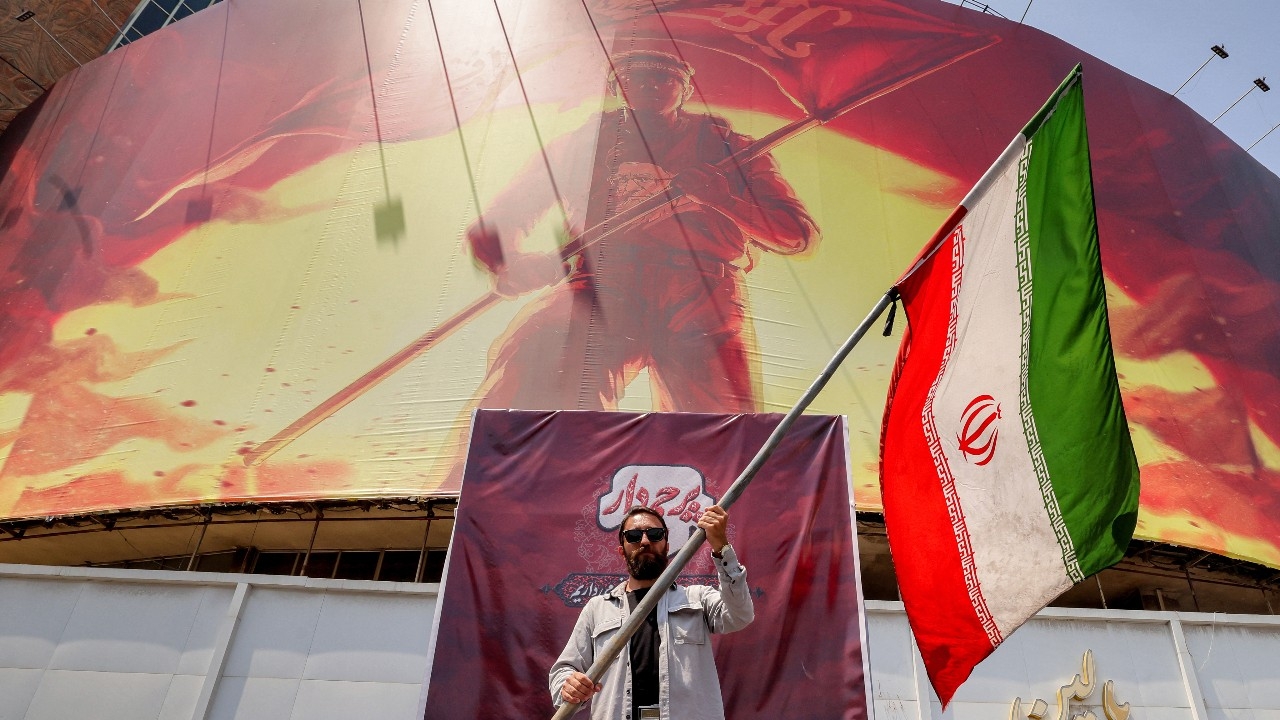
The United States is preparing to announce new sanctions against Iran and its trading partners supporting Iran's economy. The US Treasury Secretary calls this operation "Economic D-Day," representing the largest financial attack ever used against Iran, while Iran threatens to block all oil exports from the Persian Gulf if the economic war continues.
The US is set to launch a major economic sanctions package targeting Iran and countries and sectors still trading or linked to Iran's economic and financial systems, while Tehran declares readiness to respond by suspending all oil exports from the Persian Gulf if economic pressures persist.
US Treasury Secretary Scott Bessent stated in an article published in the Financial Times that this measure will be "Economic D-Day"—the largest financial attack ever deployed against an adversary. He is scheduled to announce details of the new sanctions today (24 Aug).
Bessent indicated that the sanctions will not only target Iran but also countries he perceives as "yielding" and maintaining trade and financial relations with Tehran, warning those nations to consider the consequences of supporting Iran's economy.
Mohsen Rezaei, Secretary of Iran's Supreme National Security Council, declared that if the economic war continues, Iran will not export a single drop of oil, whether through the Strait of Hormuz or elsewhere in the Persian Gulf, warning that any country participating in or supporting US economic pressure measures will be regarded as declaring war.
Meanwhile, Iranian Deputy Foreign Minister Qasem Garibabadi challenged US claims that it can destroy Iran's military capabilities and nuclear program, questioning why, if the US had succeeded in doing so, it would still need to mobilize all its agencies and powers to launch "the largest financial attack in history."
The renewed tensions erupted after war between the US, Israel, and Iran flared on 28 February following major airstrikes by the US and Israel against Iran, to which Iran responded by attacking various targets across the region.
Although a ceasefire on 8 April ended nearly 40 days of heavy attacks, the Strait of Hormuz, a vital global energy transport route, remains a major point of conflict. Iran continues to control this passage, while the US seeks to reopen the route to restore oil and gas shipments.
Iran insists it will not open the Strait of Hormuz until the US lifts its naval blockade of Iranian ports, ends oil sanctions, and releases Iranian assets frozen abroad.
The US has also called on other countries, especially China, to join in pressuring and further isolating Iran economically. Bessent has urged China to cooperate because it heavily depends on oil from the Persian Gulf region.
However, China has stated that sanctions and pressure cannot solve the problem and has called for diplomatic approaches instead.
At the same time, Iran is already under severe economic pressure from longstanding international sanctions dating back to the Islamic Revolution in 1979. Prior to the war, Iran faced high inflation, weak currency, energy shortages, and structural economic problems.
The war has worsened the situation by damaging infrastructure, disrupting trade, causing production losses, and imposing huge recovery costs. Iranian officials warn that additional sanctions could increase public hardship, trigger internal unrest, and undermine the government's legitimacy.
Pakistan, Qatar, and Turkey are attempting to act as intermediaries to promote negotiations, with Iran stating that General Asim Munir, Pakistan's Army Chief, will visit Tehran on Monday to discuss the situation and efforts to restore peace and security in the region.
Iranian Foreign Minister Abbas Arakchi affirmed that Iran's relations with China have become deeper and more systematic amid US efforts to pressure China and others to reduce economic ties with Tehran.
The US confirms it will continue its "maximum pressure" policy on Iran after President Donald Trump announced unprecedented levels of economic pressure, while Iran insists that sanctions and threats will not force it to change its stance.
/Reuters/AFP