

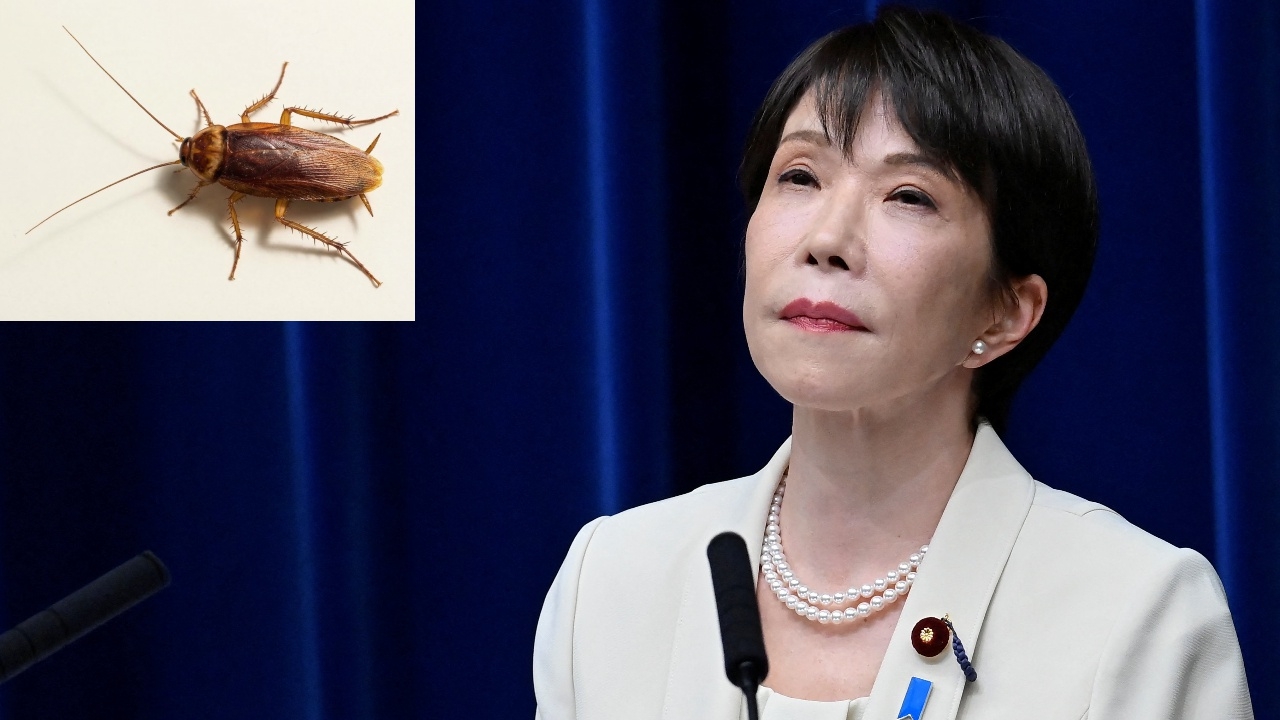
Japanese Prime Minister Sanae Takaichi shared a personal story on social media about working life in the official residence. She admitted never seeing the legendary ghosts but encountering cockroaches scurrying by. Due to beliefs in reincarnation, she refrained from killing them and let them coexist for a while until her secretarial team could no longer tolerate it and launched a removal operation. She confessed feeling "strangely lonely and sad" after their removal.
The 65-year-old Takaichi recounted this on her X account on 22 Aug in response to frequent questions about the nearly 100-year-old official residence, which has a legend of ghost sightings due to two bloody coup attempts there in the 1930s.
She said she never saw ghosts but once screamed upon spotting a cockroach. After moving in, she maintained strict cleanliness—wiping under the dining table, tightly covering trash bins, and washing and sorting plastic containers. Yet one day, a cockroach ran past her foot, startling her greatly.
Takaichi admitted she could not kill the cockroach, citing her childhood fondness for Osamu Tezuka's "Phoenix" manga, which deals with reincarnation. This idea led her to think the cockroach was part of a "long cycle of reincarnation," so she let it live in the residence for a while, hoping it would leave on its own.
However, when her secretary learned about it, she was alarmed and said, "It's unclean, I'll handle it," before proceeding to exterminate the cockroach in what Takaichi jokingly called a "combat operation."
Afterward, she saw no more cockroaches, but Takaichi said that although relieved, she felt “lonely, or perhaps a bit sad,” a phrase that caught the attention of her social media followers.
This cockroach story came alongside Takaichi’s explanation for spending most of her time at the official residence, after reports noted she often stayed there overnight, on weekends, and public holidays instead of working at the Prime Minister’s Office.
Takaichi said she deliberately uses the residence more as a workplace because its proximity to the office saves travel time and allows her to start work immediately in emergencies.
She also improved internal work systems at the residence to hold both in-person and remote meetings with staff and to review documents after office hours, stating that for her, the official residence "is also a workplace."
She added that working from the residence reduces the number of staff and special security police (SP) required on site and lessens the workload on personnel during working days.
Takaichi is known for her hard work, previously revealing on social media that after taking office, she sometimes slept less than three hours a night, rejoicing when she managed five hours of sleep one night in July.
However, this work style has drawn criticism that excessive work and little rest may send the wrong message about work-life balance and raise gender equality concerns.
Meanwhile, reports indicate declining approval ratings for Takaichi and her government amid criticism of policies, including those on Japan's imperial succession and measures addressing rising living costs.
The official residence, which Takaichi uses as both home and workplace, remains a political focus, while a small matter like a "single cockroach" reveals another side of the Japanese leader, who usually projects a serious, hardworking image.
/sourceX/The Telegraph/PEOPLE