

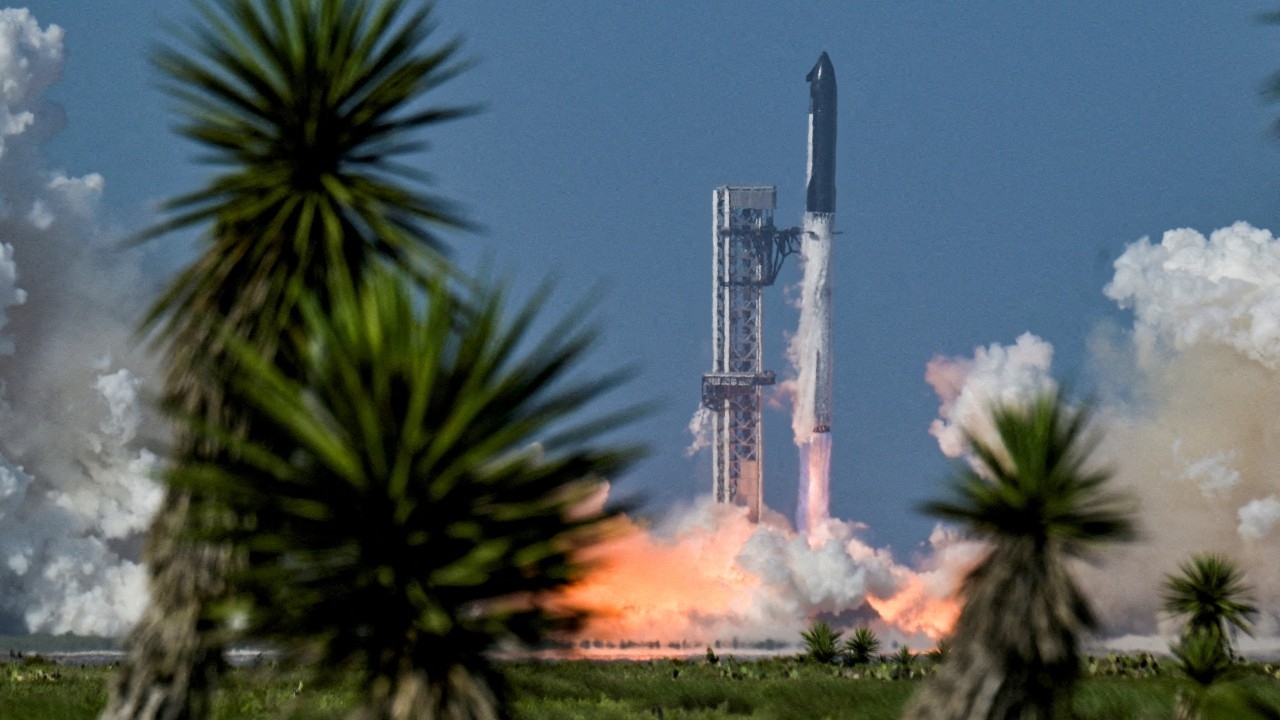
SpaceX, Elon Musk’s leading space technology company, together with Louisiana state officials, announced plans to invest a massive $100 billion (approximately 3.2 trillion baht) to build the company’s largest space launch center, named "Starbase Louisiana." This facility will support thousands of Starship rocket launches annually for missions to Earth orbit, the Moon, and Mars.
The "Starbase Louisiana" project is scheduled to begin construction in 2027 on about 125,000 acres (approximately 312,500 rai) along the southern coast of Louisiana in Vermilion Parish, roughly 322 kilometers west of New Orleans.
SpaceX stated that the new base will support the Starship rocket system missions, with the capacity to handle thousands of launches per year for missions to Earth orbit, the Moon, Mars, and further destinations in the future.
The company aims for the first Starship launch from the new Louisiana base to occur in 2029. The site will become SpaceX’s fourth launch base and its largest. SpaceX intends to significantly increase launch frequency to support plans for deploying a greater number of satellites into orbit.
The construction site was formerly owned by the oil company Exxon and offers several advantages, including access to abundant natural gas resources and a location conducive to launching rockets on diverse flight trajectories.
Louisiana Governor Jeff Landry described the project as a major achievement for both the state and the nation, comparing its impact to the historic Louisiana Purchase of 1803, which was the United States’ largest land acquisition from France.
Gwynne Shotwell, President and Chief Operating Officer of SpaceX, who attended the project announcement, stated that the company plans to keep most of the area in its natural state. It will engage in restoration and protection efforts, including addressing coastal erosion issues.
Shotwell emphasized SpaceX’s commitment to ensuring the area will not be lost to erosion. She also said the company will hold community listening sessions and public engagement activities over the coming months.
However, the massive project raises concerns among environmental groups. Anne Rolfes, director of the Louisiana Bucket Brigade, warned that the state is moving too quickly with the project, which could irreversibly alter the state’s fragile coastline.
Environmental groups are urging authorities to proceed cautiously, openly solicit public input, and conduct transparent review processes to give residents enough time to understand and evaluate the project’s impacts.
Economically, Louisiana officials expect the project to create over 3,000 direct jobs over 10 years, with more than 8,100 indirect jobs potentially generated. The average wages for workers at the facility are projected to be about 192% higher than the regional average.
The state government has also approved substantial tax incentives to support the investment, stating the project will help establish Louisiana as a global hub for the new space industry and enhance infrastructure capacity to accommodate increased rocket launch frequency.
The name "Starbase" in Louisiana mirrors SpaceX’s operational base at the southern tip of Texas. In 2025, residents of Cameron County, where the company’s rocket testing and development center is located, voted to officially designate the area as the city of Starbase.
This investment is part of Elon Musk’s broader expansion plans for SpaceX, aiming to enable Mars travel, develop artificial intelligence technology, and operate data centers in space.
Earlier in August, SpaceX and Tesla—Musk’s electric vehicle and robotics company—announced plans to invest $16.8 billion to build an AI chip manufacturing plant in Texas named Terafab, to meet growing processing demands for AI and robotics technologies.
Meanwhile, SpaceX, newly public on the stock market, faces investor pressure to prove profitability despite rapid expansion. Its shares have fallen more than 30% from their peak after trading began but remain above the initial offering price of $135 per share.
In June, SpaceX held its first public stock offering, setting a record for the largest IPO ever. Shares initially soared to about $225 each, briefly increasing Elon Musk’s net worth to $1 trillion.