

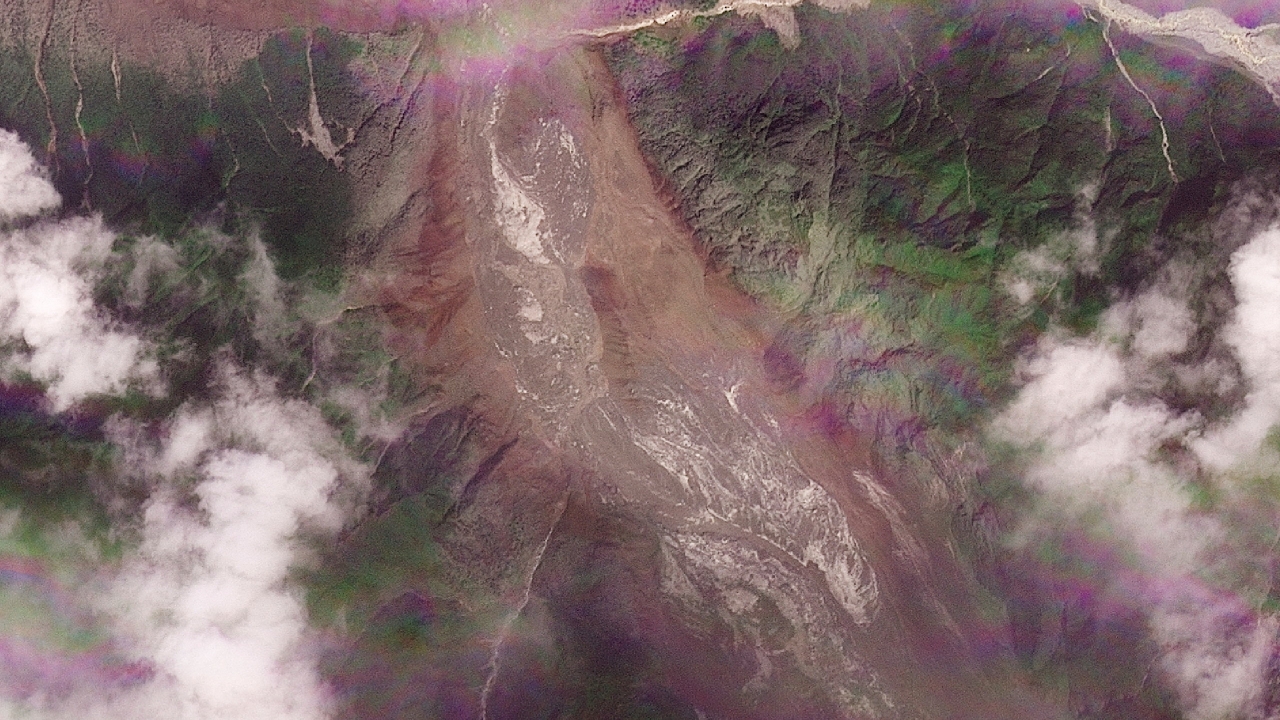
Scientists are rushing to determine the cause of the severe flood rushing down the valley along the Nepal-China (Tibet) border that has resulted in at least 160 deaths and hundreds still missing.
Many parties are questioning the cause of the severe disaster at the Nepal-Tibet border after numerous videos showed massive mud and debris surging down, hitting multi-story buildings and sweeping away cars and buses violently. The event happened suddenly, leaving people almost no time to prepare.
Initial reports suggested the incident might be linked to a magnitude 4.4 earthquake, possibly triggering a landslide that blocked a river, causing water to accumulate and then flood the lower areas.
However, the U.S. Geological Survey (USGS) stated that further seismic data analysis indicates the detected energy likely came from a landslide rather than an earthquake.
Meanwhile, the International Centre for Integrated Mountain Development (ICIMOD) in Kathmandu initially assessed that a rock and ice landslide on the Nepal side blocked the Lhende River.
With the waterway blocked, water accumulated behind the obstruction until it suddenly broke through, creating a torrent carrying huge amounts of mud, rocks, and debris down the valley.
Another factor attracting scientists' attention is that there was no heavy rainfall before the event, unlike typical flash flood situations.
Hatim Sharif, a hydrologist from the University of Texas at San Antonio, noted that the absence of heavy rain beforehand is surprising and makes it difficult for existing flood warning systems worldwide to detect such events.
Dorothy Heinrich, a researcher from the University of Reading in the UK, explained that in mountainous areas, rivers are usually narrow. When snow or landslides block the waterway, water can rapidly accumulate and, upon the collapse of the blockage, a vast amount of water rushes down swiftly.
This explains why such disasters differ from floods caused by heavy rain and can occur without abnormal rainfall warning signs.
Warning of a possible second flood wave
Scientists have expressed concern that similar flooding might occur again if river blockages remain upstream.
Changkun Zhang, head of climate and environmental risk at ICIMOD, warned of the possibility of a new flood wave while scientific teams continue to monitor the upstream situation closely.
Is climate change involved?
Although scientists have yet to confirm climate change as a direct cause of this disaster, the Himalayan region faces several trends that may increase disaster risks.
These include rising temperatures, retreating glaciers, and diminishing permafrost layers, all of which can destabilize mountainous terrain and increase the risk of landslides or ice mass collapses.
Nepal is also among the areas at risk for Glacial Lake Outburst Floods (GLOFs), sudden floods caused by the rapid release of large volumes of water accumulated in glacial lakes from melting glaciers.
However, scientists emphasize that to conclude a direct link between this disaster and climate change requires detailed event-specific studies. The Nepal-Tibet border incident remains under scientific investigation, but the steep slopes and narrow valleys of the Himalayas clearly can transform a single landslide into a rapidly moving and highly destructive mud flood.
Source:channelnewsasia
Click to read related news aboutInternational news