

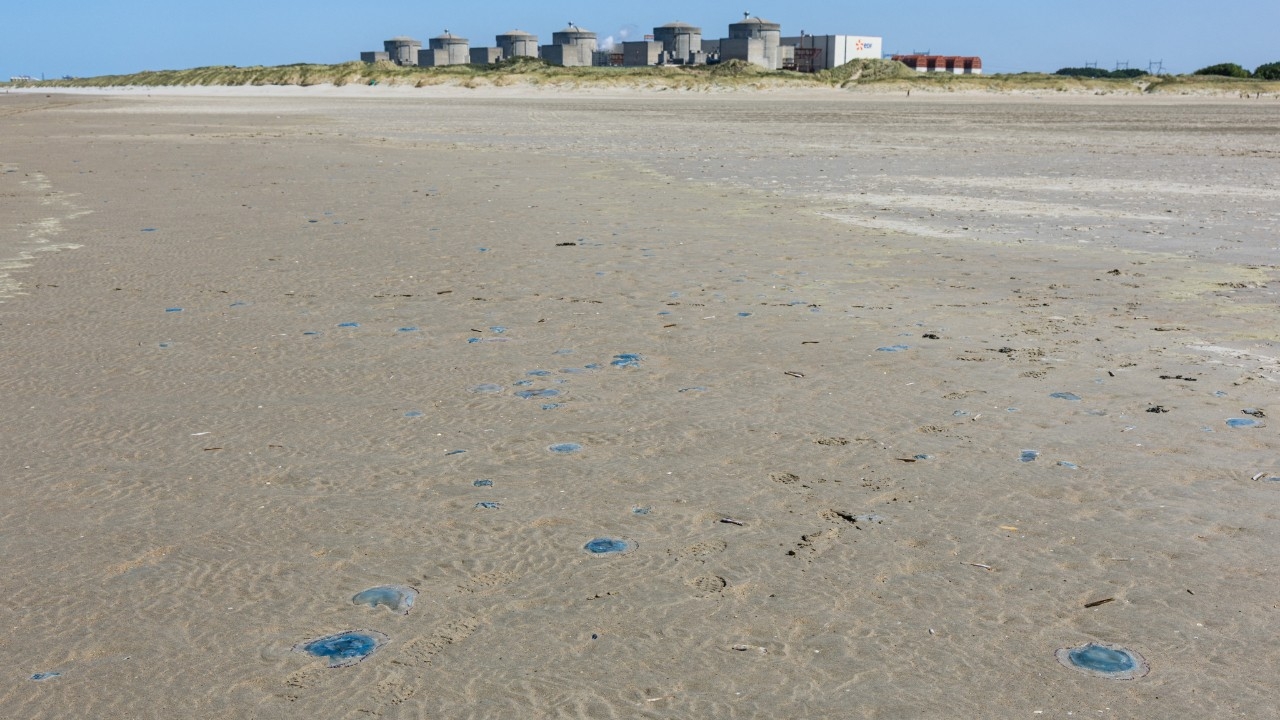
A large swarm of jellyfish was drawn into the sea water cooling filter system, causing the Gravelines nuclear power plant in northern France to partially shut down operations.
On 28 August 2026, foreign news agencies reported that an enormous swarm of jellyfish entered the sea water filter system of the Gravelines nuclear power plant in northern France, forcing two reactors to temporarily shut down, while another reactor had been offline since 10 August due to the same issue.
Electricité de France (EDF) stated that reactors number 3, 4, and 6 are currently offline. Reactor number 3 had just reconnected to the power grid on 18 August after being affected by the first wave of jellyfish earlier that month. Reactors number 1 and 2 have reduced output to prevent further clogging problems.
The Gravelines plant is located between the cities of Dunkirk and Calais in the Hauts-de-France region and is one of France's largest nuclear power plants. It has six reactors, each generating 900 megawatts, using water from a canal connected to the North Sea for cooling.
Reports indicate that the large number of jellyfish drawn into the sea water filters could clog the system, making it necessary to shut down reactors for safety. The plant faced a similar jellyfish clogging problem last August, which also led to partial shutdowns.
Experts explain that jellyfish activity increases during warmer months because higher sea temperatures boost plankton levels near the surface, attracting jellyfish closer to shore and into water filtration systems.
Source: BBC