

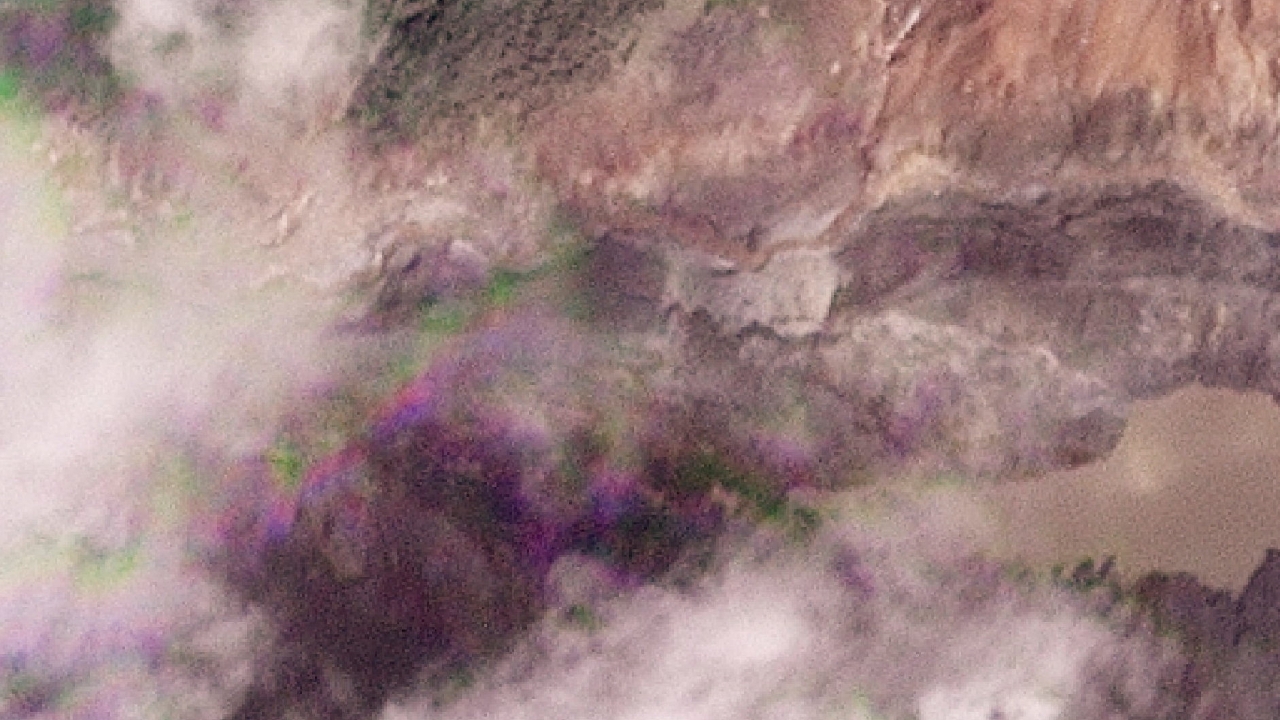
China is accelerating risk assessments after a new lake formed from rising water levels along the China-Nepal border, raising concerns that the water barrier might collapse and cause flooding downstream again.
China and Nepal are closely monitoring risks after a new lake formed from rising water at their border near the confluence of Nepal's Koshi River and the Purangpo (Sangpo) River in the Tibet Autonomous Region. There are worries that the dam could fail, leading to another flood downstream.
China's search and rescue teams in Tibet spent the entire previous day assessing flood risks near the Jilong checkpoint, a key area on the China-Nepal border, after a lake formed from accumulated floodwaters.
Chinese official media reported that stabilizing the water source is an urgent task to prevent the situation from worsening and to ensure the safety of rescue personnel still working in the area.
China's Ministry of Water Resources used models to estimate the volume of the new lake and warned that if rainfall continues, there is a high risk that the lake could overflow or the dam could collapse within the next three days.
China's Xinhua News Agency reported that the lake formed after flash floods is at high risk of overflowing and sending floodwaters downstream. If rain continues, the lake's volume could increase by about 3 million cubic meters—or roughly 3 billion liters—within three days, equivalent to about 1,200 Olympic swimming pools.
Chinese authorities warned that if the dam breaks, a massive volume of water could rush downstream, causing further damage especially around the Jilong checkpoint and nearby areas.
China's Ministry of Water Resources said it has prepared emergency response plans for potential flooding and is supporting urgent rescue efforts. Officials are closely monitoring the situation because ongoing rain could rapidly raise water levels, amid rescue operations racing against time to find missing persons.
,BBC
Click to read related international news