

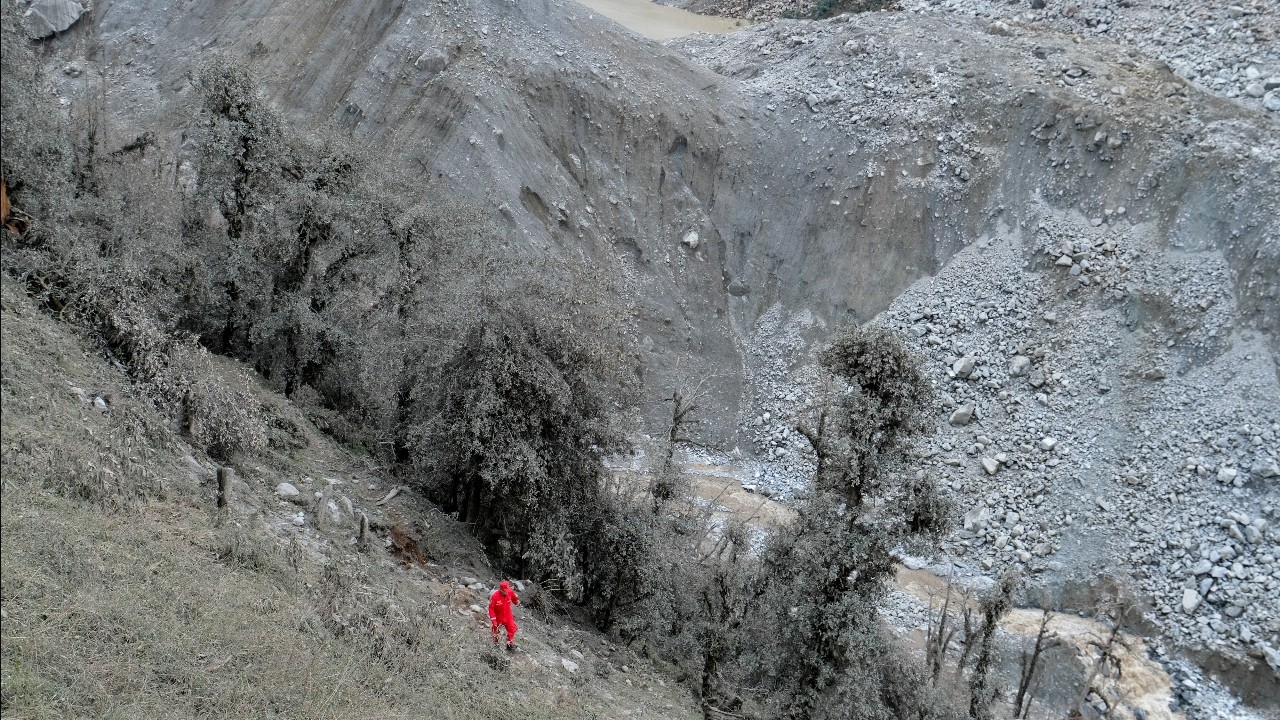
Search and rescue teams are urgently pushing through mud to save survivors after floodwaters and debris from a glacier collapse swept through villages in Nepal and Tibet, with the number of missing now exceeding 2,400.
The severe flooding and landslide crisis along the Nepal-China border remains critical, as the missing count surpasses 2,400. Rescue workers are intensifying efforts to find survivors amid muddy, debris-strewn terrain after massive water and earth flows, like a wall of water, devastated villages and communities, causing extensive damage.
Reports indicate that authorities have recovered 616 bodies, some of which were carried by river currents all the way to India.
Nearly 2,000 Missing in Nepal
Nepal's disaster management agency reported the latest figures: 1,924 people are missing or unreachable within the country, including 517 foreigners. This number surged after authorities added 933 hydropower project workers to the missing list.
Previously, Nepal’s missing count stood at 977, with 579 confirmed deaths.
Relatives of the missing have been visiting hospitals in Kathmandu seeking news of their loved ones, posting photos and lists of missing persons on hospital walls.
A 27-year-old Nepali woman searching for her brother said the family does not know his whereabouts and can only hope he is safe, adding that they have lost everything in this disaster.
USGS Identifies Glacier Collapse as Cause
The United States Geological Survey (USGS) stated that the disaster was caused by a glacier collapse, which unleashed massive flows of water, ice debris, soil, and rocks in a violent surge.
This event marks the deadliest disaster in Nepal since the major earthquake in 2015.
The powerful floodwaters and mudflows also created several large lakes from accumulated debris, with one posing a threat to rescue teams still searching for missing persons.
Nepalese police have warned rescue workers to evacuate immediately to safer areas after reports indicated another dam break on the Tibetan side.
China Suspends Rescue Operations Over Flood Risks
The situation in China’s Tibet region remains concerning. Chinese authorities suspended search and rescue operations in Gyirong, the hardest-hit area, due to fears of new flooding waves, though officials later announced the situation was stabilizing.
China’s CCTV reported that the massive debris-formed lake began overflowing into areas where rescue teams were heading. However, water levels later receded, allowing rescue operations to continue systematically.
Meanwhile, President Xi Jinping chaired a meeting on the rescue efforts and expressed China’s readiness to assist Nepal’s emergency response.
Urgent Rescue for Over 100 Workers Trapped in Tunnel
A key rescue mission focuses on workers and residents trapped inside the Trishuli 3A hydropower project tunnel. The Nepalese military has located victims inside and is attempting to gain access for rescue.
The military deployed two helicopters, but rescue efforts are hampered as officials struggle to identify tunnel entrances, with surrounding areas buried under floodwaters and mudslides.
Authorities say about 350 workers and residents have been evacuated, but over 100 remain trapped in the same area and require urgent help.
Survivors from the dams and power plants in the Trishuli River valley described the event as sudden and intense, leaving many workers no time to react.
One man said he survived because he was inside the dam tunnel during the flood, while senior officials working on the other side were swept away completely.
Bodies Carried to India by Floodwaters
The disaster’s impact extends beyond Nepal and China. Indian authorities reported finding seven bodies in rivers flowing from Nepal, believed to be victims of the floods.
On the Tibetan side, China’s Xinhua news agency reported seven deaths and 554 missing persons.
Chinese officials also said they evacuated 555 stranded tourists and 499 local residents from Tibet.
Many Pilgrims Missing on Mount Kailash
Among the missing are Hindu pilgrims from multiple countries traveling to Mount Kailash, a sacred site in Tibet.
A 46-year-old woman recounted traveling by bus with 56 passengers toward the Chinese border, when the bus had to stop. Initially, everyone thought it was just a traffic jam.
Suddenly, fog, smoke, and an unknown substance quickly enveloped the area before she saw massive floodwaters and debris rushing in.
Several vehicles were swept away or buried by mud, while passengers scrambled to escape through the driver’s side and fled up a hill to survive.
Rescue teams continue searching for the missing amid concerns over possible new floods and landslides, which pose serious obstacles to accessing affected areas and aiding those still trapped.
/source:channelnewsasia
Related news:International news