

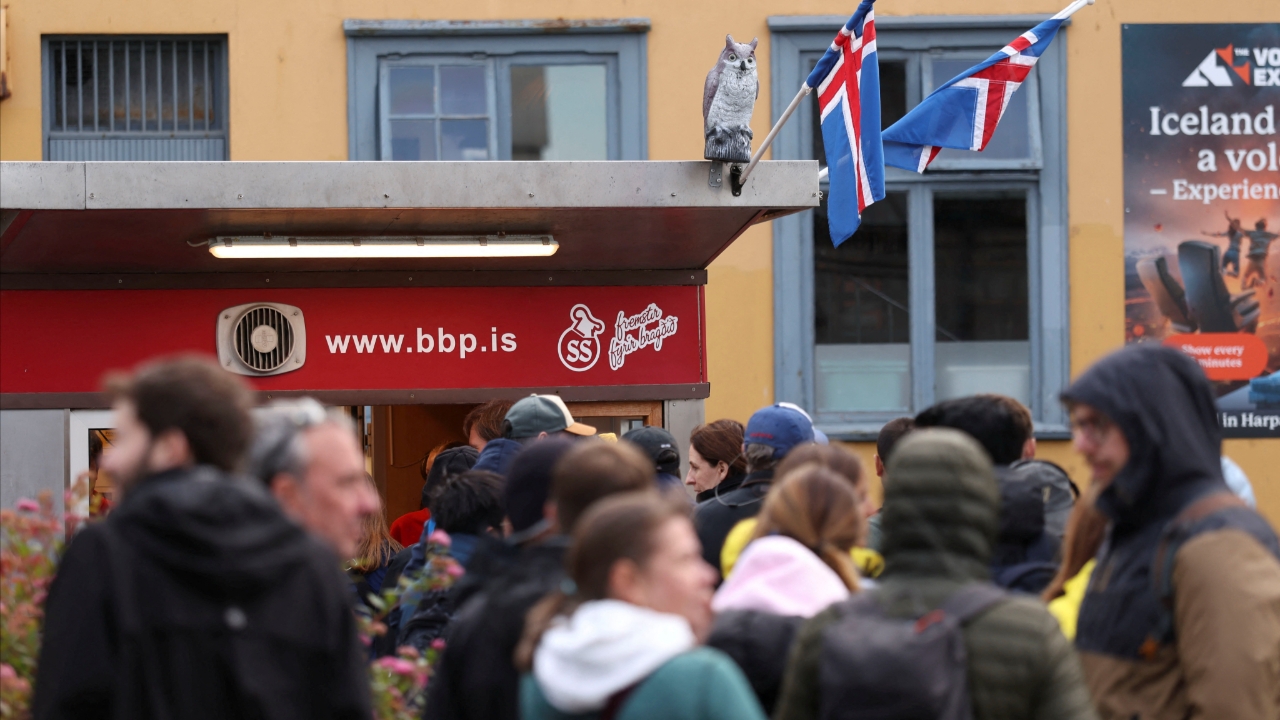
Icelanders voted in a referendum to oppose reopening negotiations to join the European Union after talks stalled 13 years ago over concerns about fishing rights.
Foreign news agencies reported that on Saturday, 29 Aug 2026, Icelanders went to the polls to decide whether to accept or reject the government's proposal to resume EU membership talks, with the majority rejecting the idea.
Public broadcaster RUV reported that out of over 225,000 votes cast, 52.8% opposed the government's proposal while 47.2% supported it, with a margin of about 12,600 votes.
The centrist-left government led by Prime Minister Kristrún Frostadóttir had promised to hold a referendum by 2027 but moved the date forward due to international tensions, including threats from US President Donald Trump toward Greenland.
However, the domestic debate on this island nation of nearly 400,000 people focused more on the fishing industry than security concerns.
With approximately 270,000 eligible voters, RUV reported a turnout of 82.5%, the highest in Icelandic elections since 2009.
Although Iceland is currently part of the EU single market and Schengen Area, full EU membership would require joining the customs union and eventually adopting the euro currency.
Iceland applied to join the EU in 2009 following the 2008 financial crisis and banking collapse, and the application process advanced significantly until a government opposing the EU came to power in 2013 and halted talks.
Fishing rights were the biggest obstacle to Iceland's EU membership at that time and remain so today.
This is because Iceland successfully defended its fishing waters against foreign fishermen during the 'Cod Wars' with the United Kingdom in the 1970s, and the seafood industry still accounts for nearly 40% of the country's export value.
Many voters opposed membership fearing it would mean losing control over these rich fishing grounds due to EU policies that set quotas on member states' fishing volumes.
While economic concerns were central to the referendum campaign, security issues were also raised.
Iceland is a founding member of NATO but has no standing army, relying on allies for defense; EU membership would grant full access to the EU's collective defense infrastructure.
Iceland has consistently supported Ukraine since Russia's full-scale invasion, with officials expressing concern over increased Russian naval exercises near the island.
More recently, concerns arose over US President Donald Trump's explicit desire to incorporate Greenland, another Arctic island, into the United States.
Iceland's Foreign Minister Katrín Gunnarsdóttir said in a Sunday press conference that she would seek ways to strengthen defense relations with other countries following the referendum result.
Meanwhile, Prime Minister Kristrún said at a Sunday afternoon press briefing that the issue of EU membership would not be reconsidered during her administration.
Follow international news:https://www.thairath.co.th/news/foreign
Source:bbc