

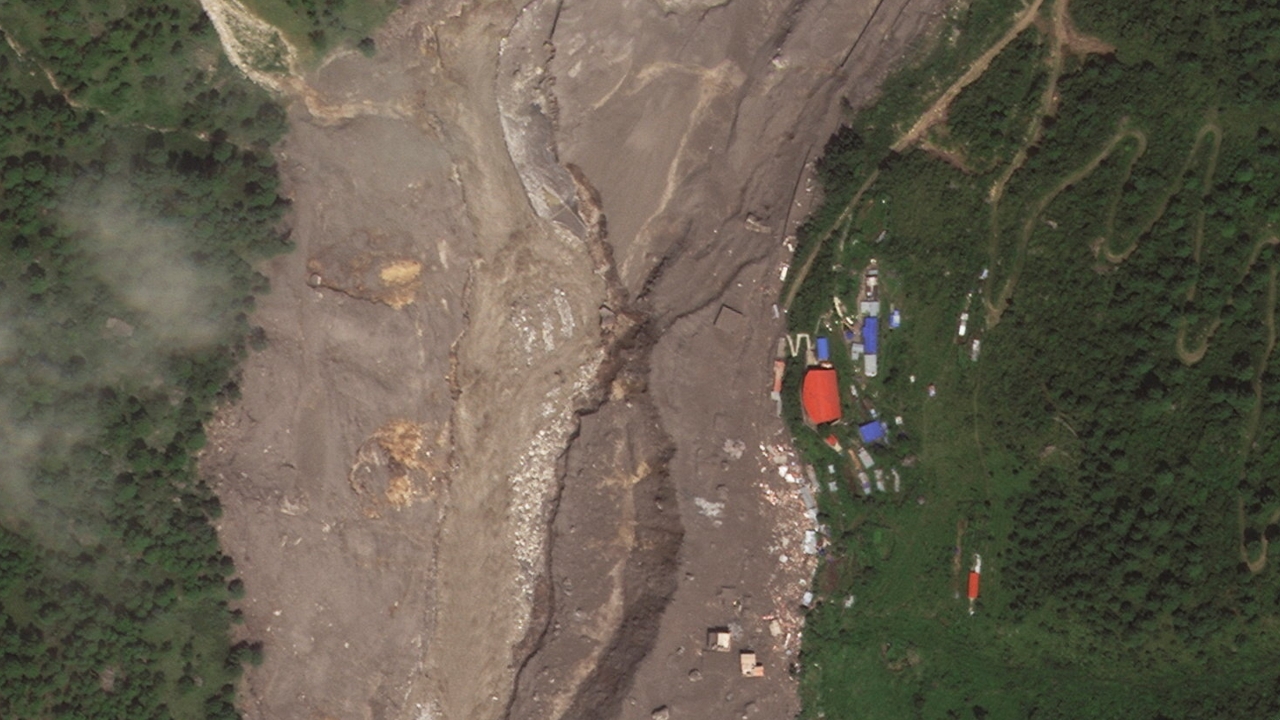
Foreign media report that Nepal and China held talks about flood and glacier risks three months before a major disaster occurred in the border area between the two countries.
Reuters reported that on 27 May, officials and experts from Nepal and China met in Kathmandu to discuss ways to enhance cooperation in monitoring and responding to floods, weather, and glacier-related hazards.
The meeting included about 10 Nepalese officials and around 12 Chinese officials, along with representatives from Tibet, the area where the latest disaster occurred.
Both sides agreed on the need to implement joint disaster risk reduction measures, with a key proposal being the creation of a glacier lake database and hazard risk maps to better track and assess risks.
However, two Nepalese officials told Reuters that after the meeting, Nepal had not received as much detailed data on glacier risks and water levels from China as needed, raising concerns that insufficient data exchange could hinder forecasting and disaster preparedness.
Sohardra Joshi, a hydrologist from Nepal's Flood Forecasting Division who attended the meeting, said Nepal seeks advance information if there are signs of glacier movement or changes in risk zones to allow for faster readiness.
No officials or experts have blamed either China or Nepal as the cause of this disaster, and experts caution that delays in data sharing were not a primary factor in the severity of the event.
China affirms timely data sharing
The Chinese Embassy in Nepal issued a statement saying China and Nepal continue close contact and coordination on these issues and that the May meeting marked important progress in promoting cross-border disaster information exchange.
China also rejected criticism from some Nepalese social media users questioning why it did not provide adequate warnings, stating that monitoring disasters in the remote Himalayan region is extremely challenging.
China confirmed that its scientists and expert teams shared critical information with Nepal in a timely manner.
Nepalese officials stated that China sent heavy rainfall forecasts for Tibet via WeChat and email, but information exchanges on other matters such as avalanches, water levels, landslides, and extreme weather events were not as comprehensive as Nepal required.
China warned of heavy rain 12 days before the disaster
Reuters' timeline reveals that 12 days before the disaster, China's World Meteorological Center emailed Nepalese officials forecasting a monsoon pressure system between 14 and 19 August.
The email warned of potential heavy rains across many parts of Nepal and advised monitoring for consequent risks such as landslides and flash floods.
However, the recent disaster was more complex than typical heavy rain, caused by a glacier collapse that released huge masses of water, mud, and debris rushing downstream at high speed.
Monitoring system cut off before flood hit Nepal
At about 08:32 local Nepal time on the day of the disaster, massive floodwaters surged past the border checkpoint on the Tibetan side as people tried to flee.
About 26 minutes later, Nepalese officials were notified that water was flooding into the Trishuli River, but upon inspection, monitoring stations at the border had stopped transmitting data since 08:40.
Downstream monitoring stations also failed to send data, leading officials to believe that these devices were destroyed by the floodwaters.
After confirming the situation with local authorities, Nepal sent mobile phone alerts to the public at 09:13.
The Nepalese government estimates the floodwaters flowing from the China-Nepal border over a distance of more than 168 kilometers totaled about 57.4 million cubic meters—over 50% above normal levels—and destroyed at least four monitoring stations. The disaster damaged 19 bridges and about 40 kilometers of roads, while Nepal's electricity generation capacity dropped by more than 10%, according to the Stimson Center's assessment.
Experts say future warning systems must consider risks beyond rainfall measurements, including glacier changes, river water levels, and glacier lake hazards.
Sonia Rijal, a postdoctoral researcher at the University of Sydney, said glacier-related disasters of this kind are rare, but this event may serve as an important lesson for countries to develop warning systems that do not rely solely on heavy rain data.
Nepal plans to request data sharing from China every 10 minutes
Following the disaster, Nepal aims to strengthen cooperation with China by proposing an agreement to exchange data on rainfall, river water levels, avalanches, and glacier lake discharge.
This approach would be similar to Nepal's existing cooperation with India and would increase data transmission frequency to every 10 minutes, with the key goal of preventing Nepal from missing future disasters.
Source:channelnewsasia
Click to read more related newsInternational news