

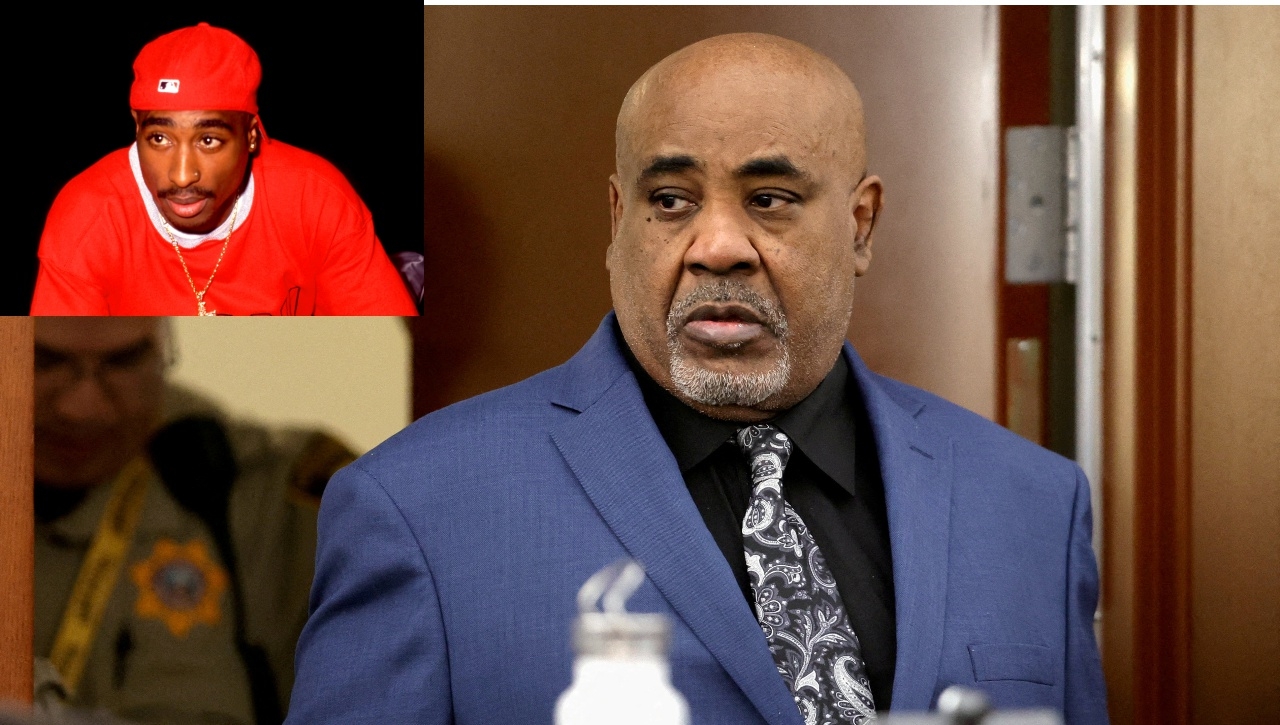
A Nevada state jury found Duane "Keffe D" Davis, a former street gang leader, guilty of murdering Tupac Shakur, the famous rapper, in the 1996 shooting attack on a vehicle in Las Vegas. This marks the first conviction in a murder case that has remained unsolved for nearly 30 years.
The Clark County jury in Nevada, U.S., convicted 63-year-old Duane "Keffe D" Davis, former leader of the South Side Compton Crips gang, of murder using a deadly weapon for planning the assassination of Tupac Shakur, the renowned hip-hop artist who was fatally shot in Las Vegas on 7 September 1996.
The jury deliberated for nearly three hours before delivering the verdict after an 11-day trial, bringing closure to a murder case that had long gone without an identified perpetrator and had drawn global attention in the hip-hop community for almost 30 years.
Davis appeared in court dressed in a black suit, maintaining a neutral expression as the verdict was read. He then informed the judge that he would appeal the case. Meanwhile, members of Tupac's family held hands, with some embracing and weeping upon hearing the decision.
Tupac was shot dead at just 25 years old, during the peak of his career. He is celebrated as one of the most influential rappers in history, with over 75 million records sold worldwide.
Prosecutors stated that although Davis was not the shooter, he planned and ordered Tupac's murder and supplied the firearm used by his nephew, Orlando Anderson, in the attack. Prosecutors said the killing was an act of revenge after Anderson was assaulted by Tupac and his entourage in Las Vegas just hours before the shooting.
Clark County prosecutors explained that under gang rules of honor and retaliation, Davis could not ignore the assault on his nephew. They told the jury that Davis procured the weapon, gathered gang members, and pursued Tupac before the shooting took place.
Police had suspected Davis for many years but lacked sufficient evidence to charge him until Davis began revealing his story through media interviews, documentaries, podcasts, and his 2019 memoir titled "Compton Street Legend."
Key prosecution evidence included a secretly recorded police interview from 2008, conducted during the investigation of another famous rapper's death—Notorious B.I.G., also known as Christopher Wallace.
In that testimony, Davis admitted being in the white Cadillac used to follow Tupac on the night of the shooting. He recounted handing a gun to someone in the back seat before one of the men fired at Tupac's vehicle, which also carried Marion "Suge" Knight, head of Death Row Records.
Police said Davis and three other men, including Anderson, were hunting for Tupac and Knight after the earlier altercation. The other three suspects in the car have since died, and the police have not officially identified who pulled the trigger.
However, Nevada law allows Davis to be found guilty of murder even if he did not personally fire the gun, provided it is proven he participated in planning or ordering the crime.
Davis's attorney, Michael Sanft, tried to persuade the jury that the stories his client publicly shared were uncorroborated by other evidence and should not be taken as confessions. Sanft argued Davis fabricated and exaggerated his accounts to gain fame, sell his book, and profit from interviews.
The defense also alleged police corruption, mishandling of the case, and loss of some key documents. Sanft pointed to the book "Compton Street Legend," claiming its content was fictional, not factual, and should not be considered a confession. The prosecution countered that over many years, Davis repeatedly admitted responsibility for Tupac's death through documentaries, books, podcasts, and police interviews.
Previously, Tupac's murder was one of the most famous unsolved crimes in the U.S., remaining without a convicted perpetrator for nearly 30 years and spawning numerous conspiracy theories about the killers and their motives.
Tupac's death occurred amid intense rivalry between East Coast and West Coast rap scenes, as well as conflicts between the Bloods and Crips gangs, which were deeply intertwined with hip-hop culture at the time.
Tupac was associated with Death Row Records and linked to the Mob Piru gang faction, adversaries of the South Side Compton Crips, which Davis once led.
After the verdict was read, Tupac's family showed visible emotional distress. His sister embraced the prosecutor, while many in the courtroom wept. Outside, longtime fans following the case also cried and expressed approval of the verdict.
The Clark County District Court judge scheduled Davis's sentencing hearing for 13 October, where he could face a maximum sentence of life imprisonment without the possibility of parole.
Before leaving the courtroom, Davis requested his personal belongings, including his mobile phone. He reiterated to the judge, "I want to appeal this case," to which the judge responded that he could do so after sentencing.