

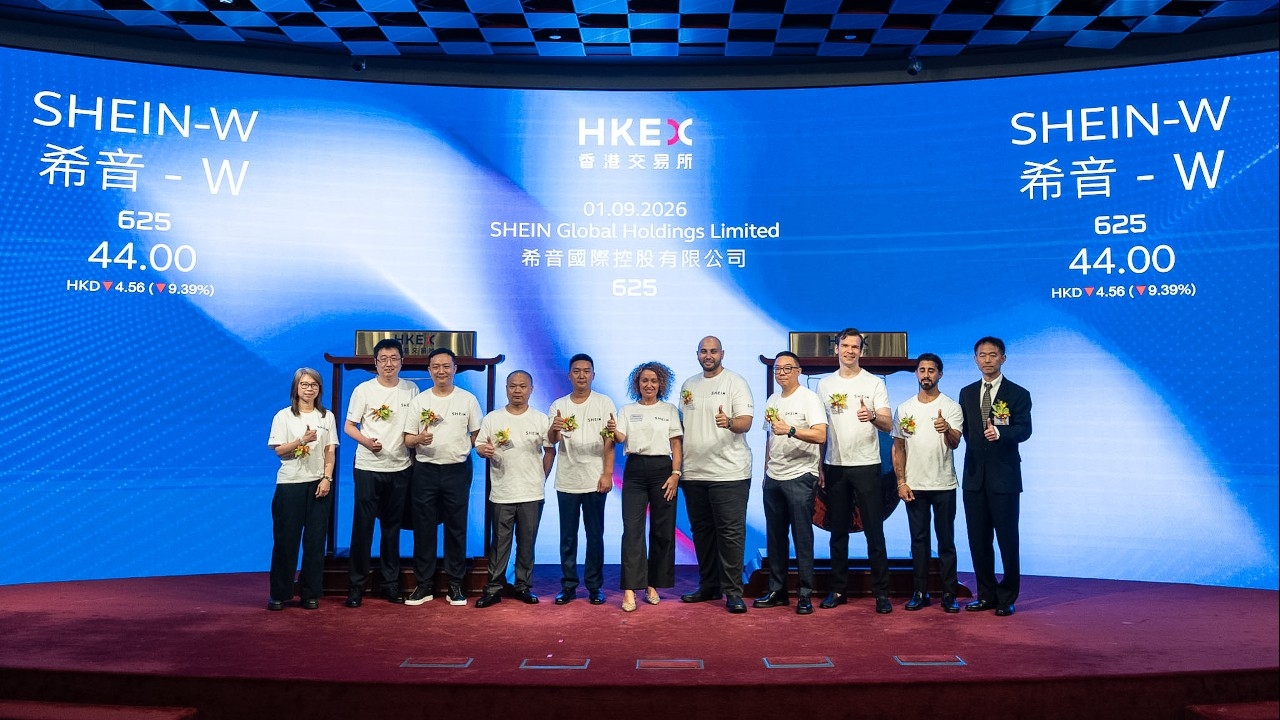
Shein, the budget fashion retail giant, faced a tough start on its first day trading on the Hong Kong Stock Exchange, with shares plunging as much as 10% after raising $1.7 billion in its IPO. This decline reflects investor concerns about slowing growth, tighter trade regulations, and intense competition in the e-commerce market.
Shein conducted its initial public offering (IPO) on the Hong Kong Stock Exchange, setting the share price at HK$48.56 and raising approximately $1.7 billion (around 56.4 billion baht), making it the largest IPO in Hong Kong this year.
However, on its first trading day (1 Sep), the share price dropped to a low of HK$43.72, down 10%, before recovering slightly, resulting in a company valuation of about $26.3 billion—significantly lower than its near $100 billion valuation in 2022.
Previously, Shein had tried for more than five years to list on the New York and London stock exchanges but faced major obstacles due to stringent regulatory scrutiny in Western countries over copyright infringement, environmental impact, and allegations of forced labor in its supply chain. Eventually, it sought approval from Chinese authorities and listed in Hong Kong, which experts see as the "only viable option" for a China-origin company amid geopolitical tensions.
Ashley Dudarenok, founder of Chinese market research firm ChoZan, said Shein had virtually no other stock markets to turn to after attempting to make the company appear "less Chinese" by relocating its headquarters to Singapore, yet failing to gain political support abroad or guarantees from the Chinese government.
Despite massive growth in active users and a loyal customer base exceeding 273 million regular buyers, Shein is struggling with revenue and profit. Reports indicate a net loss of $99 million in Q1 this year after the U.S. government revoked import tax exemptions on small parcels, which had been a key advantage allowing Shein and competitors like Temu to ship cheap goods directly from Chinese factories to consumers tax-free.
Additionally, the European Union has started imposing import taxes of 3 euros per parcel on goods valued under 150 euros, while France has introduced fast fashion fees that can reach nearly 20 euros per item, aiming to reduce environmental impact and protect local brands.
Analysts from various financial institutions noted that the share price decline reflects investors' lack of confidence that Shein can replicate its past rapid growth, due to rising operating costs and import taxes, compounded by stiff competition from rivals like Temu and AliExpress.
Meanwhile, Shein is working to revamp its image and supply chain. CEO Chris Xu (Su Yangtian) has publicly reaffirmed the company's Chinese roots and announced increased investment in technology development, along with plans to diversify production beyond relying solely on factories in China, to address stricter regulations and scrutiny as a public company.