

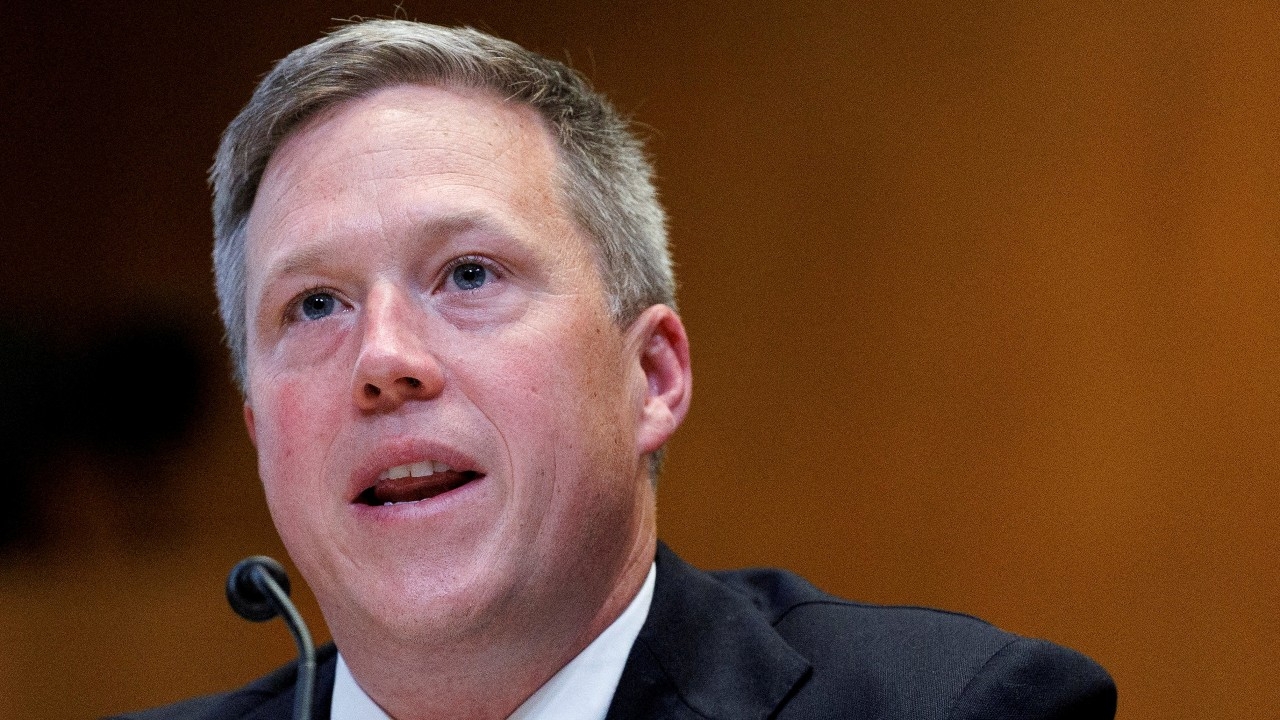
Dan Driscoll, U.S. Army Undersecretary, has submitted his resignation after serving about 18 months, amid conflicts with U.S. Defense Secretary Pete Hegseth. Sources reveal that Driscoll disagreed on army restructuring and enhancing combat readiness, particularly regarding the dismissal of senior officers.
A source familiar with the matter told Reuters that it remains unclear whether the White House has accepted Driscoll's resignation. Meanwhile, the U.S. Army declined to comment on the reports, which were first published by The Wall Street Journal.
The White House issued a statement praising Driscoll's performance, describing him as highly effective in advancing President Donald Trump's agenda under the "Make America Strong Again" initiative. They also noted his key role in major military operations, improving army readiness and destructive capabilities, as well as assisting in negotiations between Russia and Ukraine.
At 41 years old, Driscoll was the youngest U.S. Army Undersecretary in history and earned the nickname "Trump's Drone Man" within political circles due to his strong focus on new technologies and unmanned aerial systems for combat.
Sources said Driscoll expressed concerns to the administration about plans to restructure the Army and enhance readiness, especially efforts to modernize the force. He viewed Hegseth as obstructing these efforts by dismissing senior officers responsible for these projects.
Driscoll pushed for a more agile Army in procuring affordable weapons and adopting new technologies, while criticizing major U.S. defense contractors for charging excessively high costs.
A U.S. official who requested anonymity said Hegseth perceived Driscoll as an internal threat within the defense bureaucracy and had long wanted to remove him. However, Driscoll's close relationship with U.S. Vice President JD Vance made such actions difficult.
The conflict intensified after Hegseth dismissed General Randy George, U.S. Army Chief of Staff, in April. Driscoll was close to George and reportedly Hegseth pressured George to resign. Sources said George's dismissal surprised Driscoll and greatly increased his dissatisfaction with Hegseth.
Driscoll's resignation occurs amid ongoing senior personnel changes within the U.S. Department of Defense since Hegseth took office. Hegseth has removed or pushed out more than a dozen senior officers, including the U.S. Navy's operations commander and the Air Force deputy chief of staff.
Additionally, John Feland, U.S. Navy Undersecretary, abruptly resigned in April. Several other key Army figures, such as Generals Randy George, David Hodne, and Brigadier General William Green, have also left their posts. In June, Hegseth pushed out the U.S. European Command commander and reportedly interfered with promotions of senior Army officers.
Driscoll served in the U.S. Army, enlisting in 2007. He commanded a cavalry platoon and was deployed to Iraq for several months in 2009.
He was appointed U.S. Army Undersecretary and confirmed by the U.S. Senate in February 2025. This position is the highest civilian leader of the Army, overseeing active-duty soldiers, the National Guard, and reserves, as well as responsible for training and equipping personnel.
During his tenure, Driscoll played a prominent role in promoting the adoption of new technologies in the Army, especially drones and low-cost weapons, earning him the nickname "Trump's Drone Man." He was also assigned by Trump to participate in diplomatic efforts to end the Russia-Ukraine war, an unusual role for an Army Undersecretary, including traveling abroad to meet Ukrainian President Volodymyr Zelensky.
Driscoll is an ally and close friend of Vice President JD Vance; the two have known each other since their time at Yale University.
While in office, he also played a key role in supporting the deployment of National Guard forces to various U.S. cities under the Trump administration's policies and served as acting director of the Bureau of Alcohol, Tobacco, Firearms and Explosives (ATF).