

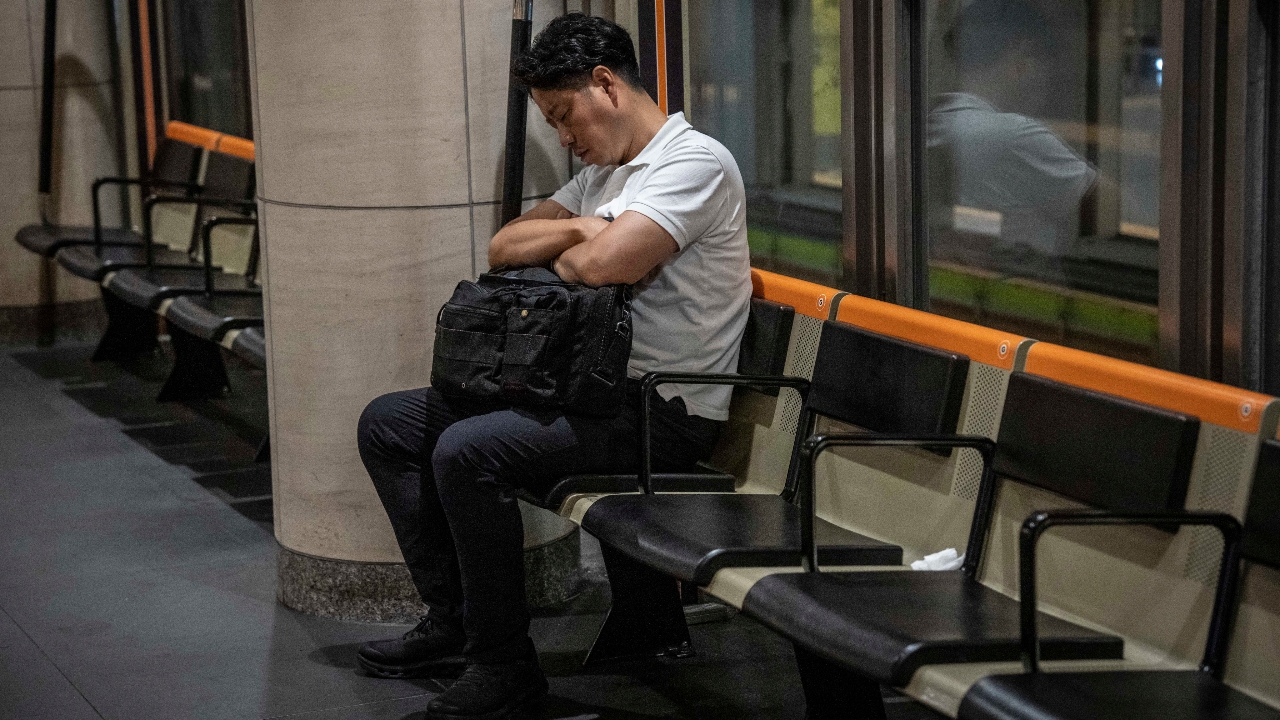
Japan has begun relaxing the enforcement of guidelines limiting overtime work. The cap remains at no more than 45 hours per month, but labor unions and representatives of families who lost loved ones to overwork warn this policy might reverse efforts to reform Japan’s "workaholic" culture and increase the risk of "karoshi," or death from excessive work.
Since 1 September, Japan has eased enforcement of the overtime limit, with the Labor Standards Inspection Office no longer pressuring employers nationwide to restrict employee overtime to 45 hours per month, though the government affirms it will continue closely monitoring worker health and safety measures.
This change follows the government led by Prime Minister Sanae Takaichi, who identifies as a "workaholic," approving an economic growth strategy in July calling for a review of work hour regulations to provide greater business flexibility amid worsening labor shortages.
Data from Japan’s Ministry of Labor indicates that about 40% of companies operate under agreements between employers and employees allowing up to 100 hours of overtime monthly in certain cases. However, the Labor Standards Inspection Office had previously recommended limiting overtime to 45 hours per month, treating this as nearly equivalent to legal requirements due to the increased risk of "karoshi" beyond that level.
This relaxation comes after businesses, particularly medium and small enterprises, urged the government to make work rules more flexible to cope with sudden or seasonal increases in workload.
The Japan Chamber of Commerce and Industry (JCCI), representing small and medium businesses, reported a May survey of 1,724 member companies nationwide, finding over 70% desire more flexible regulations to accommodate peak workload periods.
The survey also showed industries facing severe labor shortages, such as construction, transportation, and hospitality, were particularly affected by the previous restrictions.
Some service providers stated that overtime limits negatively impacted service quality and customer satisfaction, while some transportation companies reported lost business opportunities. Manufacturing firms noted that restrictions delayed deliveries and in some cases led to lost orders.
JCCI’s survey found that enforcing the 45-hour monthly overtime cap affected about 20% of small and medium-sized companies’ business activities, especially those with staffing shortages.
Despite government justifications citing flexibility and economic growth, the policy faces strong criticism from labor groups and advocates against overwork. The National Confederation of Trade Unions (Zenroren) described the change as a retreat from efforts to reduce work hours and a repeal of key measures aimed at cutting working time.
Lawyers representing victims of "karoshi" issued a statement opposing the change, saying it undermines years of government and labor ministry efforts to reform Japan’s work culture.
They cited recent Ministry of Labor data showing that in fiscal year 2025, compensation claims for work-related deaths and illnesses reached a record 6,212 cases—an increase of 1,402 from the previous year—and warned that heavy workloads and workplace stress continue to affect workers’ health and may be fatal.
Japan was once known for a "salaryman" culture, where employees devoted most of their time to their company, and long working hours were considered normal and a career asset.
In recent years, the government has sought better work-life balance, especially after a 2015 case where a 24-year-old female advertising employee committed suicide due to overwork and stress.
Japan enacted work style reform legislation in 2018, effective in 2019, setting principles to limit overtime to 45 hours per month and 360 hours per year under a labor-management agreement known as the "36 Agreement."
Before this law, Japan had no clear overtime ceiling; employers and employees could agree on overtime. However, if a "special clause" is included in the 36 Agreement, overtime can reach up to 100 hours in any one month, averaging no more than 80 hours monthly over 2 to 6 months, and not exceeding 720 hours annually.
OECD data shows that in 2021 Japan’s average annual working hours were 1,651, lower than the U.S. at 1,773 and close to the U.K.’s 1,625, but higher than France’s 1,401 and Germany’s 1,295.
Japan's Ministry of Labor stresses that this policy change does not mean companies can force employees to work excessively without limits.
Kunihiro Nishiumi, Director of Inspection at the Labor Standards Office, said that even if companies allow employees to exceed 45 overtime hours per month, officials will still check if the company has measures to protect workers’ health from overwork.
The ministry will focus on companies using the special clauses in the 36 Agreement, requiring employers to set health care measures jointly with worker representatives, report to the labor office, and implement at least one of ten prescribed measures.
These measures include ensuring employees have sufficient rest during shifts and providing medical checkups for those working overtime beyond set limits.
Another concern is that Japan lacks laws guaranteeing the "Right to Disconnect" from work communications, as seen in some European countries, and the concept of mandated rest periods between shifts is not widespread.
The 2018 work style reform law calls for companies to "make every effort" to provide rest periods between work sessions but imposes no penalties if companies fail to do so.
A 2025 Ministry of Labor survey of 3,820 companies found only 6.9% had systems mandating rest between work periods, while 78.7% had no plans or had not considered implementing such systems. Meanwhile, 15.7% of surveyed companies did not know what such rest period systems were, up from 14.7% the previous year.
SourceAFP/THE JAPAN TIMES