

Scientists warn that global warming is increasing disaster risks in the Himalayan mountains, including flash floods, landslides, avalanches, and glacier collapses, although it is not yet clear if the floods in Nepal were directly caused by global warming.
The major flood disaster in Nepal and nearby areas of China on 26 August has become another warning sign of the vulnerability of communities in the Himalayan mountains. Massive flows of water, mud, and boulders surged down multiple rivers, killing more than 1,000 people and leaving thousands missing, with some believed trapped inside tunnels of hydropower projects.
This event occurred after rock layers and ice masses from glaciers at high elevations collapsed, causing fast-moving currents of water and debris to flood community areas.
Global warming increases disaster risks in the Himalayas.
Disaster experts note that the Himalayan mountains are facing increasingly interconnected hazards as rising temperatures cause ice and glaciers to melt, leading to higher risks of landslides, avalanches, and floods.
In some cases, falling snow or ice can block waterways, forming natural dams that suddenly burst and cause flash floods, while heavy rains following initial disasters can worsen the situation.
However, scientists emphasize that it is still too soon to directly attribute Nepal's latest disaster to global warming, though rising global temperatures from fossil fuel burning increase the likelihood of such disasters, especially in the Himalayas, which are warming faster than many other regions.
Experts from the International Centre for Integrated Mountain Development (ICIMOD) in Kathmandu say climate change plays a major role in complex disasters in the Hindu Kush-Himalayan region, affecting communities and infrastructure downstream.
Rapid glacier melting increases risks further.
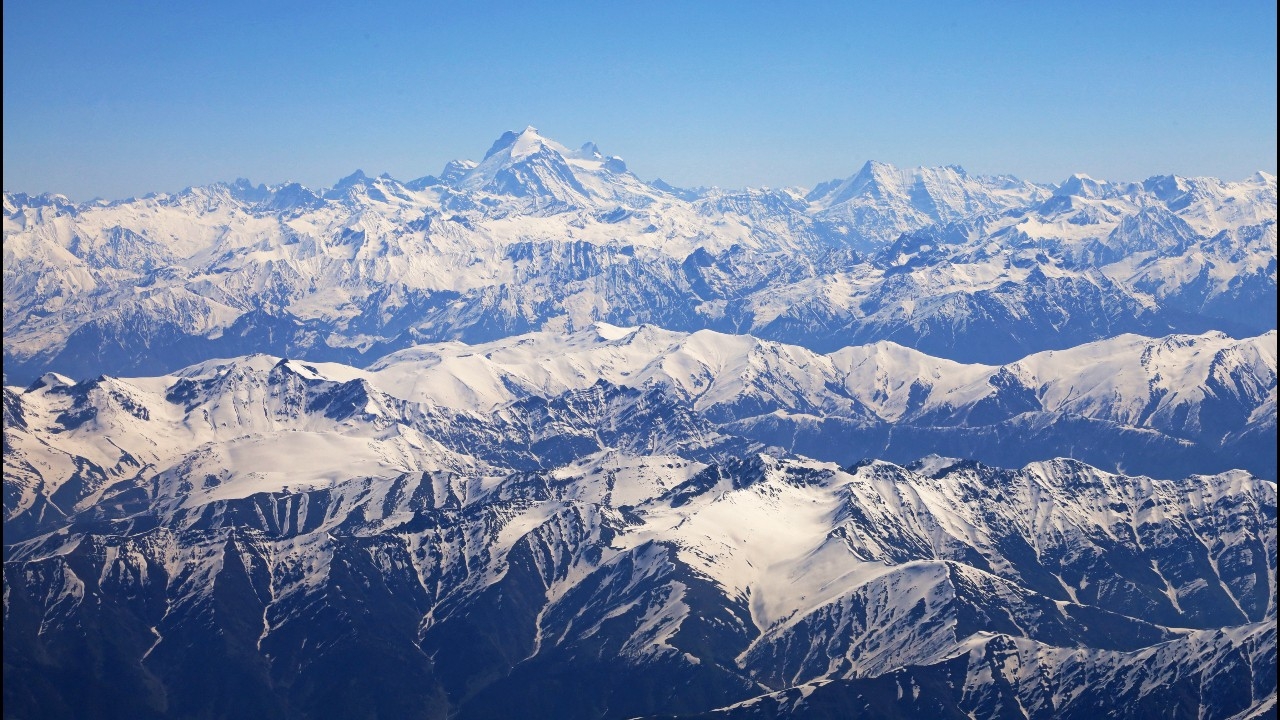
The Hindu Kush-Himalayan range spans Afghanistan, Pakistan, India, Nepal, Bhutan, Bangladesh, Myanmar, and China, and holds one of the world's largest accumulations of ice outside the polar regions.
Many major rivers originate from these mountains, sustaining nearly 2 billion people.
Climate researchers report that ice loss from glaciers in this area has accelerated rapidly since 2000, while thawing permafrost may weaken slopes and increase landslide risks.
Satellite images after the recent event show huge masses of rock and ice collapsing into valleys, pushing water and mud flows several stories high downstream to communities several kilometers away.
Recurring disasters leave communities with little time to recover.
Experts warn that Himalayan communities face critical problems as they are hit by new disasters before recovering from previous ones.
In recent years, the Himalayas have seen several severe events, including the 2013 Kedarnath floods in India, the 2021 Chamoli glacier collapse, and the 2023 glacial lake outburst flood in Sikkim, India, all causing massive loss of life and property.
A Nepali climate policy expert warns that some areas may have exceeded their adaptation limits, making reconstruction of homes, roads, and infrastructure unsafe and necessitating community relocation to lower-risk areas.
Warning systems alone may not be enough.
Although Nepal has a mobile phone alert system, experts say it has limitations since some recipients are tourists or migrant workers unfamiliar with Nepali, and others underestimate the severity of threats.
To better handle future disasters, experts propose developing warning systems that clearly instruct people on how to respond, enforcing stricter land use, assessing multiple risks before approving construction projects, and enhancing cross-border monitoring in the region.
Nepal emits little greenhouse gas but suffers severe impacts.
Nepal contributes less than 0.1% of global greenhouse gas emissions, yet faces severe consequences from climate change.
Nepalese climate experts say that countries severely affected by global warming should use this event as motivation to urge the world to accelerate carbon emission cuts, especially from fossil fuel use.
The recent flood and landslide disaster is not only a tragedy for Nepal but also a warning that as the world continues to warm, vulnerable regions like the Himalayas may face increasingly frequent, severe, and complex disasters, leaving communities with little time to recover before the next event strikes.
Source:AP
Click to read news aboutInternational news