

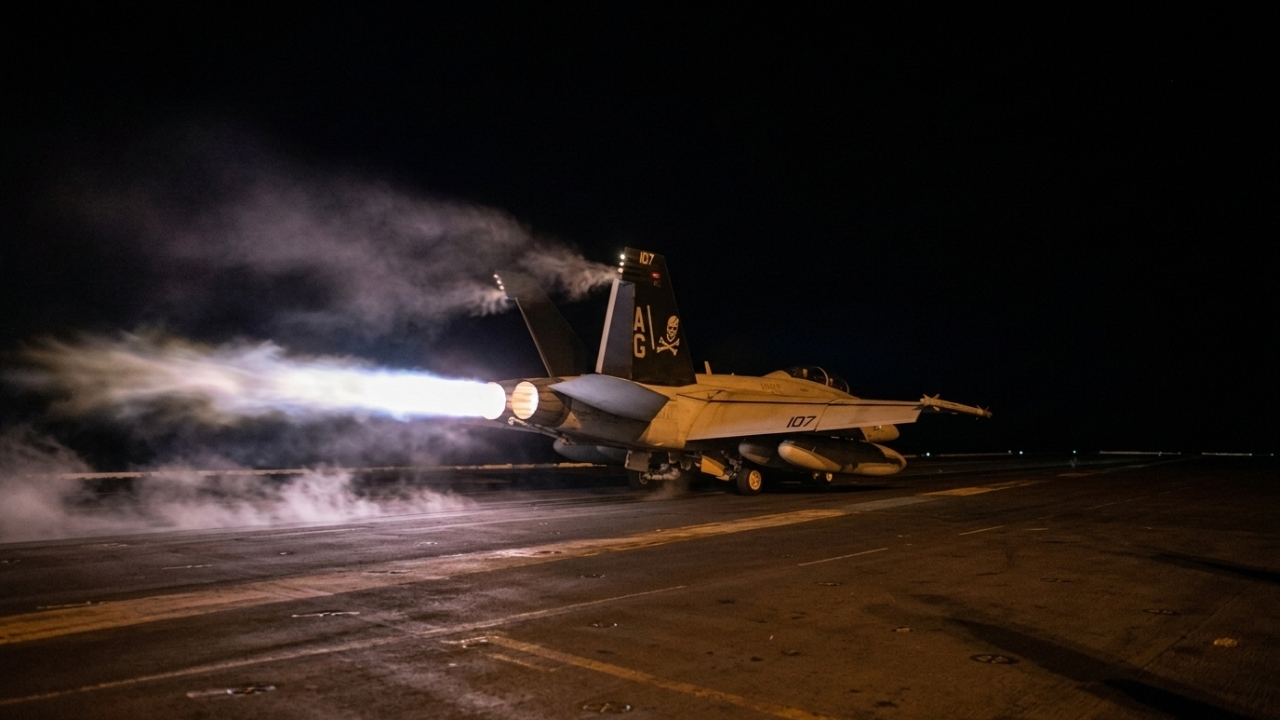
Iran proceeded with attacks on U.S. interests and military bases in the Middle East, launching missiles and drones against U.S. bases in Jordan, Iraq, and allied Gulf states to retaliate for recent U.S. airstrikes. The Iranian Red Crescent Council revealed that U.S. bomb fragments hit a wedding in Iran, killing 4 and injuring about 50, while President Trump warned that any retaliation would be met with stronger counterstrikes.
The Iranian military launched retaliatory operations by firing missiles and deploying drones against U.S. military bases and interests, as well as allied nations throughout the region, during Wednesday. This was in revenge for prior U.S. airstrikes.
Foreign news agencies, citing local media and the Iranian Red Crescent Council, reported that U.S. airstrikes on Tuesday, 1 September, affected civilian areas in southern Iran, especially in the city of Sirik or Kuhestak. Bomb fragments struck a house hosting a wedding, causing 4 immediate deaths, including a child, and injuring over 50. Explosions were also reported in key strategic locations such as Qeshm Island, Bandar Abbas port city, and the airport in Kerman province.
A spokesperson for Iran’s Islamic Revolutionary Guard Corps (IRGC) and the Central Command of Khatam al-Anbiya issued a stern warning that the U.S. would "regret" its actions and heavy punishment awaits the aggressors. They threatened that any country cooperating with the U.S. military would face even harsher and more widespread retaliation.
Reports indicate that Iran’s retaliation spread across several critical Middle Eastern locations. In Jordan, Iran fired missiles targeting the U.S. Marine base in Aqaba. The Jordanian military confirmed intercepting 10-13 missiles, with some falling in remote areas. No casualties were reported.
In Iraq, the IRGC claimed missile and drone strikes on the U.S. base in the Kurdistan region, destroying maintenance centers, warehouses, and military equipment. In Bahrain and Kuwait, air raid sirens sounded in Bahrain amid Iranian claims of drone attacks on the U.S. airbase there, while Kuwait’s military reported that its air defense systems were actively countering missile attacks from Iran.
The U.S. Central Command (CENTCOM) clarified that the recent air operations aimed to counter Iranian attempts to lay naval mines and attack commercial vessels in the Strait of Hormuz, as well as prior assaults on U.S. personnel. Commander Tim Hawkins, CENTCOM spokesperson, denied any civilian targeting by U.S. forces, stating, "The U.S. military has never targeted civilians, unlike Iran’s IRGC."
Meanwhile, U.S. President Donald Trump warned via Truth Social that if Iran chose to retaliate, the U.S. was ready to respond with "heavier and more severe" force. He added that he was not seeking to bring Iran back to the negotiating table and questioned when the Iranian people would rise up.
This latest escalation follows the expiration of a temporary ceasefire between the two sides, reigniting a conflict that has lasted over six months. Issues include the closure of the Strait of Hormuz—one of the world’s five main oil shipping routes—the attacks on private oil tankers, and renewed economic sanctions from Washington, severely impacting regional stability and the global economy.