

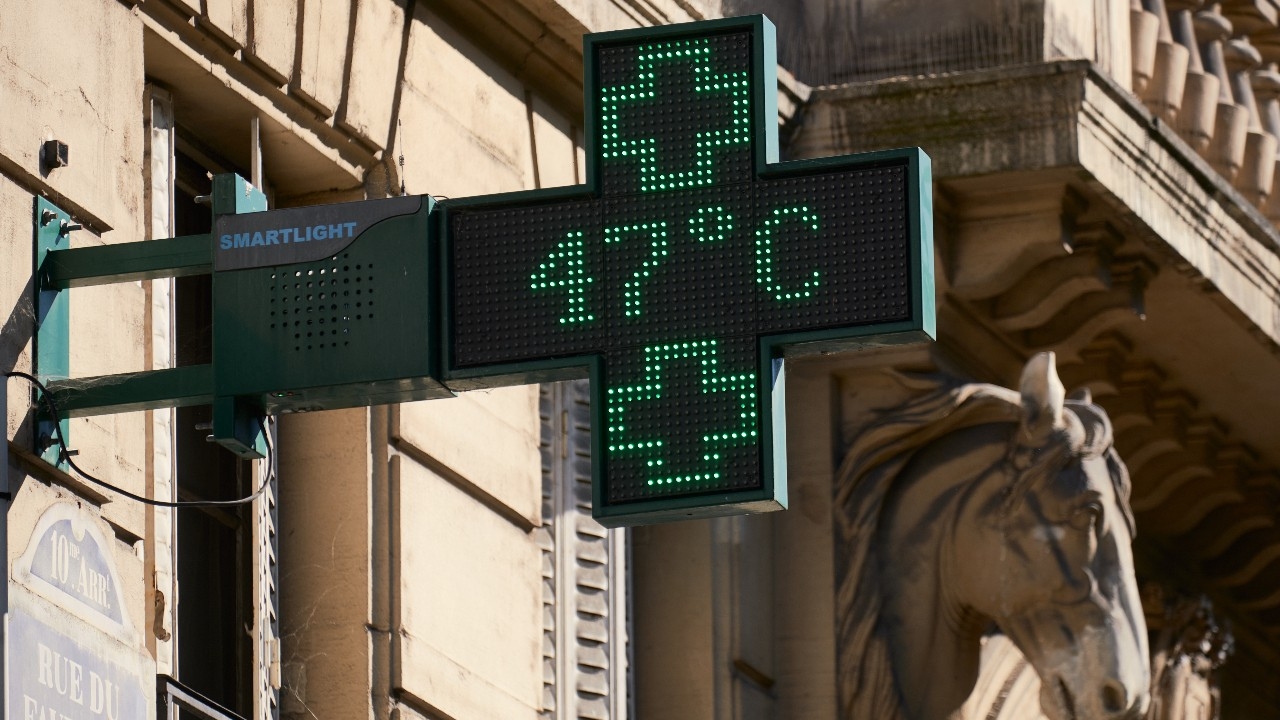
The United Nations Environment Programme (UNEP) has released a major assessment report stating that the average global temperature is likely to exceed the 1.5 degrees Celsius threshold above pre-industrial levels within a few years. Although the Paris Agreement target may be missed, the world can still reduce temperatures below 1.5 degrees Celsius if greenhouse gas emissions are aggressively cut.
UNEP has published a new report indicating that the global average temperature is expected to surpass 1.5 degrees Celsius within the next few years, marking a breach of the key target set under the 2015 Paris Agreement to control global warming.
The report clearly states that avoiding exceeding 1.5 degrees Celsius may no longer be feasible. The global challenge is shifting from "avoiding overshoot" to minimizing both the duration and extent of temperatures above 1.5 degrees Celsius, while striving to bring temperatures back below that level as soon as possible.
The "Limiting Overshoot" report proposes the "overshoot, peak, and decline" strategy as the best remaining option to limit the severity and duration of warming beyond 1.5 degrees Celsius. This requires rapid and continuous reductions in greenhouse gas emissions—especially methane—alongside efforts to achieve net-zero emissions.
Scientists agree that global temperatures exceeding 1.5 degrees Celsius will significantly increase risks to humans and ecosystems. The Earth has already warmed about 1.4 degrees Celsius compared to 1850-1900 (pre-industrial period), mainly due to fossil fuel combustion, with the past three years being the hottest on record.
If global temperatures surpass 1.5 degrees Celsius, risks will rise with every fraction of a degree and each year temperatures remain high. Expected impacts include more frequent heatwaves, wildfires, floods, extreme weather events, loss of ecosystems, submersion of small island nations and low-lying coastal cities, as well as harm to human health, food security, water resources, urban areas, infrastructure, and economies.
The report warns that higher and prolonged temperatures increase the risk of crossing irreversible "tipping points," such as the destabilization of large ice sheets, degradation of the Amazon rainforest, and changes to the Atlantic Ocean circulation system, which plays a vital role in regulating global climate.
In the best-case scenario, the global temperature might peak at about 1.8 degrees Celsius above pre-industrial levels before declining over the long term, while most other scenarios anticipate higher peak temperatures.
A key approach highlighted in the report is removing carbon dioxide from the atmosphere through methods like reforestation and carbon capture, which must be implemented alongside deep and rapid emission cuts—not as a substitute for reducing emissions.
Currently, carbon removal plays a minor role in addressing climate change and is opposed by some environmental activists who fear these technologies might be used as an excuse to delay ending coal, oil, and natural gas use.
Inger Andersen, UNEP's Executive Director, stated, "There are no good outcomes if we remain above 1.5 degrees Celsius," warning that severe global heatwaves already demonstrate that climate impacts are occurring faster, more intensely, and for longer durations, causing more deaths and widespread social damage.
United Nations Secretary-General António Guterres said that although the world may surpass 1.5 degrees Celsius, it is still possible to lower temperatures back below that level by the end of the century if all countries act seriously. He emphasized, "The fight for 1.5 degrees is a fight for humanity," calling on all nations to accelerate emission reductions, increase climate adaptation capacity, and minimize the time and extent the world remains above 1.5 degrees Celsius.
However, UNEP's report has faced criticism from climate campaigners who worry that accepting the inevitability of exceeding 1.5 degrees Celsius might discourage public commitment to combating global warming.
Jasper Inventer, Deputy Director of Greenpeace International's program, said the forecast is a sad moment but stressed that overshooting does not mean the world should give up on the 1.5 degrees Celsius goal.
Bill Hare, climate scientist and CEO of Climate Analytics, criticized the report as potentially becoming a "call for complacency" rather than a motivator for urgent action.
Small island nations, highly vulnerable to rising sea levels, continue to actively defend the 1.5 degrees Celsius target and urge wealthy countries responsible for historical emissions to implement the fastest and most aggressive emission reductions.
UNEP also states that emission reductions and climate adaptation must progress simultaneously, prioritizing measures that support both, such as using nature-based solutions to cool urban areas.
Meanwhile, current climate adaptation efforts form a critical foundation for the future but must be adjusted to address new, sudden, and severe risks, including some irreversible damages.
The report warns that even if the world manages to reduce temperatures below 1.5 degrees Celsius, the impacts and losses experienced during the overshoot will not be fully reversible. Some communities may need to relocate or alter their livelihoods, while governments will face questions about justice, power, and political legitimacy.
UNEP calls on countries to use "political will, multilateral cooperation, effective policies, inclusive participation, and financing" as key tools to respond. Countries with greater responsibility for climate change should act fastest and set the most ambitious targets.
The report concludes that the "overshoot-peak-decline" pathway may be the new frontier in tackling the climate crisis but is not a burden to be passed to future generations. Immediate action is essential because delaying will reduce the chances of limiting the severity and duration of global warming.
. . .UN Environment Programme / AFP