

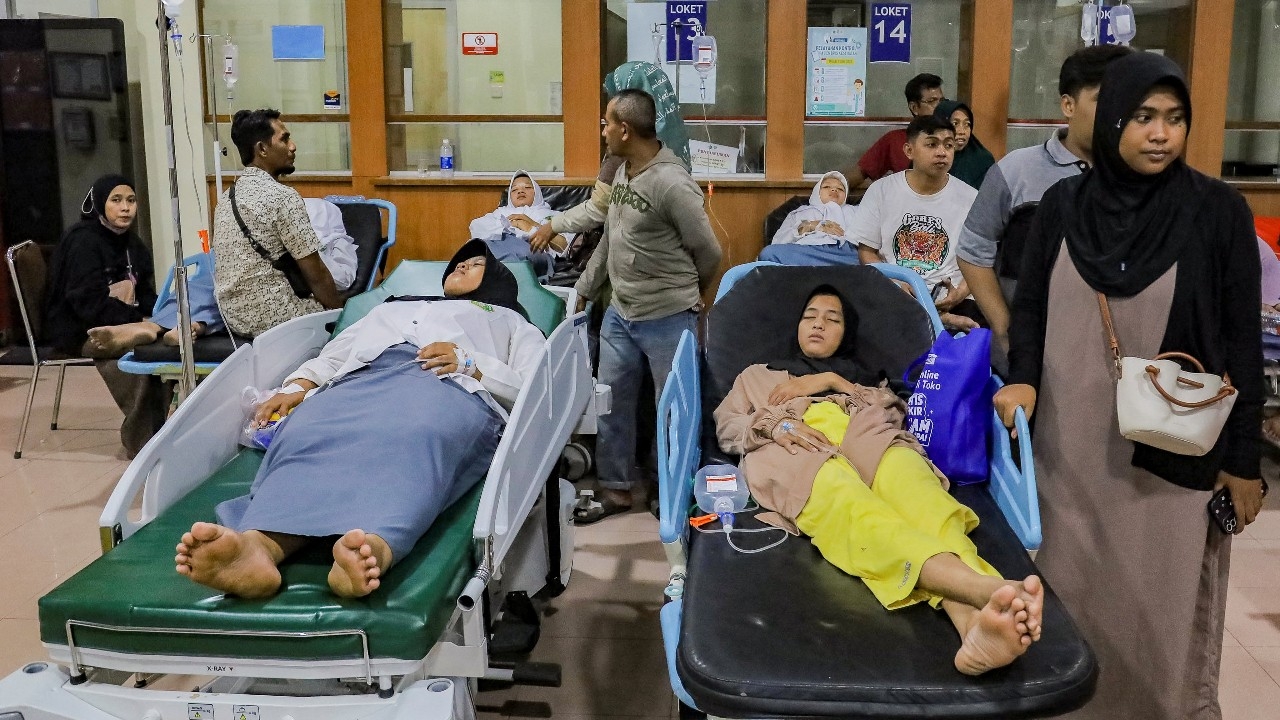
A total of 566 students and boarding school pupils in East Java, Indonesia, required medical treatment for food poisoning after eating meals from a free food program. The head of the nutrition unit acknowledged that cooked food could only be stored at room temperature for 4 hours. Authorities are rushing to investigate the contamination cause, even though the kitchen involved holds a hygiene certification.
A total of 566 students and boarding school pupils in Sidoarjo district, East Java, Indonesia, were hospitalized with suspected food poisoning after consuming meals from the "Free Nutritious Food" (MBG) program yesterday (1 Sept).
The incident affected students from 19 educational institutions, with many cases among pupils of Mambaul Hikam boarding school in Putat village, Tanggulangin district. Students from several other schools in the area also reported similar symptoms after eating lunch from the MBG program.
Rafli Ridho, head of the Nutrition Fulfillment Service Unit (SPPG) Galitegeh, responsible for preparing food in the area, apologized for the incident and admitted that the cooked food had a storage time limit of about 4 hours at room temperature.
Rafli revealed that food preparation began at 05:30 local time, and after cooking and packaging, meals were delivered to schools around 11:00 a.m.
According to standard procedures, meals sent to schools must undergo an initial quality inspection or sensory evaluation by school officials before being served to students.
Rafli stated that after consulting school officials, they confirmed the food passed inspection and showed no abnormalities, so the cause of the subsequent food poisoning remains unexplained.
As of 2 September, a total of 566 people from 19 schools were affected, with 88 still hospitalized. Local authorities reported most patients have been treated and discharged gradually.
The meals distributed on the day included steamed rice, scrambled eggs, Balinese spiced tempeh, stir-fried long beans with baby corn, and apples.
Authorities are urgently testing food samples to identify the contamination source. Police collected samples from the meal for investigation, while the National Nutrition Office, overseeing the MBG program, is verifying if the food caused the illnesses.
Emil Elestianto Dardak, Vice Governor of East Java and head of the provincial MBG task force, confirmed that the SPPG Galitegeh kitchen holds a hygiene and sanitation certification (SLHS). Emil said previous evaluations found the facility and equipment suitable; many staff are certified in food management, and the kitchen is also halal-certified.
However, having certification does not eliminate the possibility of contamination since SLHS assesses the system and infrastructure, but problems may arise during production, such as problematic raw materials or improper food preparation and delivery timing.
Emil emphasized the need for detailed laboratory testing to pinpoint the contamination source before concluding the cause of this illness outbreak.
The Sidoarjo incident occurs amid the Indonesian government's efforts to reform the MBG program, a key policy of President Prabowo Subianto launched in 2022 to provide free meals to tens of millions of children to combat malnutrition.
However, the multibillion-dollar program has faced ongoing criticism, including food poisoning cases, corruption allegations, leadership changes, and government budget strain.
Civil society watchdog Network for Education Watch reported that as of 8 August, about 37,600 food poisoning cases linked to the MBG program have been recorded.
Officials noted that many issues relate to improper food storage and delayed delivery of cooked meals, increasing risks of contamination and food spoilage.
The National Nutrition Office has yet to comment immediately on the recent mass illness in Sidoarjo but has previously shut down hundreds of kitchens for various problems, including failure to meet quality standards.
The agency has undergone several leadership changes recently, including the replacement of its head in June following an arrest on corruption charges. Meanwhile, the government has scaled back parts of the program amid concerns over costs and its impact on the national budget deficit.
A July survey by Saiful Mujani Research and Consulting found only about one-third of the public were satisfied with the free meal program, with ongoing food poisoning incidents cited as a key reason for declining support.
SourceKompas.com/Reuters