

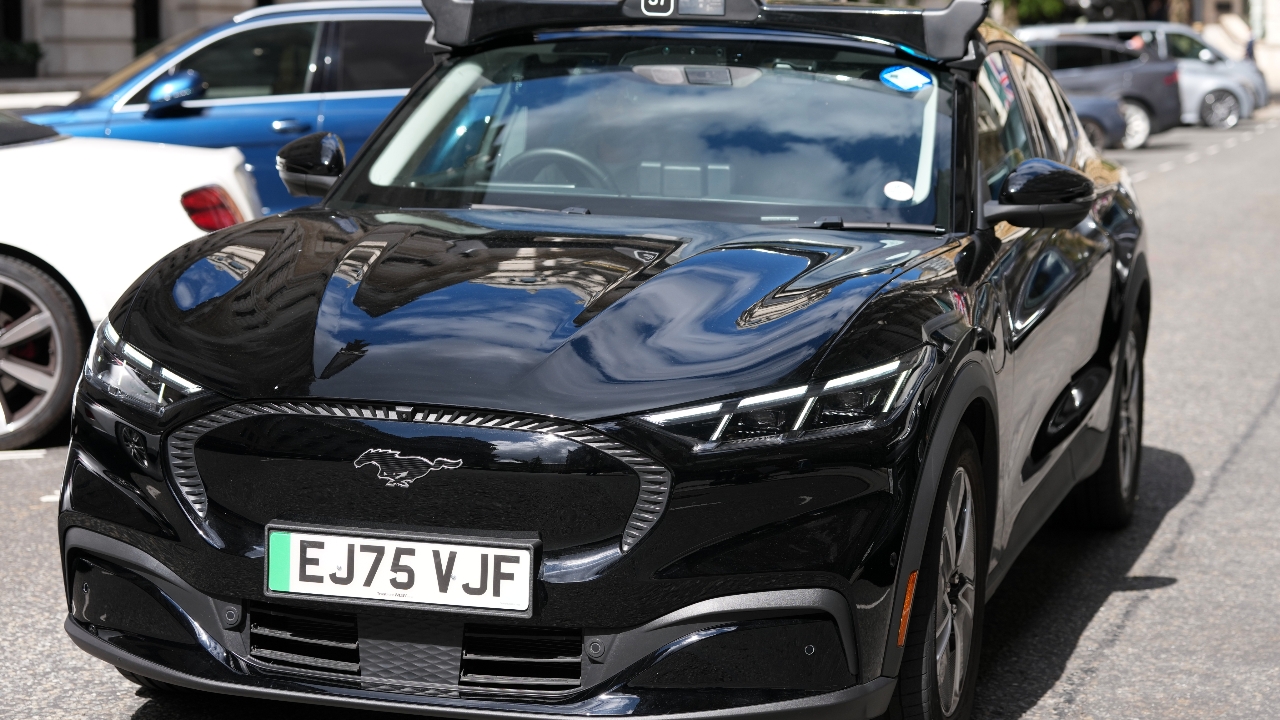
Uber and Wayve have launched the first commercial driverless taxi service in London, but initially, human operators remain in the vehicles to supervise, with no set date yet for fully driverless operation.
On 3 September 2026, Uber launched its commercial driverless taxi, or robo-taxi, service in London, England, using artificial intelligence technology from Wayve, a British AI startup. This makes London the second European city after Zagreb, Croatia, where Uber offers robo-taxi services. The initial rollout involves around several dozen vehicles, each with a human operator behind the wheel to control the car and ensure passenger safety.
Wendy Lee, Uber's Head of Product, stated the company will start with a limited service area and gradually increase the number of vehicles. During this initial phase, fares will be charged at the same rate as Uber’s regular ride services.
Reports indicate that this launch makes Wayve the first company to provide robo-taxi services to the public in London, ahead of competitors such as Waymo, a subsidiary of Alphabet, Google's parent company, and Baidu, a Chinese tech firm collaborating with Lyft.
However, Uber and Wayve have not specified when fully driverless taxi services will become available. Meanwhile, Waymo has announced plans to deploy vehicles without human drivers behind the wheel to carry passengers by the end of this year, pending approval from the UK government.
Source: AFP