

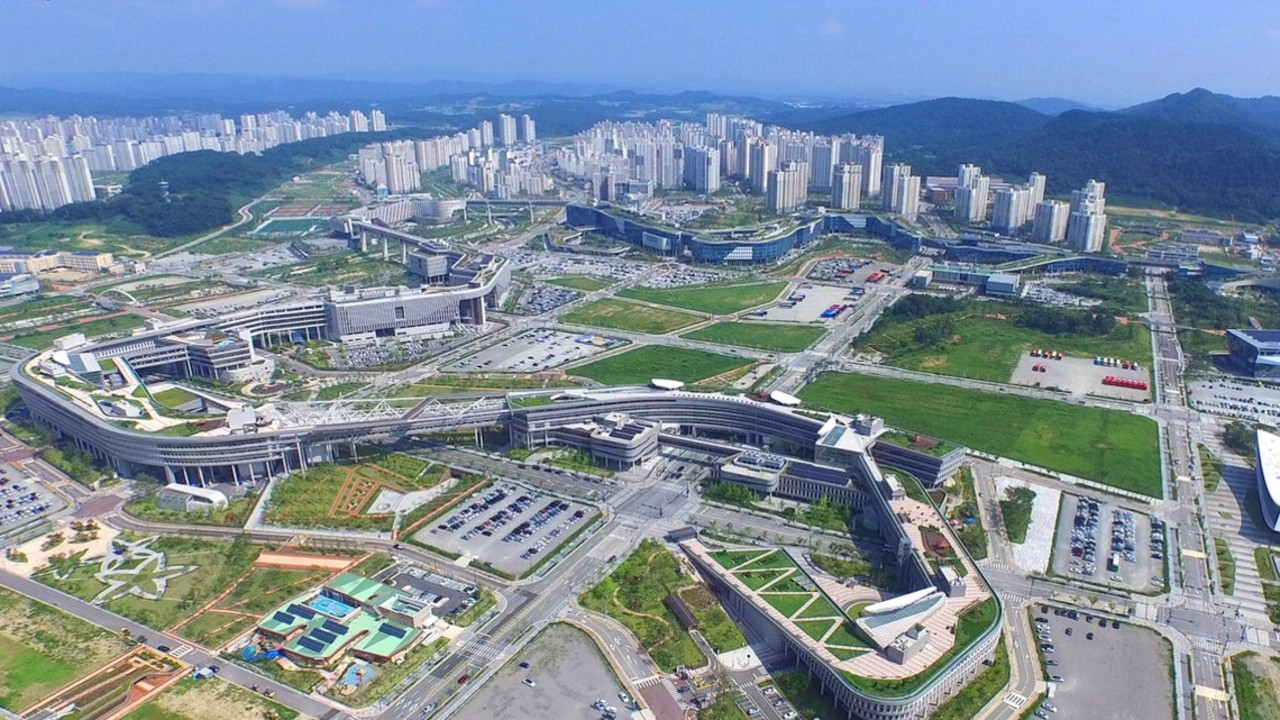
The South Korean government announced it will gradually relocate about 350 central ministries and government agencies currently based in the Seoul metropolitan area to Sejong City, the administrative center located approximately 110-120 kilometers south of Seoul, starting in 2027. This move aims to decentralize authority and address unequal regional development.
Prime Minister Han Seong-sook said the relocation will be phased, beginning with larger agencies expected to have the greatest impact on decentralization. The Ministry of Justice and the Ministry of Gender Equality and Family will be among the first to move to Sejong in the first half of 2027.
Agencies requiring dedicated office buildings in Sejong, such as the National Police Agency and the Serious Crime Investigation Office, scheduled to open next month, will relocate later after their new facilities are completed.
Prime Minister Han stated the government will promote the transfer of central administrative bodies located in the Seoul metropolitan area to Sejong, prioritizing large agencies that significantly influence economic activities and administration decentralization.
Prime Minister Han said, "Sejong symbolizes and is the core of balanced national development," adding that the government plans to build a second presidential office in Sejong by August 2029 to further centralize national administration there. Simultaneously, it will support plans to construct a second National Assembly building in the city.
However, the timeline for constructing the second National Assembly building varies among plans, with the government stating it will support advancing the project to meet targets set for the early 2030s.
Interior Minister Yoon Ho-jung said the government will finalize the list of agencies to relocate and detailed plans in the fourth quarter of 2026. The Ministry of Foreign Affairs and the Ministry of Unification are among the agencies currently under consideration.
The government said this plan is part of a continuous effort spanning over a decade to solve issues of administrative, economic, educational, and employment concentration in Seoul and surrounding areas.
The first agency relocation occurred in 2012 when the Prime Minister's Office became the first central agency to move to Sejong. Since then, 44 central government agencies, including the Ministry of Finance and the Ministry of Health and Welfare, have relocated there.
In addition to government agencies, the government plans to relocate 350 institutions and public organizations currently located in the Seoul metropolitan area to other regions, with details to be announced in the final quarter of this year and relocations beginning in 2027.
Prime Minister Han said the government will follow the principle of "minimizing the number of agencies remaining in the capital area," emphasizing that decentralizing public agencies is part of a long-term strategy for balanced growth.
The government also plans to reduce the number of public institutions and agencies by 109 through structural reforms, merging agencies with similar or overlapping missions, and consolidating smaller organizations.
Prime Minister Han stated the government will undertake major reforms of public agencies' roles to align with rapidly changing policy environments. Each ministry will develop implementation plans, such as mission reform plans, and agencies not requiring legislative changes can proceed immediately.
This announcement comes amid growing regional disparities in South Korea, where about half of the country's approximately 51 million people live in the Seoul metropolitan area, which is the center for jobs, education, and economic opportunities.
Meanwhile, many areas outside the capital are facing population decline and aging societies, leading to school and child clinic closures in some places, compounded by South Korea's among the world's lowest birth rates.
Government data indicates that in 2024, 130 out of 228 cities, districts, and counties—about 57%—are classified as at risk of population loss due to demographic decline.
Furthermore, the Seoul metropolitan area covers only about 12% of South Korea’s land area but produces 53% of the national gross domestic product (GDP) and accounts for over 60% of the country’s research and development investment, according to the Organisation for Economic Co-operation and Development (OECD).
President Lee Jae-myung said at a meeting last week that the root cause of nearly all major problems South Korea currently faces is the severe imbalance in national development.
The government views decentralizing government agencies and public institutions from Seoul not merely as administrative restructuring but as a key strategy to address population decline, regional disparities, and economic concentration in the capital area.
Prime Minister Han concluded, "Balanced growth is no longer optional; it is a survival strategy for South Korea’s sustainable future."
. SourceYonhap / The Korea JoongAng Daily