

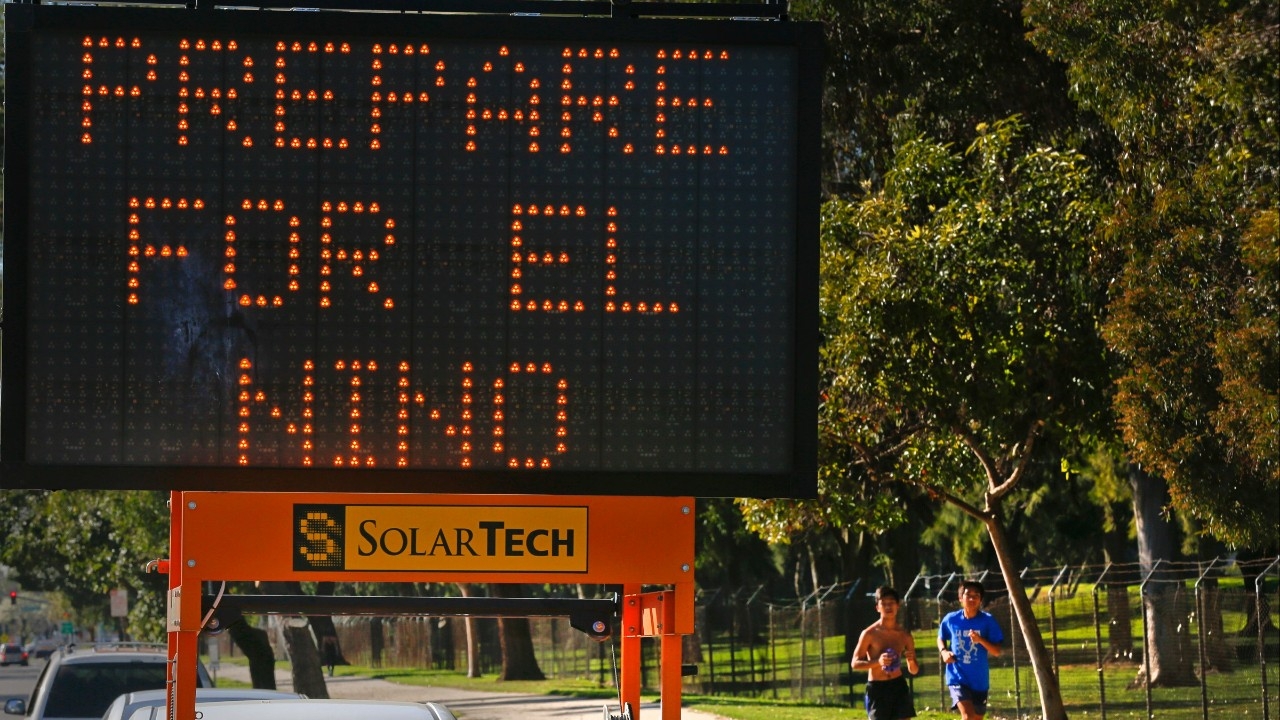
The World Meteorological Organization (WMO) warns that the El Niño phenomenon has fully developed and is intensifying, likely escalating to a "very strong" level in the coming months. It is expected with nearly 100% probability to continue through February 2027, potentially causing severe impacts on global rainfall and temperature patterns, increasing the risks of floods, droughts, and extreme heat.
The United Nations' World Meteorological Organization (WMO) revealed that El Niño is clearly underway and is expected to intensify to a "very strong" level over the coming months, with the peak anticipated by late 2026. The climatic impacts may persist into 2027.
WMO stated that forecast models from its information production centers indicate nearly 100% likelihood that El Niño will continue until February 2027. This is the first time WMO's "El Niño/La Niña Update" has expressed such a high level of confidence, reflecting consistent data from meteorological and climate centers worldwide.
"El Niño is expanding before our eyes. The science leaves no room for doubt. The world is entering uncharted waters, and those waters are warming. Sea surface temperatures are rising, overall temperatures continue to climb, and the world is in a danger zone of extreme weather," said the WMO.
United Nations Secretary-General António Guterres warned that the world is currently in a race between increasing risks and commitments to climate action and protecting people, emphasizing that the world must win this race.
WMO Secretary-General Petteri Taalas said this event has the potential to cause "major impacts on communities and economies worldwide." He noted that the world is already experiencing damage from droughts and floods, which are expected to worsen as El Niño strengthens.
Taalas urged disaster management agencies and climate-sensitive sectors such as agriculture, public health, energy, and water resources to accelerate preparedness efforts, emphasizing, "There is no time to lose."
He added that this El Niño is unusually severe, requiring special readiness and response. The WMO is mobilizing cooperation with national meteorological and hydrological services worldwide, frontline agencies that issue forecasts and warnings to help protect lives and livelihoods.
WMO also stated it will collaborate with various United Nations agencies and the humanitarian system to provide climate data and knowledge to support disaster management and sectors directly affected by weather.
El Niño is a natural climate system phenomenon not directly caused by climate change, but scientists expect El Niño to exacerbate the warming already driven by fossil fuel combustion, potentially intensifying extreme weather in many regions.
El Niño occurs when sea surface temperatures in the central and eastern tropical Pacific Ocean are higher than normal, altering wind patterns, atmospheric pressure, and rainfall globally.
Typically, El Niño occurs every 2-7 years and lasts about 9-12 months, alternating with La Niña, its opposite phase, with neutral periods in between.
El Niño usually begins developing between March and June and peaks from November to February. However, global temperature impacts can extend beyond the peak ocean warming period, often prominently affecting the year following El Niño onset.
A key indicator of El Niño is the sea surface temperature in the central and eastern tropical Pacific, the core area of the phenomenon, which is significantly above average and continuing to rise.
The Niño 3.4 index, measuring sea surface temperature anomalies in the central and eastern tropical Pacific, has risen markedly. From May to July 2026, average temperatures were about 1.5 degrees Celsius above normal, reaching about 2.0 degrees Celsius above average in July.
Weekly averages from late July to mid-August increased further to approximately 2.2–2.6 degrees Celsius above average, indicating El Niño is continuing to intensify.
Meanwhile, subsurface sea temperatures show even greater anomalies, with some areas recording temperatures more than 8 degrees Celsius above average in July and early August.
WMO noted that considering both surface and subsurface ocean temperatures together provides strong evidence supporting the trend that El Niño will persist and likely strengthen further in the coming months.
WMO warned that although El Niño is among the most influential natural factors on global climate systems, its intensity alone does not determine the severity of impacts for any country or region. Effects vary by location and season and may be modified or amplified by other climate factors such as conditions in the Indian and Atlantic Oceans.
For September to November 2026, WMO's multi-model forecasts predict that nearly all land areas worldwide are likely to experience above-normal temperatures, while rainfall patterns will change according to the atmospheric response to the strong El Niño in the Pacific Ocean.
Additionally, there is a tendency for a positive phase of the Indian Ocean Dipole (IOD) to develop, with the seasonal average from September to November 2026 expected to be around 0.9 degrees Celsius.
At the same time, sea surface temperatures near the equator in the Atlantic Ocean are expected to remain elevated, with tropical Atlantic sea surface temperatures above normal in both hemispheres. These factors may enhance, reduce, or alter the typical El Niño impacts regionally.
El Niño can alter weather and climate patterns thousands of kilometers from the tropical Pacific. While each El Niño event differs, strong events often show recurring effects, such as drought in parts of the Amazon basin, Indonesia, and Australia, disrupted monsoons in India, and altered rainfall patterns in tropical regions globally.
However, WMO emphasized that national meteorological and hydrological services remain the primary sources for official warnings and climate information tailored to their areas.
WMO reiterated that El Niño is a natural phenomenon, not caused by climate change. However, human-induced global warming may increase the severity and complexity of concurrent heat and extreme weather impacts.