

The Philippine Department of Education led students and education personnel nationwide in drills to prepare for emergencies involving armed intruders committing violence in schools, aiming to enhance student safety after two school shootings occurred in the past few months. The drills were modified to prohibit realistic violent reenactments to prevent psychological harm to children.
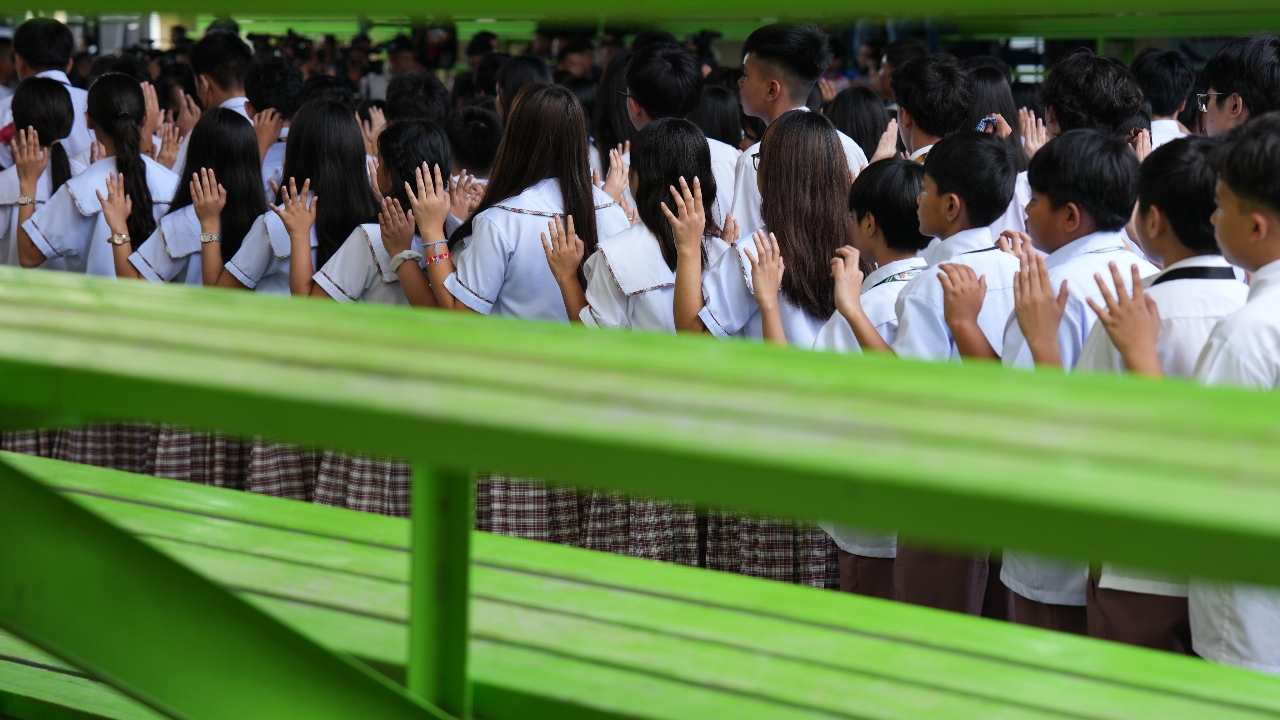
Approximately 3,000 junior and senior high school students at Carlos F. Gonzalez High School in Bulacan, north of Manila, participated in the safety drill. When the alarm sounded, students immediately took shelter inside classrooms, locked doors, barricaded entrances with desks and chairs, closed curtains and lights, then crouched under tables to protect themselves.
This training is part of the Department of Education’s nationwide initiative to improve school security following two recent shootings in educational institutions, which shocked Philippine society since such events are uncommon in the country.
The Philippines frequently faces natural disasters, so schools are accustomed to earthquake and fire drills. However, drills preparing for armed intruders or school shootings are a new practice.
Malcolm Garma, Undersecretary of the Department of Education, said schools are experienced in conducting fire and earthquake drills, but drills for this type of threat are new. Therefore, training is necessary so schools can recognize threats and respond appropriately.
The drill in Bulacan lasted about 12 minutes, involving police, rescue personnel, and around 250 school staff and teachers.
Reporters on site said that after the drill, teachers led students out of classrooms with raised arms to signal they were unarmed, then escorted them to the school gymnasium or indoor sports field, where students awaited mental health assessments and parental pickup.
Roy Fama, a teacher at Carlos F. Gonzalez School, said he initially felt fearful upon learning about the drill but saw participation as a step to reduce fear and prepare both teachers and students to respond if a real incident occurs.
The drill was originally scheduled for the previous month but was postponed due to bad weather and concerns from mental health experts that overly realistic violent simulations could cause long-term psychological harm to children.
The Department of Education revised the training guidelines to ban highly realistic portrayals of attackers and to avoid violent or frightening threat scenarios or images that might cause fear.
Instead of simulating shootings directly, this drill used a distinct alarm signal specifically for school security threats, different from fire or earthquake drills, so students and staff could learn procedures without panic or psychological distress.
However, some parents remain uneasy about the drills. April Tapion, 40, said she is hesitant to allow her children in grades 5 and 8 to participate despite the revised format. She worries that introducing the concept of armed attacks in training could make children view schools as frightening places filled with danger.
Karina Mallonga, director of Infant Jesus Academy’s Kalibo campus, believes schools and Philippine society should also emphasize strengthening other support systems for children.
She proposed enhancing counseling and student care programs to reassure children that their homeroom teachers support them and to encourage children to openly discuss their problems and feelings.
Meanwhile, Jonvic Remulla, Secretary of the Department of the Interior and Local Government, who observed the drill in Bulacan, said the training aims not only to teach students how to respond to threats but also to test and improve coordination between local police and emergency units. He expressed confidence that these agencies will respond more quickly and effectively after the drills.
Garma added that the new approach includes using the Unified 911 system managed by the Department of the Interior and Local Government along with law enforcement, enabling schools to report incidents rapidly.
Under this system, school principals can dial a three-digit emergency number, which connects to the nearest police station, facilitating faster police and local agency access to incident sites.
The Department of Education stated that the nationwide drills follow the 'Do No Harm' principle, prioritizing the holistic safety and well-being of students.
During the drills, students and teachers jointly executed lockdown procedures for about 30 minutes, followed by first aid steps addressing both physical emergencies and psychosocial crises.
Mental health experts, including psychologists and psychiatrists, participated in assessing and refining response guidelines to ensure the drills are age-appropriate. Garma said these specialists provide advice and help develop comprehensive, child-friendly approaches emphasizing child protection.
The Department of Education emphasized that the drills are not intended to instill fear but to educate students, teachers, and school staff on proper actions during real threats, while improving coordination among schools, police, rescue units, and related agencies to enhance life-saving chances and reduce harm if violence occurs in the future.